Manchester United's JJ Gabriel Seeks Exit Amidst Rising Tensions
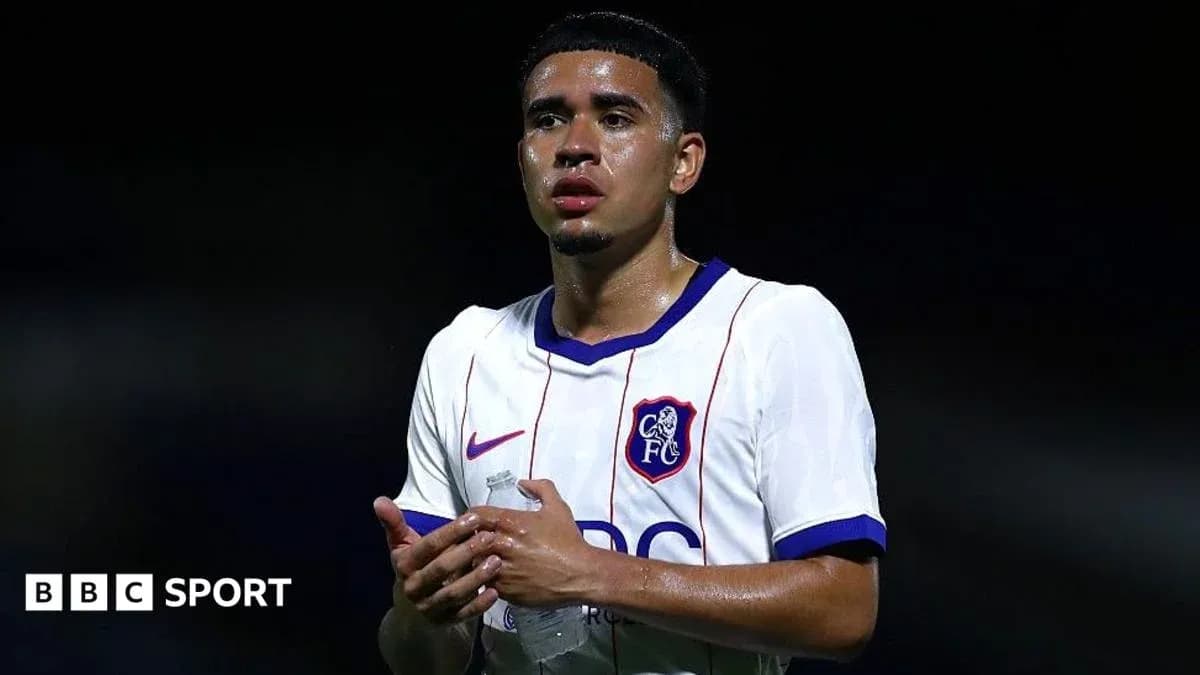
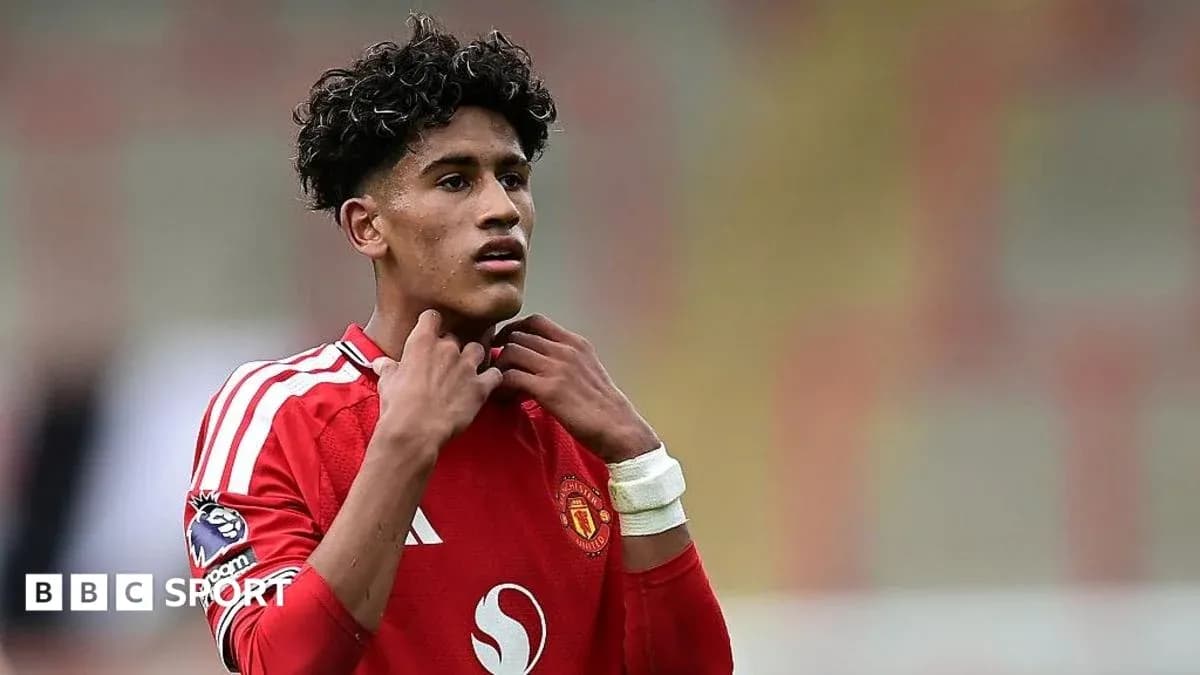
Old Trafford was supposed to be dressing itself up for history. Instead, on the eve of a night that could have produced Manchester United’s youngest ever player, the club is dealing with the shock that JJ Gabriel wants out.
The mood has turned fast. A week ago, Gabriel was the golden boy, fresh from a hat-trick on his Uefa Youth League debut at Leigh, the kind of performance that usually clears the path to a first-team bow. The Carabao Cup tie against Brighton on Wednesday looked tailor-made for that moment.
Now, United are firefighting.
Chief executive Omar Berrada and director of football Jason Wilcox have been pulled into talks they hope can stop the 15-year-old from walking away. Inside the club, it already feels like an uphill battle. A sense that promises have not been kept, combined with absolute conviction in Gabriel’s own ceiling, has eroded trust.
And the rest of Europe can smell it.
Real Madrid, Barcelona and Paris St-Germain are all tracking the situation, circling a teenager many inside Carrington regard as a generational talent. One United source recently described him as “the best 15-year-old in Europe”. That line has not aged well.
A prodigy with numbers to match the hype
Gabriel’s reputation has not been built on whispers. Every major English club has seen the evidence.
Last season, he was named Under-18 Premier League Player of the Year despite starting the campaign as a 14-year-old. He hit 23 goals in the Premier League Under-18 competition and added three more in the FA Youth Cup. He drove United to the Premier League Under-18 Cup final and the FA Youth Cup final, sweeping both the league’s Under-18 award and United’s own Under-18 Player of the Year.
The numbers only tell part of it. Coaches talk about his balance, his pace, his tight control in traffic and a shot that carries real weight. This season, he has added a noticeable edge out of possession, hunting the ball rather than waiting for it.
United Under-21s coach Adam Lawrence summed up the internal dilemma after Gabriel’s Uefa Youth League masterclass against Sabah FK.
“The first thing in my job is not to ruin him,” Lawrence said. “When you have a talented player like JJ, you obviously don’t want to stifle their freedom and their creativity.”
Talent like that doesn’t stay local. Real, Barcelona and PSG build their futures on this exact profile of player. Gabriel is now firmly in that bracket.
Contracts, loopholes and a ticking clock
United’s first reaction to the noise around Gabriel’s future was calm in tone, if not in content. Privately, they insisted they would work to convince him that staying put was best. They also pointed out that his registration runs until the end of the season.
That might help fend off immediate interest from domestic rivals. It is far less useful when the biggest sharks are swimming in from mainland Europe.
Gabriel holds a European Union passport through his Greek-Cypriot mother, while his father represented the Republic of Ireland twice at senior level. That detail matters. In 2016, the Court of Arbitration for Sport rejected an appeal from Argentine side Velez Sarsfield, who had tried to stop one of their 16-year-olds moving to Manchester City. The player’s dual Argentine-Italian nationality meant that, as an EU national, he could move freely within the European Union despite coming from a non-EU league.
United know the precedent. They have also seen how easily clubs can be left empty-handed. West Brom received no compensation when 16-year-old Louie Barry left for Barcelona in 2019 after Fifa ruled the club had not formally offered him a scholarship. West Brom had claimed €130,000 in training compensation. Six months later, Barry was on his way to Aston Villa for just under £1m.
The nightmare scenario for United is obvious. Gabriel turns 16 on 6 October. If he walks then, United could end up with nothing for a player whose market value, even at this stage, is already measured in millions.
Broken pathways and familiar fault lines
Gabriel is not the first teenager to clash with his club over the route to the first team.
Jadon Sancho was 17 when he stopped training with Manchester City to push through a £10m move to Borussia Dortmund, convinced that his opportunities under Pep Guardiola would be limited. Morgan Rogers, a team-mate of Barry’s in the West Brom side that reached the FA Youth Cup semi-final in 2019, left for City three months later on his 17th birthday.
Around Gabriel, there is a belief that similar fault lines have opened up at United. Sources close to the situation feel that, during meetings with the hierarchy last summer which led to Gabriel committing his short-term future, clear promises were made about his progression that have not been honoured.
He did step into senior training, first under Ruben Amorim and then Michael Carrick. Yet when speculation built about a possible FA Cup debut last season, it was Under-18s coach Darren Fletcher – by then interim first-team manager after Amorim’s dismissal – who cooled it. Fletcher felt it was too soon.
This summer was supposed to reset that narrative. Gabriel was expected to feature prominently in pre-season.
Instead, the pattern only deepened the frustration. His absence from the trip to Helsinki to face Wrexham on 18 July was attributed to the date he returned for pre-season. After that, he was named in every squad but barely touched the pitch – just eight minutes against Atletico Madrid in Stockholm.
Then came Trondheim on 24 July. Gabriel travelled. Carrick used 11 substitutes in the game against Rosenborg. Gabriel was one of only two United players who stayed on the bench. Five of those who did get on the pitch have since left, permanently or on loan.
Another flashpoint arrived at Croke Park. Three weeks after arriving from Tottenham, 18-year-old Tynan Thompson was handed a 45-minute senior debut against Leeds United in Dublin. Gabriel travelled again. He watched again.
The Champions League omission that lit the fuse
Despite all that, the expectation within the club remained that Gabriel would become United’s youngest ever player this autumn, most likely in the EFL Cup.
The third-round draw appeared to align with that plan: Brighton at Old Trafford, a competition where managers tend to gamble on youth. United’s Champions League group added another tempting opportunity. On paper, a home tie against Azerbaijani champions Sabah looked like the softest fixture on the schedule.
United led 3-0 at half-time. By the 72nd minute, Carrick had used all five substitutes. Gabriel stayed unused, not because of a tactical call, but because of paperwork.
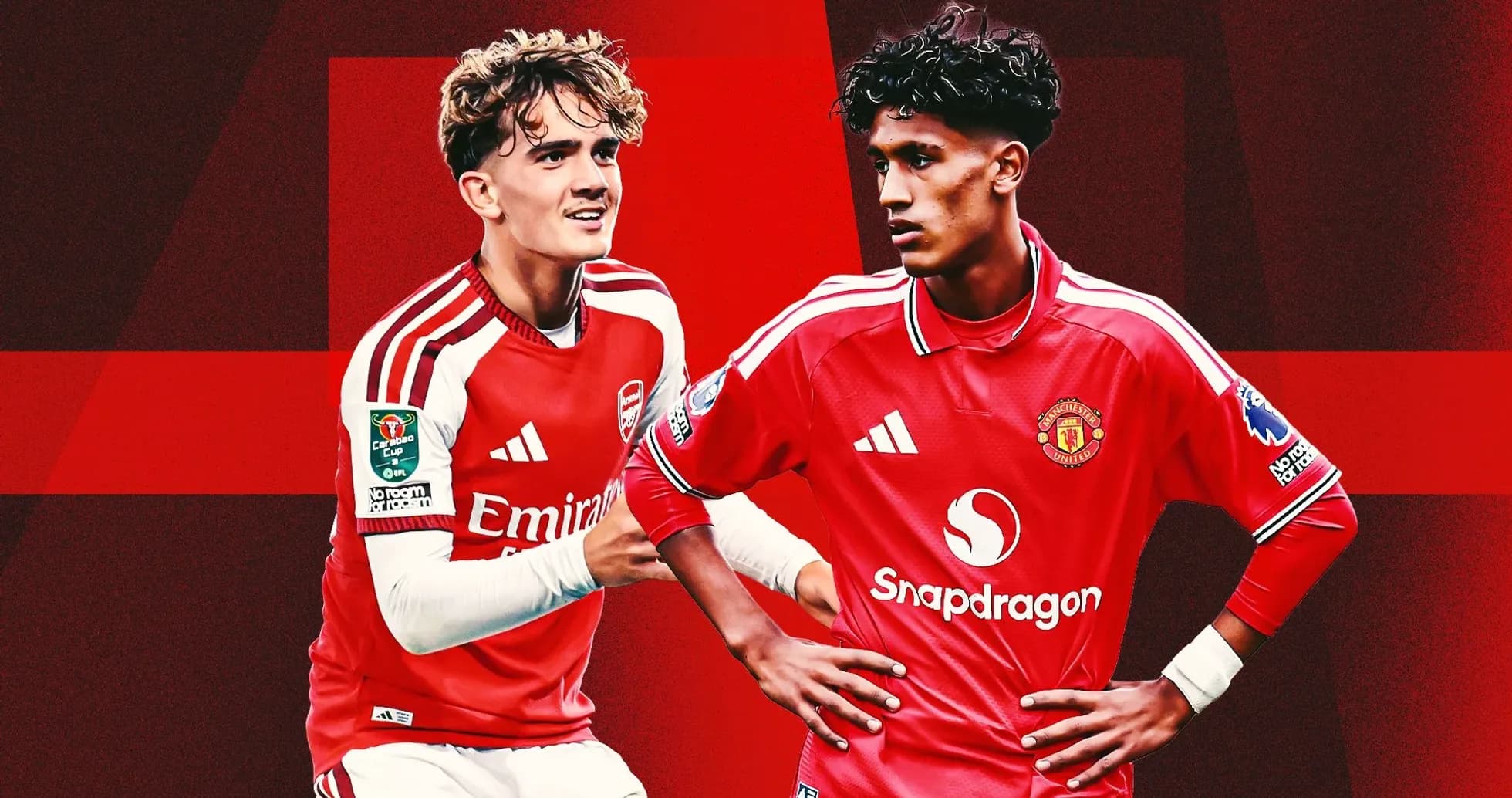
Like Max Dowman at Arsenal last season, Gabriel fell foul of Uefa registration rules. At 15, he could only play if he was named on United’s A list for the competition. He was not.
Why? That remains murky. United filled their full allocation of 25 players, but one of those spots went to Manuel Ugarte, who will not play until after the registration window reopens in January due to a knee injury. Thompson also made the list.
Inside Carrington, some coaches have argued that Gabriel is not yet at the physical level required to face senior opposition. Those close to the player strongly disagree. They look at Arsenal throwing Dowman into European action at 15 and Bayern Munich handing Lennart Karl his debut at 17 and ask a blunt question.
If others are prepared to trust their prodigies, why aren’t United doing the same with the one they call the best 15-year-old in Europe?