Manchester Derby Analysis: City Edges United 1-0
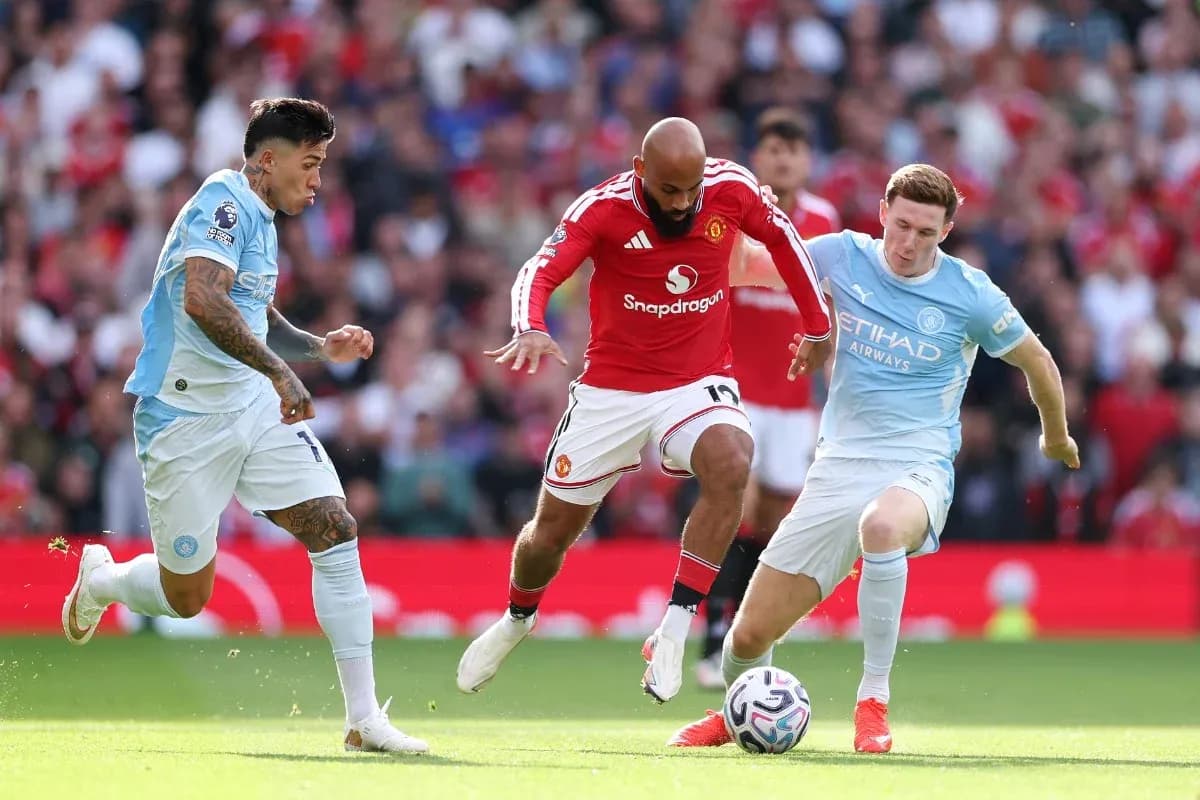
Old Trafford under grey Manchester skies, a 15:30 kick-off, and a Premier League table already stretching in opposite directions. By full time, Manchester City had edged a 1–0 derby, preserving their perfect start and tightening the pressure on a Manchester United side stranded in mid-table turbulence.
I. The Big Picture – Diverging Trajectories
Heading into this game, the standings told a stark story. United sat 13th with 4 points from 4 matches, their overall goal difference at 0 after scoring 7 and conceding 7. At home they had been more expansive than effective: 5 goals scored and 3 conceded in 2 games, an average of 2.5 goals for and 1.5 against at Old Trafford. City arrived in ominous contrast – 2nd in the table, 12 points from 4, with an overall goal difference of 6 (8 scored, 2 conceded). On their travels they had been ruthless: 2 away wins from 2, 5 goals scored and just 1 conceded, an average of 2.5 goals for and 0.5 against away from home.
Both coaches leaned into a mirrored 4-2-3-1, but the shared shape masked very different identities. Michael Carrick’s United have been a high-variance outfit: overall 1 win, 1 draw, 2 defeats, averaging 1.8 goals scored and 1.8 conceded per match. Enzo Maresca’s City, by contrast, have been about controlled dominance: 4 wins from 4, averaging 2.0 goals scored and just 0.5 conceded overall, with 2 clean sheets already banked.
II. Tactical Voids – Absences and Discipline
United’s squad sheet carried a long list of absentees that reshaped the spine. C. Baleba (ankle injury), A. Diallo, T. Heaton, L. Shaw, M. Ugarte (knee injury) and M. de Ligt (back injury) were all ruled out. The absence of Shaw removed a natural left-sided outlet, while the loss of Ugarte and de Ligt stripped Carrick of a ball-winning pivot and a first-choice organiser at centre-back. It is no coincidence that heading into this match United had yet to keep a clean sheet, at home or away.
City’s only listed absentee was J. Doku with a calf injury, a blow to their one-v‑one wing threat but not to their structural core. Maresca could still field a back four of Matheus Nunes, M. Guéhi, Rúben Dias and J. Gvardiol in front of G. Donnarumma, with E. Fernández and E. Anderson anchoring midfield.
Disciplinary profiles added a darker undercurrent. United’s yellow cards this season have skewed late, with a clear surge between 76–90 minutes, when 50.00% of their bookings have arrived. It speaks to a team chasing games, stretched and reactive. City’s yellows show a similar late-game spike – 42.86% between 76–90 minutes – but layered on top is a sharper edge: a red card already this season for P. Foden, and a red-card profile that includes one dismissal between 16–30 minutes. This is a side that defends aggressively in the press and accepts the disciplinary risk.
III. Key Matchups – Hunter vs Shield, Engine Room Battles
The derby’s narrative gravity centred on two attacking fulcrums: E. Haaland for City and Bruno Fernandes for United.
Hunter vs Shield
Haaland entered as the league’s most clinical spearhead. Over 4 appearances he had 4 goals, 15 shots with 9 on target, and a rating of 7.91. His duel numbers – 30 contested, 17 won – underline a striker who doesn’t just finish moves but also fights for direct balls and second phases.
He was up against a United defence whose season numbers had already exposed their fragility. Overall they had conceded 7 goals in 4 matches, with no clean sheets in any venue. At Old Trafford, 3 goals conceded in 2 games underlined that their home advantage has not translated into defensive control. Harry Maguire, ever-present with 360 minutes played, embodies both the solution and the risk. He has made 5 interceptions and blocked 1 shot, but he also tops United’s card charts with 2 yellows and 7 fouls committed. Against Haaland’s physicality and penalty-box movement, every aerial duel carried the risk of a decisive error or a booking that could tilt the balance.
On City’s side, the shield in front of Haaland was their collective defensive record: just 2 goals conceded overall, 1 at home and 1 away, with an away average of 0.5 goals against. Dias and Guéhi form a central pairing designed to suffocate the kind of direct runs and half-spaces that Matheus Cunha thrives on. With Donnarumma behind them and two clean sheets already this season, the Hunter vs Shield equation looked heavily weighted in sky blue.
The Engine Room
In the engine room, the duel between Bruno Fernandes and City’s midfield triangle of Fernández, Anderson and Cherki framed the contest’s rhythm.
Bruno’s numbers this season have been outstanding despite United’s inconsistency: 3 goals and 1 assist in 4 games, 262 passes at 85% accuracy, and 9 key passes. He is both United’s top scorer and joint-top creator, and he has also converted United’s only penalty of the campaign, maintaining a 100.00% record from the spot so far. His presence as the central “10” in the 4-2-3-1, flanked by B. Mbeumo and M. Rashford behind Cunha, is the creative brain of Carrick’s structure.
But City’s response is layered. E. Fernández and E. Anderson, sitting as the double pivot, provide the platform that allows R. Cherki to operate higher. Cherki’s season line – 2 goals, 2 assists, 10 key passes, 185 completed passes at 91% accuracy – makes him the creative mirror to Bruno, but within a side that already controls territory and tempo. Add P. Foden and A. Semenyo, both with 2 assists each, and City’s chance creation is more distributed and harder to isolate.
The critical intersection lies here: United’s ability to funnel possession through Bruno and K. Mainoo, while City look to suffocate that lane and transition quickly into Cherki–Foden–Semenyo combinations feeding Haaland.
IV. Statistical Prognosis – Margins and xG Logic
Even before the ball rolled, the statistical balance tilted towards City. Their overall scoring rate of 2.0 goals per match, combined with just 0.5 conceded, pointed to a side that regularly wins the xG battle through volume and shot quality. United, by contrast, have lived in chaos: 1.8 scored and 1.8 conceded overall, with both their goals for and against at home outpacing control.
United’s lack of clean sheets, coupled with 2 matches already where they failed to score, suggested a volatility that is unforgiving against a City team that has yet to fail to score in any venue. City’s defensive numbers away – 1 goal conceded in 2 games – and their ability to maintain structure even with an aggressive pressing and card profile, made a narrow City win the logical outcome of the underlying data.
The 1–0 full-time scoreline at Old Trafford ultimately felt like the statistical script playing out: City’s defensive solidity held, Haaland’s presence and the collective creativity around him found the one decisive moment, and United’s reliance on Bruno’s inspiration could not overcome the structural gaps left by injuries and a still-fragile back line.