Manchester City Dominates Sunderland in Thrilling 5–3 Match
Under a clear Manchester sky at the Etihad Stadium, this “finished in the regular time” 5–3 spectacle felt less like a routine league outing and more like an early-season statement. Manchester City, already top of the Premier League heading into this game with 15 points from 5 matches and a goal difference of +8 (13 scored, 5 conceded), reaffirmed their dominance. Sunderland arrived in 14th, with 4 points from 5 games and a goal difference of -4 (6 scored, 10 conceded), hoping to turn a fragile start into something more stable. Instead, they were dragged into City’s high-tempo carousel and paid for every structural flaw.
Both managers trusted the same system on paper – 4-2-3-1 – but the shapes could not have been more different in personality. Enzo Maresca’s Manchester City used the formation as a canvas for fluidity. Gianluigi Donnarumma anchored from goal, with a back four of Matheus Nunes, Rúben Dias, Marc Guéhi and Joško Gvardiol. Ahead of them, Enzo Fernández and E. Anderson formed a double pivot that was less about destruction and more about orchestration, setting the rhythm for a line of three attacking midfielders – I. Ndiaye, Rayan Cherki and Antoine Semenyo – all tasked with rotating around the central reference point, Erling Haaland.
Across the halfway line, Régis Le Bris mirrored the 4-2-3-1 but with a far more conservative intention. R. Roefs stood behind a back four of Nordi Mukiele, Kevin Danso, Dan Ballard and D. Methalie. Granit Xhaka and N. Sadiki were charged with screening the defence, while T. Meunier, Enzo Le Fée and N. Angulo supported lone forward Brian Brobbey. On paper it was balanced; in practice, Sunderland’s double pivot was repeatedly outnumbered and stretched by City’s positional play.
The absences shaped the tone before a ball was kicked. For City, P. Foden’s suspension for a red card removed one of Maresca’s most elastic midfielders and a key creative presence – 2 assists in 4 league appearances and a reputation for drifting into half-spaces. His absence nudged more responsibility onto Cherki as the primary conduit between midfield and attack. Sunderland, meanwhile, were stripped of depth and experience at the back and in wide areas: H. Diarra (hamstring injury), Reinildo Mandava (red card) and R. Mundle (knee injury) all missed out. The loss of Mandava in particular deprived Le Bris of a defender who had already shown bite – 8 tackles, 1 blocked shot and 8 interceptions in 4 league appearances – and a natural competitor for the left-sided role.
Discipline has been a season-long subplot for both sides. City’s campaign profile shows a team that tends to collect yellow cards late, with 50.00% of their cautions coming between 76–90 minutes and a further 16.67% in added time between 91–105. They also carry the stain of an early red – the one that sidelined Foden – which arrived in the 16–30-minute window. Sunderland, by contrast, spread their bookings more evenly, but with a notable spike: 25.00% of their yellows fall between 61–75 minutes, suggesting a side that tires and starts to foul as control slips. Crucially, Sunderland’s disciplinary record also includes a red card deep into added time (91–105 minutes), underlining how chaotic their endings can become.
Those patterns fed directly into the tactical story. City’s season numbers paint a side that overwhelms opponents with sustained pressure. Overall they average 2.6 goals per game, rising to 2.7 at home, while conceding just 1.0 overall and 1.3 at the Etihad. Sunderland, on their travels, concede 2.7 goals per match while scoring 1.7, a profile that screams open games and defensive strain. A 5–3 scoreline felt less like an anomaly and more like the statistical mean made flesh.
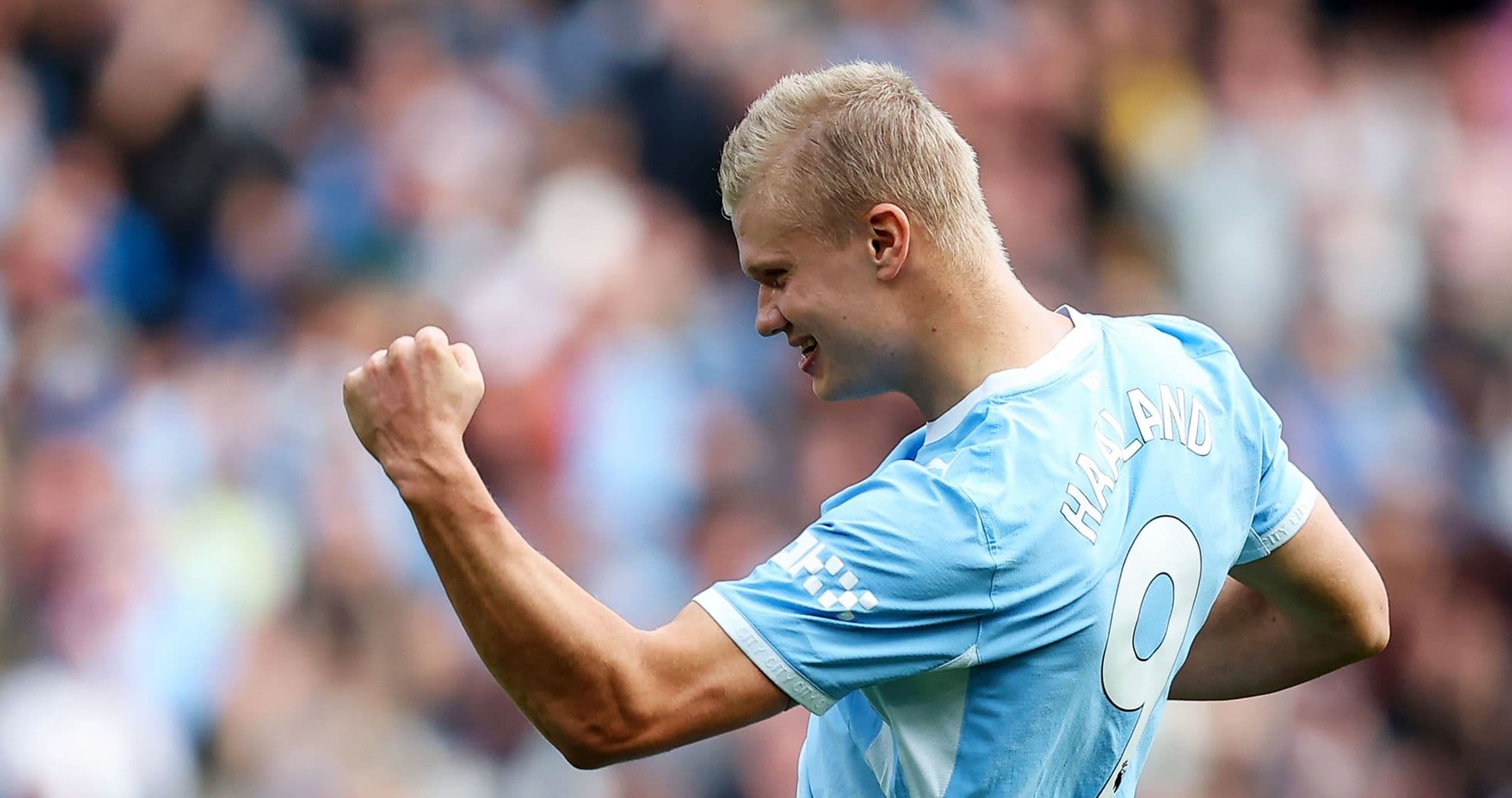
Within that framework, the “Hunter vs Shield” duel was always going to be Haaland against Sunderland’s back line. Haaland entered the round as the league’s top-rated forward, with 4 goals in 4 appearances, 15 shots (9 on target) and a rating of 7.98. His movement across the front line, supported by Semenyo’s vertical running and Ndiaye’s drifting between lines, repeatedly dragged Danso and Ballard into uncomfortable zones. Without Mandava’s aggression on the cover, Sunderland’s full-backs were often isolated, and Mukiele in particular found himself torn between stepping out to Cherki or dropping with Haaland.
If Haaland was the spear, Cherki was the sculptor. Already with 2 goals and 2 assists in 4 league appearances, 10 key passes and a 91% pass accuracy, he functioned as the “engine room” between the lines. His duels with Xhaka defined the central narrative: whenever Cherki escaped Xhaka’s orbit, Sunderland’s block fractured. Xhaka’s task was to impose control, but with City circulating the ball through Fernández and Anderson, Sunderland’s midfielder was repeatedly forced into lateral shuttling rather than front-foot challenges.
On the other side, Sunderland’s best hope lay in transition. Brobbey’s physicality, supported by Le Fée’s craft and Angulo’s running, aimed to test a City defence that, despite its solidity, still concedes 1.3 goals per home match. Yet Sunderland’s own season-long fragility without the ball – 2.0 goals conceded per game overall, 2.7 away – meant that any attacking gambit came at a cost. Their penalty record told another story of fine margins: 2 spot-kicks awarded, but with only 1 converted and 1 missed, they lacked the ruthless edge needed to punish City’s few errors.
In the end, the numbers and the narrative converged. City’s relentless attacking volume, powered by a top-end spearhead in Haaland and a creative hub in Cherki, simply overwhelmed a Sunderland side already trending towards high-scoring, defensively porous away days. The 5–3 final score at the Etihad was not just a thriller; it was a live demonstration of both teams’ seasonal DNA – City as a ruthless, free-scoring league leader, Sunderland as a brave but brittle newcomer still searching for balance in the Premier League storm.