Manchester City Dominates Brentford 3–0 in Premier League Clash
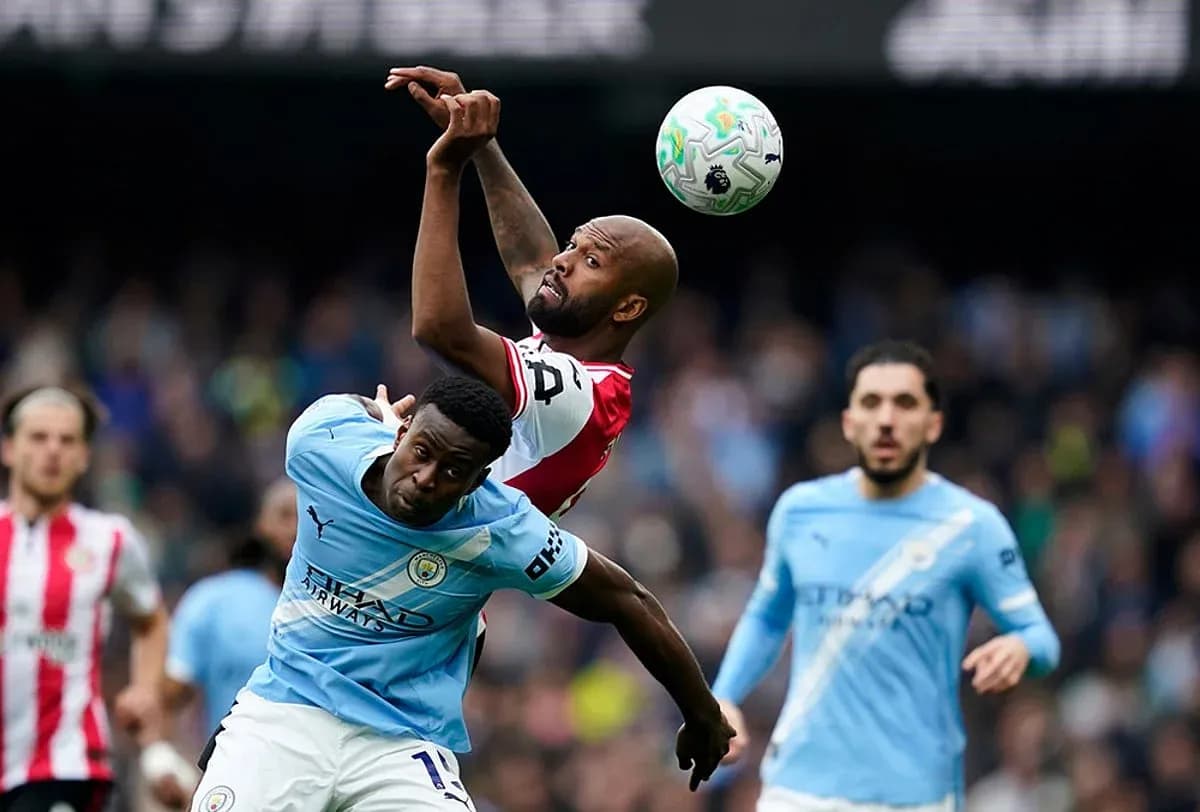
Manchester City’s 3–0 win over Brentford at the Etihad Stadium was a methodical, data-backed domination rather than a chaotic shootout. In a late-season Premier League fixture (Round 36), Pep Guardiola’s side controlled territory, tempo, and shot volume, converting a 59% possession share and 25 total shots into three second-half goals. Brentford, under Keith Andrews, were restricted to four shots and an expected goals value of just 0.24, surviving largely through Caoimhin Kelleher’s work in goal. The 0–0 halftime scoreline masked City’s structural superiority, which eventually told once the pressing and positional play began to wear Brentford down after the break.
First Half
The scoring opened on 60' when Jérémy Doku struck for Manchester City, finally translating sustained pressure into a breakthrough. Immediately after, Guardiola reshaped his attacking structure: at 60', Rayan Cherki (OUT) was replaced as Omar Marmoush (IN) came on, and Tijjani Reijnders (OUT) made way for Phil Foden (IN). Brentford responded on 61' with a structural adjustment of their own, Aaron Hickey (OUT) replaced by Vitaly Janelt (IN), then on 68' Mikkel Damsgaard (OUT) replaced by Dango Ouattara (IN), seeking more direct threat in transition.
Second Half
City’s control deepened, and on 75' Erling Haaland added the second, effectively killing the contest. Brentford tried to regain midfield stability on 79' as Yehor Yarmoliuk (OUT) went off for Jordan Henderson (IN). Deep into stoppage time, City added a third: at 90+2' Omar Marmoush scored, assisted by Erling Haaland, reflecting City’s sustained attacking volume to the final whistle.
Disciplinary Incidents
Card log:
- 36' Bernardo Silva (Manchester City) — Argument
- 74' Nico O'Reilly (Manchester City) — Foul
- 80' Kristoffer Ajer (Brentford) — Foul
- 88' Matheus Nunes (Manchester City) — Argument
- 88' Jordan Henderson (Brentford) — Argument
- 90+5' Omar Marmoush (Manchester City) — Time wasting
That yields locked totals: Manchester City: 4 yellow cards, Brentford: 2 yellow cards, Total: 6.
Tactical Overview
Tactically, City’s game plan was built on high-volume, patient occupation of Brentford’s half. With 463 total passes at 86% accuracy versus Brentford’s 320 at 76%, Guardiola’s side established a stable possession platform. The structure leaned on a technically secure back line of Matheus Nunes, Marc Guéhi, Nathan Aké and Nico O'Reilly, stepping high to compress space and keep Brentford pinned. From there, Tijjani Reijnders and Bernardo Silva provided circulation and vertical access, while Antoine Semenyo, Rayan Cherki and Jérémy Doku attacked the half-spaces around Erling Haaland.
The shot profile underlines the territorial dominance: 25 total shots to 4, with 15 inside the box for City versus only 2 for Brentford. The 10 shots on target generated an xG of 2.98, closely aligned with the three goals scored, suggesting City’s finishing was in line with chance quality rather than wildly overperforming. Brentford’s 0.24 xG encapsulates how effectively City’s rest-defense suffocated counters: Kevin Schade and Igor Thiago rarely received clean service, and Brentford’s few attempts came from low-probability positions.
Goalkeeping Performances
Gianluigi Donnarumma’s role was more about concentration than heroics. He faced just two shots on goal and made two saves, reflecting how City’s defensive line and midfield screen pre-empted danger before it reached the box. The “goals prevented” metric at 1.5 for City indicates that, on the rare occasions Brentford did threaten, Donnarumma’s interventions and defensive blocks marginally outperformed the underlying shot quality against.
At the other end, Kelleher was Brentford’s standout. Seven saves from 10 shots on target and a goals prevented value of 1.5 show he significantly limited the damage relative to the volume and quality of chances City created. Without his shot-stopping, the 3–0 scoreline could have been heavier given City’s 2.98 xG and relentless box entries.
Substitutions and Tactical Adjustments
Substitutions were tactically coherent. Marmoush’s introduction for Cherki added more depth running and penalty-box presence, which paid off with his 90+2' goal and later time-wasting card at 90+5' as City managed the closing stages. Foden for Reijnders allowed City to maintain control while adding another line-breaking dribbler between Brentford’s midfield and defense. For Brentford, Janelt and Henderson were clear attempts to stabilise central spaces and improve ball retention under pressure, while Ouattara offered a more direct outlet on the flank. However, with only two corner kicks and four total shots, these changes never truly altered the territorial balance.
Statistical Overview
Statistically, the verdict is clear. City’s 59% possession, 10 corners to 2, and a 25–4 shot differential map onto a game where the home side dictated every major metric. Brentford’s 14 fouls to City’s 8 underline how much defending and last-ditch disruption they were forced into, reflected in their two yellow cards for Foul and Argument. Manchester City, despite four bookings, largely managed their aggression within a controlled press.
From an overall form perspective, this performance looks like a high-functioning late-season display: City generated almost 3 xG, conceded virtually nothing, and translated structural dominance into a clean sheet and three goals. From a defensive index standpoint, allowing only 0.24 xG and two shots on target while maintaining such a high line and heavy possession confirms an integrated, well-balanced system, with Donnarumma and his back line rarely exposed and Brentford’s attack comprehensively neutralised.