Manchester City's Crisis: Guardiola and Walker's Tense Confrontation
The cracks finally showed.
Inside a silent Anfield dressing room in December 2024, minutes after a bruising 2-0 defeat to Liverpool, Manchester City’s air of invincibility gave way to something far more raw. The cameras from Amazon Prime Video’s documentary A Beautiful Obsession were rolling when Kyle Walker snapped.
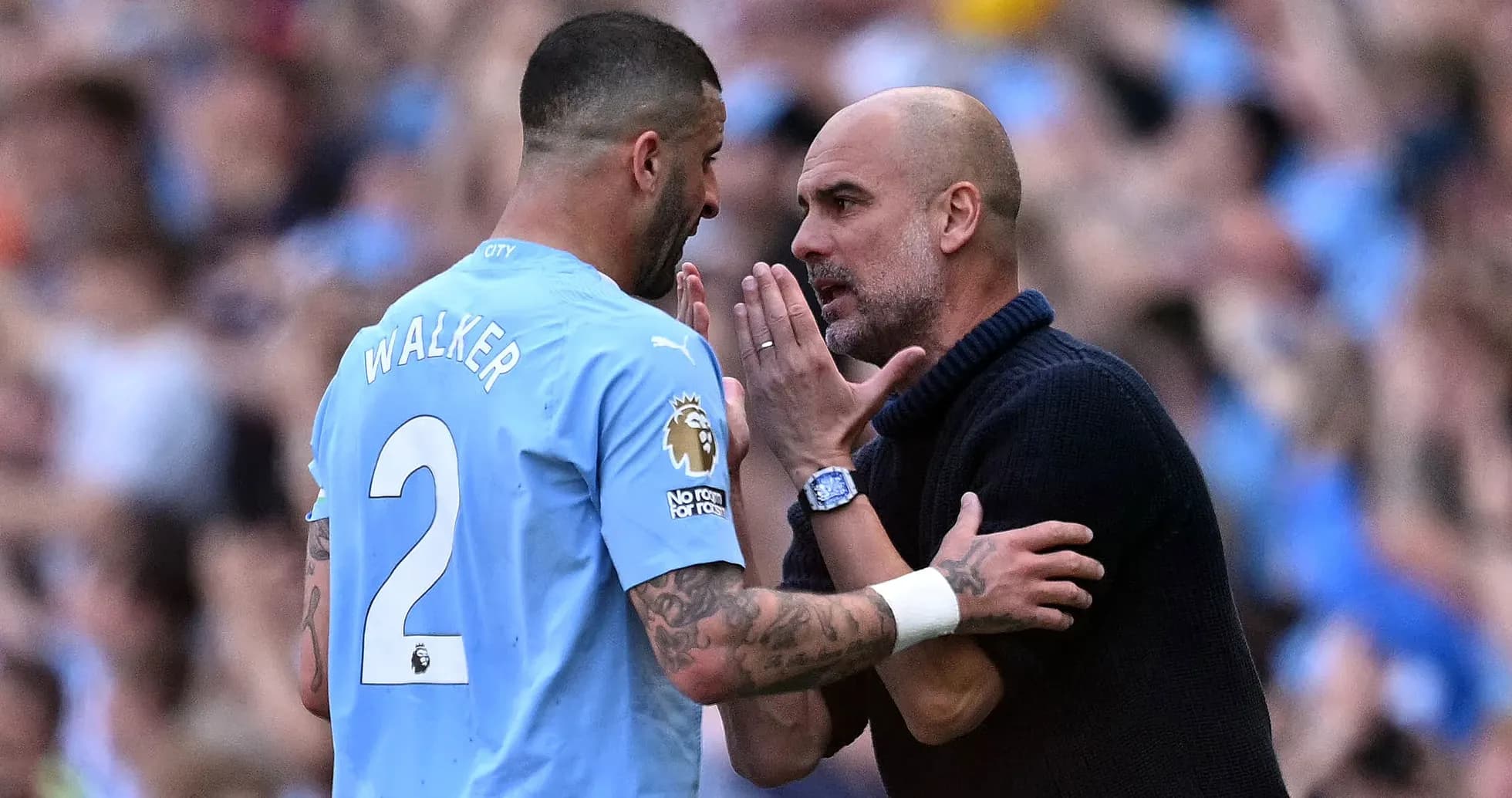
The England defender, a senior captain and one of Pep Guardiola’s most trusted lieutenants over the years, turned his frustration directly on his manager.
"You keep saying my name, every meeting," Walker raged, voice raised and face tight with anger. "Every f***ing meeting it’s my name."
This was not a routine debrief. It came at the lowest point of City’s season, a night that sealed a staggering collapse. That defeat at Anfield dropped the champions into a run of seven games without a win, six of them losses, a freefall that sat in brutal contrast to the historic four straight Premier League titles they had banked the previous campaign.
The pressure had been building. The expectations, too. Guardiola had only just signed a contract extension, a statement that he was staying to drive the next cycle. Instead, he found himself firefighting inside his own dressing room.
Walker felt singled out. In his eyes, the criticism he absorbed in meetings went beyond what a captain should shoulder.
As tempers rose, Guardiola tried to explain. The reason Walker’s name kept coming up, he said, was precisely because he wore the armband, because he was one of the captains. The manager wanted his leaders front and centre.
The answer didn’t soothe anything.
"You didn’t want me to be a captain," Walker shot back, challenging the very premise. He argued he was being dragged into blame for situations that weren’t his alone. "I’ve reacted to someone else, I’ve lost the ball, you somehow bring my name into it."
This wasn’t just a tactical disagreement. It was a senior player accusing his manager of using him as a lightning rod for wider failings on the pitch.
Then the room shifted.
The famously intense, often controlled Guardiola suddenly looked vulnerable in front of his entire first-team squad. The footage shows him fighting back tears as he addressed the players, his voice cracking under the weight of the moment.
"If I am a problem, you have to tell me," he said, visibly emotional. "I won’t stay here for the money or just for the fact of staying. I extended the contract because I want to be with you, I want to fight in that position."
The speech cut through the anger and into something deeper: doubt, loyalty, the question of whether his message still landed with a group that had already climbed every mountain with him.
"I don’t want you to feel like I’m leaving and running away from you," Guardiola continued. "I don’t want to have the feeling that the pieces fall down. And I feel 'No, I want to help you.'
He turned to the leaders in the room, the captains who act as the bridge between manager and squad.
"But if you feel, captains first and then the other ones, that there is a problem? Tell me. It’s not going to change the love I have for all of you. Not one second. But I want to fight. That’s all. I’m sorry."
No tactics board. No clips. Just a manager who had dominated English football reduced, for a moment, to a man asking if he was still the right voice for this team.
For a club that has built an era on control, the scene is jarring. The champions of everything, suddenly wrestling with the most basic question in elite sport: when the results turn, do the bonds hold?