Luis Binks' Unique Journey to Scotland's National Team
Luis Binks is used to unusual surroundings, but even by his standards this is quite a contrast. One minute he’s under the palm trees of La Manga, fighting for a first Scotland cap. Not so long ago, he was the only other guest in a deserted Ritz-Carlton with Thierry Henry.
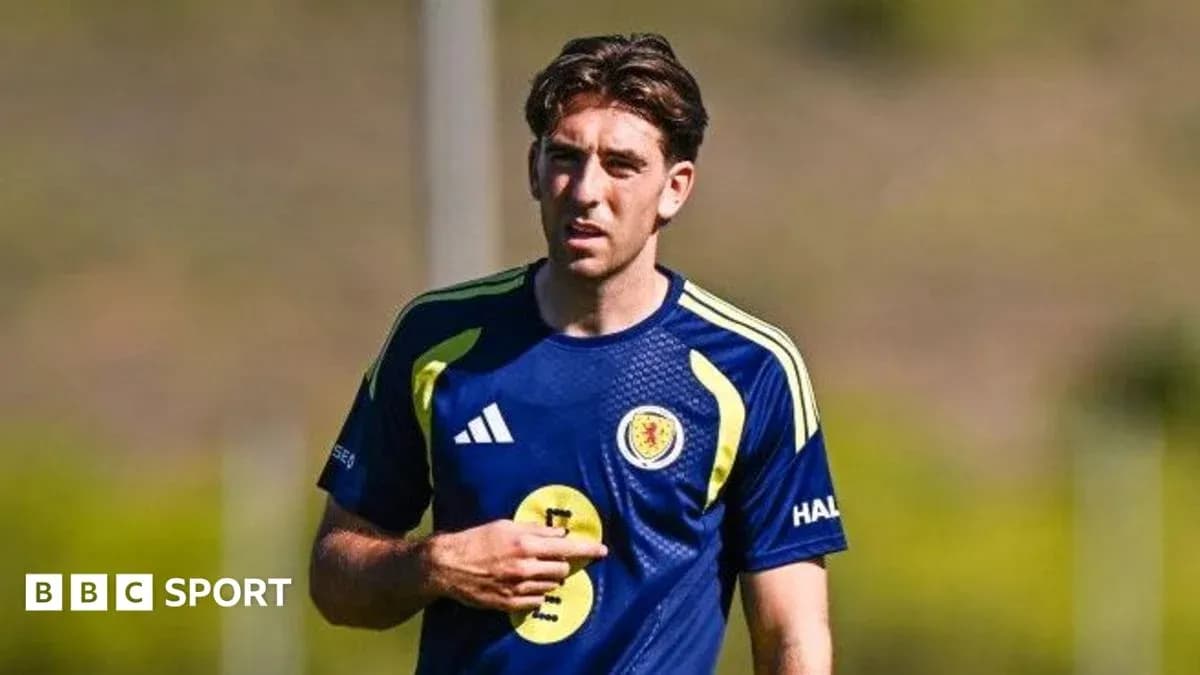
At 25, the Brondby captain has arrived late to the Scotland party. Sebastien Pocognoli’s first squad has ripped up the old order at centre-back, with Grant Hanley and John Souttar moved aside and eight uncapped players drafted in. A vacancy has opened in the heart of the defence. Binks is sprinting towards it.
His route here has never been straightforward. A Tottenham academy product with a grandparent from Dunbar, he walked away from the comfort of that world at 18. He wanted real football, not the polished bubble of youth-team fixtures.
“I'd been at Tottenham since I was very young, but I just wanted to go and play first football,” he recalls. That urge dragged him across the Atlantic to Montreal Impact in early 2020, just as the world was about to shut down.
He signed in February. By March, Covid had arrived and everything stopped.
Binks hadn’t even found a flat. One hotel kicked him out as restrictions tightened. The club suggested another place, near the airport. Isolated. Lifeless. “It felt like prison, almost,” he says.
At the same time, his manager, Henry, was holed up alone at the Ritz-Carlton. A five-star ghost ship. One hundred and twenty-nine rooms. Two residents.
“He was staying at the Ritz on his own,” Binks explains. “They wanted to move me to a hotel by the airport and I didn't want to go because there was nothing there. One day I get a call from him, saying: ‘Do you want to move to where I am? You can go on the other floor’.”
So the teenager and the World Cup winner became unlikely neighbours.
Binks would head out on solo runs through a silent city. Henry would be in reception when he left. He’d still be there when the defender came back, sitting alone in the lobby, a global icon suddenly with nothing but time.
“I'd go for runs in the morning and he'd be sat in the reception on his own. When I'd get back from the run, he'd still be sat there. I'd spend a few hours with him, just trying to pick his brains.”
The scenes feel almost fictional. One night, the phone rang in Binks’ room while he was playing PlayStation. Henry’s voice on the other end: fancy a pizza?
Minutes later, they were in a car, driving around a locked-down Montreal, two generations of the game hunting for an open slice joint. “There's me and him driving around Montreal looking for a pizza. It's a bit surreal, but that was how it was.”
He tells it now with an easy shrug, as if it was normal. It wasn’t. This was Thierry Henry. The aura never really went away.
“I'm saying it now like it's just anybody, but there's a big aura around him. I was nervous at the time, but I asked him who's the best defender he's played with and against and why and it was a good time.”
The conversations stuck. Some details have blurred with time, but one name remains crystal clear.
“I always remember him talking about Sol Campbell and just saying what made him great and how I could improve as a defender,” Binks says.
Those days in an empty luxury hotel did more than fill the silence of lockdown. They shaped a young centre-half who now stands on the edge of international football, trying to bring those lessons to a Scotland back line in transition.
“I owe a lot to him because he gave me my first chance in senior football,” Binks says of Henry.
From Montreal’s deserted streets to La Manga’s training pitches, the journey has been anything but ordinary. The next chapter could begin against Slovenia.