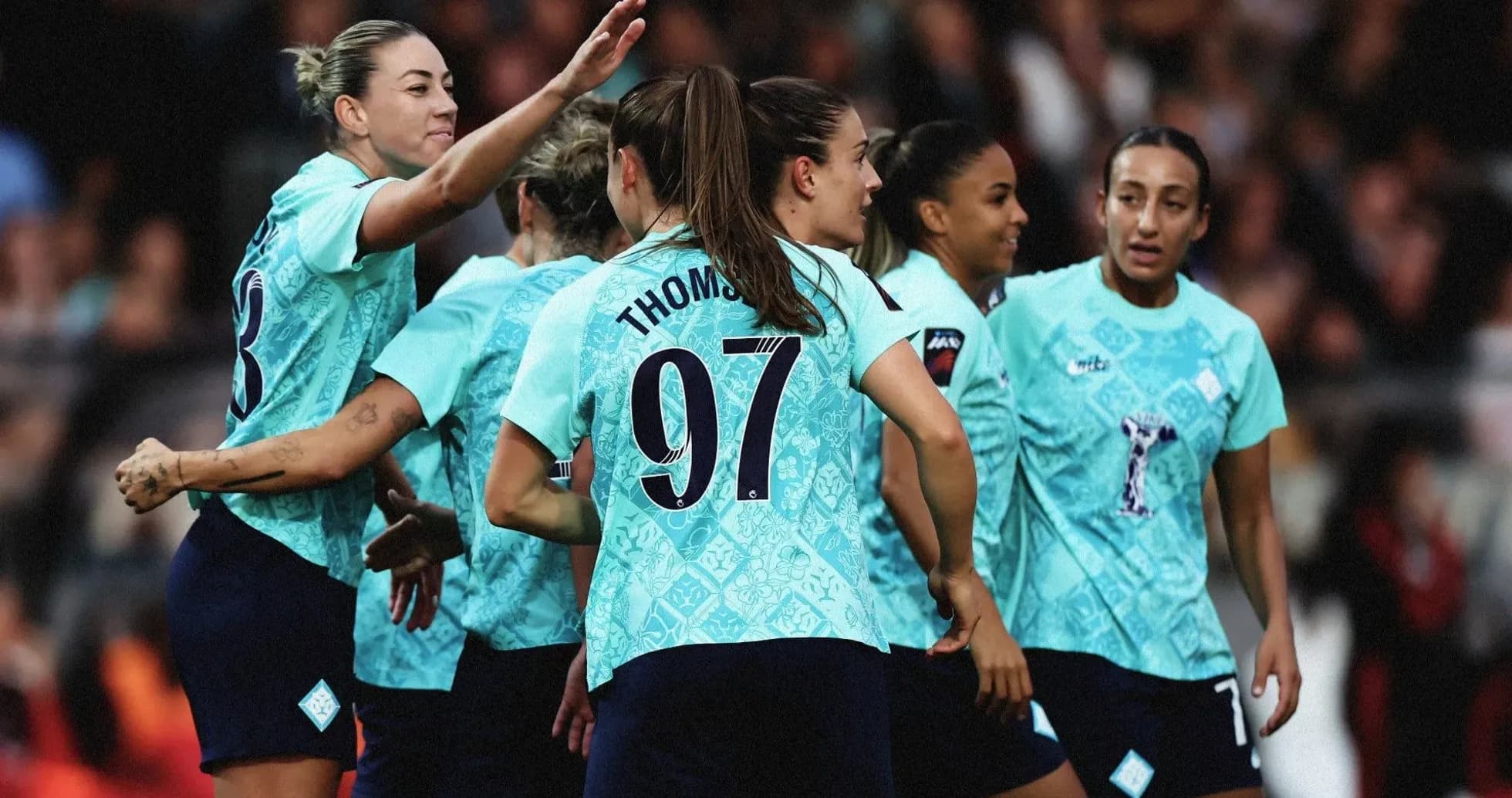
London City Impresses with Team Cohesion in WSL Opener
If anyone in London was still wondering what all the noise around London City was about, Friday night answered it. A record-breaking WSL sell-out in the capital turned up expecting a star showcase. They left talking about a ruthless, cohesive team.
Many had come to see Alexia Putellas’ first competitive minutes for the club, to watch a Ballon d’Or winner in their own backyard, or to catch Mary Earps in action. Earps stayed on the bench. Putellas was tidy, controlled, quietly effective. But this was not a one-woman production. It was a statement from a collective that looked far more settled, far more dangerous, than a “much-changed” side has any right to be on opening night.
Elene Lete almost wrote her own headline, too. Drafted in with Earps watching on, she stood firm until the 100th minute, when Simi Awujo finally denied her the honour of the WSL’s first clean sheet of the season. It was the only real smudge on an otherwise immaculate team display.
Everywhere you looked, someone in sky blue was stepping up.
Grace Geyoro, after a muted first campaign following that world-record transfer, played as if she’d decided enough was enough. She snapped into tackles, drove through midfield, linked play. This looked like the player London City thought they were signing.
Alongside her, Alanna Kennedy justified her selection in a star-studded midfield trio with Geyoro and Putellas. She brought bite and clarity, and her aggressive press forced Julia Zigiotti Olme into an early own goal that set the tone. London City weren’t just slick. They were suffocating.
Out wide, Rosa Kafaji tormented her markers all evening, desperate to reassert herself after that difficult spell at Arsenal. On the opposite flank, Delphine Cascarino tore United apart. Sky Sports named her Player of the Match, and it was no mystery why – she drove at defenders relentlessly, stretching the game and never letting United breathe. On the left, Lucia Corrales inflicted similar damage, pinning United back and ensuring the visitors rarely got out cleanly.
And that really was only the top layer.
At centre-back, Isa Kardinaal shone alongside Leon, who dictated from deep with her passing range and calm distribution. Together they gave London City a platform that looked unshakeable for most of the night.
Ahead of them, Danielle van de Donk floated between the lines in a false nine role and gave the whole attack a different rhythm. She pressed, dropped in, dragged defenders away. Her clever flick to make it 2-0 summed up her performance: sharp, inventive, utterly in tune with those around her.
This is what Eder Maestre has been promising since he arrived at the winter break last season. It just took a full pre-season to show it. The players have been open about the disruption of changing ideas mid-campaign. Kennedy admitted as much to GOAL in pre-season, talking about the difficulty of adapting on the fly and how crucial it would be to finally have “real time” together.
On Friday, that time showed. London City pressed Manchester United high and hard, hunting in packs. They snapped into duels, then flowed through the thirds with the ball, rotations and off-the-ball runs constantly pulling United apart. Every coordinated press, every passing triangle, felt like a nod to the work Maestre and his staff have put in over the summer – and to the players’ total buy-in.
Across the technical area, the contrast was stark.
United’s display underlined how early it still is for new head coach Marcela Olid. She’s only been in the job a month, and it showed. This wasn’t a side stripped bare by departures or full of strangers. There was just one new signing in the starting XI, yet the lack of understanding was glaring.
Part of that comes down to the tactical shift Olid is demanding. She has spoken openly about how tough her ideas have been for the full-backs in particular to absorb, calling the first weeks a “challenge” because her style is “different” to what they were used to. On this evidence, that learning curve is steep.
At times it was genuinely hard to decipher whether United were trying to play with a back three or a back four. On the left, Andrea Medina – the lone new starter – and Anna Sandberg looked like strangers still working out basic distances and angles. On the right, Jayde Riviere, usually a force of nature bombing forward, stayed unusually restrained, rarely breaking lines or offering her usual outlet.
The tactical confusion might have been forgivable. The sloppiness was not. United coughed up possession with heavy touches and poor choices all over the pitch, inviting wave after wave of pressure. Phallon Tullis-Joyce had to bail them out repeatedly, making sure the scoreline stayed respectable.
Olid didn’t sugar-coat it when she spoke to Sky Sports. She said her players were “nervous, without confidence.” Then came the line that cut through everything: “That is not us.”
But right now, it is. At least for the moment.
Look at this game in isolation and you’d be tempted to say London City, not United, are the side ready to crash the Champions League party and harass Manchester City, Chelsea and Arsenal at the top. They looked like a team already in gear, not one still fumbling for the keys.
Van de Donk, speaking to Sky Sports afterwards, made it sound even more ominous for the rest of the league. “We don’t even know our best level yet,” she said. “We’ve not really played together that much. Hopefully there’s still more to come. We have loads to improve.”
If this is them still figuring it out, the ceiling is high.
United, by contrast, face a very different kind of season. The club believes that Olid’s ideas will pay off in time, that short-term pain will lead to a more modern, aggressive version of the Red Devils. On nights like this, though, that feels a long way off.
London City look ready now. United are still drawing the blueprint.