Lia Walti's Journey: From Juventus Frustration to Brighton's Ambitious Future
Lia Walti did not leave Juventus for a bigger pay day or a grand farewell tour. She left because, in her words, she no longer felt valued as a footballer.
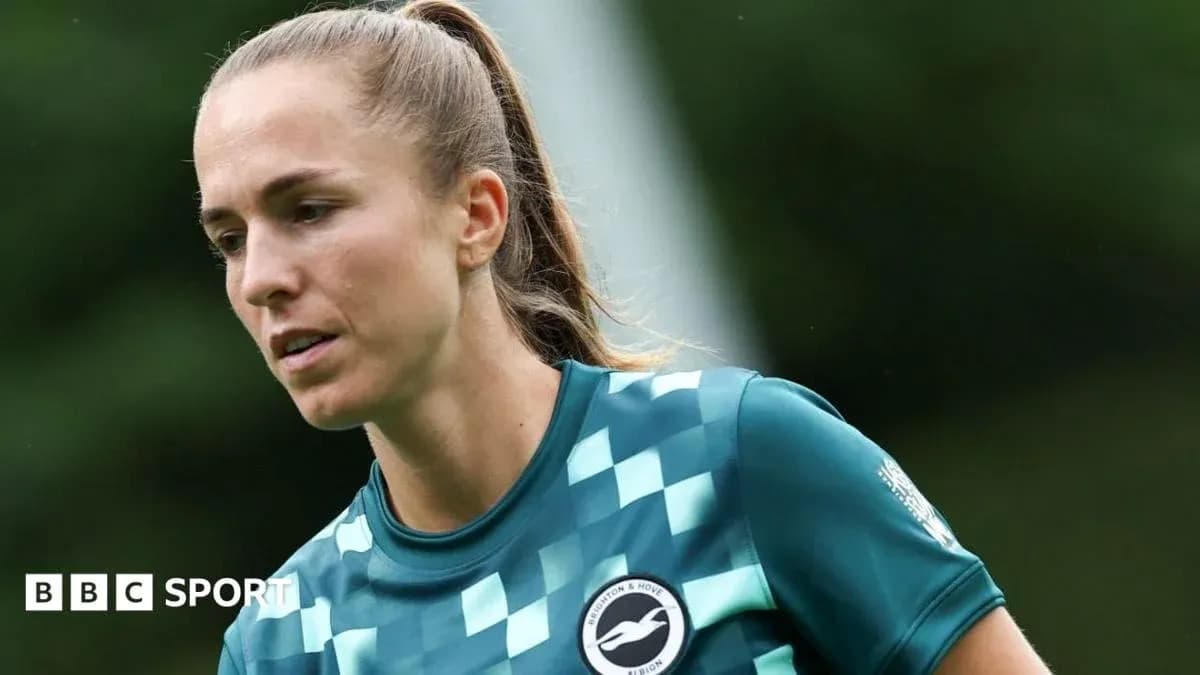
The Switzerland captain, a cornerstone of Arsenal’s rise in the modern era of the women’s game, has come back to the Women’s Super League with Brighton after a single, jarring season in Italy. The contrast, she says, was “extreme”.
From Arsenal’s peak to a harsh reality check
Walti spent seven years at Arsenal, making 183 appearances and helping the club to four major trophies, including WSL and Champions League titles. She lived through the surge of interest in women’s football in England – the packed grounds, the TV cameras, the sense that the game finally belonged on the main stage.
That made last summer’s move to Juventus feel like a fresh adventure. A new league, a historic club, a different culture. On paper, it looked perfect.
On the grass, and in the stands, it felt very different.
“It’s such a huge difference,” she told BBC Sport, careful not to turn her criticism into a broadside at Serie A Femminile. She stressed she was not out to attack Italian football, but she did not sugar-coat the gap.
For Walti, the WSL’s standards – from facilities to fan engagement – are “not comparable with any other league”. Once she stepped away, she realised that what she had in England was not the global norm. It was the exception.
Empty stands, missing culture
What hit hardest was the absence of football culture around the women’s game in Italy.
“I missed the feeling of being valued as a footballer, feeling like we’re getting the full support we needed,” she said.
At Juventus and across the league, she found good players but little atmosphere. “We had absolutely no fan culture – not just at Juve – in general in Italy,” she explained. Matches were played in front of sparse crowds, often in basic surroundings.
“In Italy, it was just [empty]. Every game felt a bit like that.”
For someone who had lived through the WSL’s boom – small grounds sold out, big stadiums filling up, noise and colour wrapped around every fixture – it was a shock. She had been part of that growth in England. She had felt the energy. Now, stripped of it, she realised how much it mattered.
“When you have been part of that growth in England, with the fan cultures, the full stadiums – even stadiums that are really small, they are exciting to play in,” she said. In Italy, she felt that excitement drain away.
A generation that changed England – and wants more
Walti is not just a club stalwart. She has captained Switzerland, passed 100 caps and led her country at Euro 2025 on home soil. Her career has run in parallel with the explosion of women’s football in England, and she knows what it looks like when a country decides to take the sport seriously.
She believes others can follow the WSL’s path, but only if they are bold.
“I think you have to bring the game to the people. You kind of have to force people to watch it. I felt that that’s how it maybe started in England,” she said.
Broadcast coverage is a key battleground. In Italy and many other countries, she sees a product undermined before it even reaches the viewer.
“They have bad coverage. It’s not shown [on TV] at all, or if it’s shown, from where they film it, is really poor,” she said. Angles, camera quality, the way the game is framed – all of it matters.
“It affects the way you watch a game. You don’t really see the speed, the tactics or anything and you don’t enjoy watching the game.”
Contrast that with the WSL, where big stadiums and proper production values help show the sport at full pace. “In England, in the big stadiums, you can have great camera angles. I think people enjoy watching it more.”
Bad pitches, lost talent
Coverage is only one piece. Walti talks about “so many different things” missing in women’s football globally, but she starts with the basics: the pitch.
“The biggest lacking starts with pitch quality. In a lot of countries, you play either on the worst artificial pitches or the worst natural grasses,” she said.
On surfaces like that, even elite teams would struggle. “Even if a Premier League team were to play there, it would probably look rubbish because it’s just not possible to play nice football on it.”
She sees the same issues in Switzerland. Poor pitches, poor visibility, limited investment. The result is brutal: talent disappears.
“A lot of talent in women’s football gets lost because they are in bad environments where nobody sees them or they don’t have the chance to reach their potential,” she said.
Walti is blunt about the solution. You have to spend before you earn.
“You have to do the first step – invest money for all those things before you get something back. I think a lot of countries don’t have that money or patience.”
From frustration in Italy to belief in Brighton
Her frustration in Italy did not come from apathy on her part. She tried to use her voice. She pushed for change. The response left her disillusioned.
“I try to make an impact and I think that was really hard in Italy because I felt like when we spoke up, nothing happened, and that was frustrating,” she said.
She remembers where England started. Low wages, semi-professional structures, players juggling jobs. “We used to not have good conditions. It wasn’t professional. Our first salaries were not enough to live from,” she said.
Now she looks around the WSL and sees the payoff: improved standards, serious investment, a league that others study and try to copy. It makes the gaps elsewhere harder to accept.
“Now, seeing the growth in England and being with players who try to push the game in their own countries, it makes you feel frustrated to still see the reality,” she admitted. “You forget sometimes, when you’re in your own bubble, that this is not the norm. You’re just one of the lucky ones who can experience it.”
When the time came to decide her future, with a year left on her Juventus deal, that perspective weighed heavily. She wanted an environment that matched her ambitions and her expectations. Brighton stood out.
Brighton’s big bet on the women’s game
Brighton are not yet a powerhouse in the WSL, but they are trying to build something serious. Walti knew that from watching them at close quarters in England and from the noise around their plans.
In 2021, the women’s team moved into upgraded facilities at the American Express Elite Football Performance Centre, part of an £8.5m investment. In April this year, the club revealed designs for what would be Europe’s first purpose-built women’s football stadium, a £75-80m project that sent a clear message about intent.
On the pitch, Dario Vidosic’s side reached the Women’s FA Cup final for the first time in May and have been aggressive in the transfer market. The target is ambitious: break into the WSL’s top three.
For Walti, all of that mattered.
“After that experience in Italy, I knew a bit more about what I probably wanted, or didn’t want,” she said. She already “had a pretty big trust in Brighton” before talks even began, having seen the club’s work from afar and heard from other players.
“I’ve heard from other players about the club investing a lot and I only heard really positive things. There is no better feedback than from other players.”
Once she arrived, the reality matched the reputation.
“Once I started to have the first moments with the club, it proved to me that this is the right place – that cares about women’s football, that invests in women’s football, and who has the right people in place.”
For Brighton, signing a player who has lived the full spectrum of the women’s game – from bare-bones conditions to elite professionalism – is a statement. For Walti, it is a return to a league that mirrors her standards and her demands.
The question now is whether the rest of Europe is willing, or able, to follow.