Leeds United's Transformation Under Daniel Farke
Anton Stach didn’t celebrate so much as explode. He tore away towards the away end, arms wide, swallowed by a wall of noise as his late, swerving free-kick ripped three points out of a game that had looked destined to drift away from Leeds United at the City Ground.
The contrast with their last visit to Nottingham could not have been sharper.
Back in November 2025, Leeds had also struck first. Lukas Nmecha scored early, only for Forest to hit back with three of their own, handing Sean Dyche his first win as Forest manager and sending Leeds home with the cold fear of relegation gnawing away at them. That night was supposed to light the fuse on Forest’s revival under yet another new boss.
Nine months on, it is Leeds who carry the momentum.
Farke’s side have taken 17 points from their last eight league matches, winning five of them. Only Arsenal, with 18, have done better since the start of April. The numbers tell one story; the mood around Leeds tells an even stronger one.
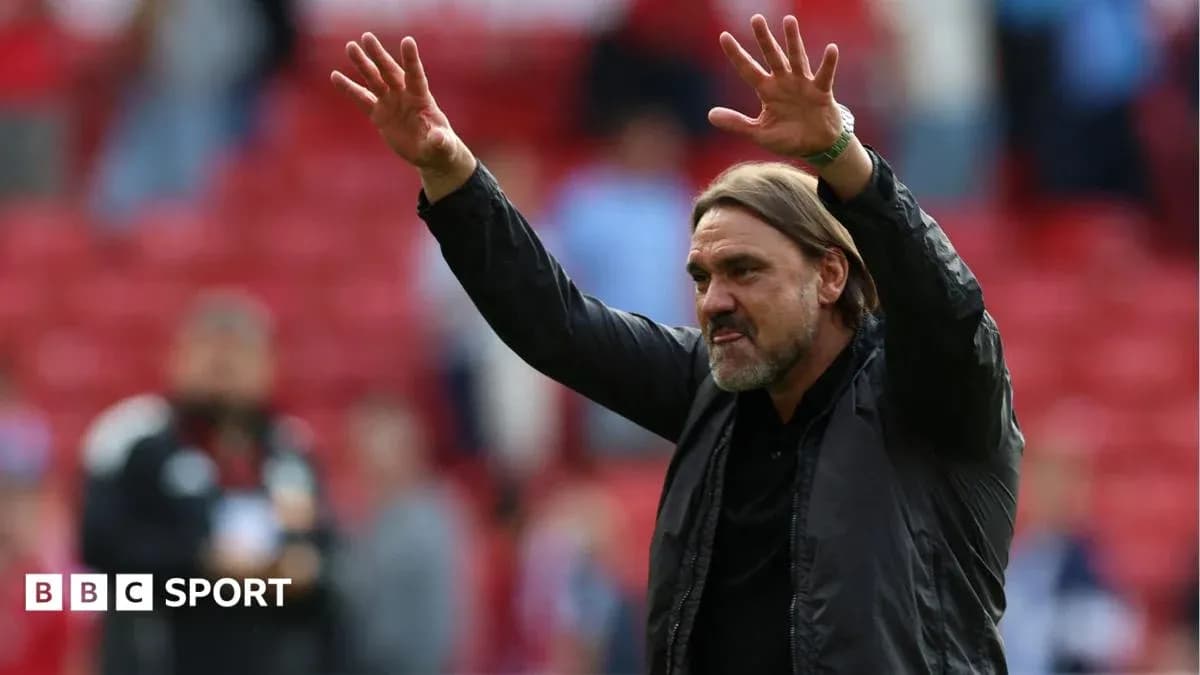
“I expected a difficult game away at Forest,” Daniel Farke told BBC Match of the Day, his voice betraying more satisfaction than surprise. “I’m very happy to come away with a cleansheet and compliments to the players.”
A clean sheet, a late winner, and a performance that looked nothing like a team just hoping to cling on in the Premier League.
From survival to something more
Leeds finished 14th last season, eight points clear of danger. Respectable. Safe. But the journey to that comfort zone was anything but.
They stumbled badly out of the blocks on their return to the top flight: three wins in their first 13 games, eight defeats, and a manager feeling the heat. The turning point came not in a victory, but in a 3-2 defeat away at Manchester City on 29 November. Farke ripped up his 4-3-3 and switched to a 3-5-2, and the team hardened almost overnight. From that moment, they lost only five more league matches all season.
The lesson stuck.
“There were times in the first half of last year where we allowed teams to run over us a bit,” captain Ethan Ampadu told BBC Final Score. “We wanted to get a bit more solid and put our stamp on the game. We want the ball, we want to be attacking and creative.”
This is no longer a group content just to survive. The language has shifted.
“We know our targets and goals,” Ampadu said. “We want to be a Premier League club next season. We want to achieve that target and then get to a better place. Once that can be achieved, we think of everything else.”
Leeds look like a side that has already moved on to that “everything else”.
Cracking the away-day problem
If there was one glaring weakness last season, it came on the road. Leeds only managed two away wins in the entire 2025-26 campaign. That record hung over them as they walked out at the City Ground.
This time, they stood firm. They took the punches, stayed compact, and when the chance arrived late on, Stach punished Forest with ruthless precision.
“Away games in Premier League are always difficult,” Farke said. “Sometimes the second year is more difficult. Last season, we picked up many points with draws. On the road, we want to be competitive and be more effective.”
This was exactly that: competitive, effective, and ultimately decisive.
Backing the manager
None of this felt inevitable at the end of last season. After steering Leeds to safety, Farke publicly questioned whether he should stay, insisting he was “not the right choice” if the club were not prepared to match his ambition in the transfer window.
The board listened. Then they spent.
Around £80m went into reshaping the squad over the summer, and three of those signings walked straight into the starting XI on opening day. They did not look out of place.
James Trafford, signed from Manchester City for £45m – a record fee for a British goalkeeper – produced the kind of sharp, decisive stops that justify such a fee. Tarik Muharemovic, the Bosnia-Herzegovina defender, brought calm at the back and menace at the other end, thundering a header that forced Matz Sels into action from a set-piece. Harry Wilson, arriving on a free after 10 goals and seven assists for Fulham last season, thought he had marked his debut with a goal before the offside flag cut short the celebrations.
“From the very first minute they walked into the building, they have shown their quality,” Ampadu said. “They have shown why they have been brought in to try and help us get to the next level. They’ve shown that hunger and drive to take Leeds to a better place so that has been very good.”
Farke backed up his captain’s verdict.
“I am very happy because they have big boots to fill,” he said. “Trafford is a good player but he hasn’t played that many Premier League games, Tarik too. So they both shined and showed why we agreed to sign them, but the whole group was excellent today. Wilson too was excellent. The vibe and mood is good around the place.”
That “vibe and mood” has Farke in rare company. He is now the third-longest-serving manager in the division, behind only Mikel Arteta at Arsenal and Unai Emery at Aston Villa. Stability, at last, at a club that has often lurched from one extreme to the other.
A platform for something bigger
This win, carved out in a tough away ground and sealed by a moment of individual brilliance from a familiar face, felt like more than three points. It felt like confirmation.
The new signings have landed. The old guard, like Stach, still deliver when it matters. The tactical identity is clear, the belief visible.
Leeds wanted to move from survival mode to something more ambitious under Farke. On the evidence at the City Ground, they have already started to play like a club that expects this season to be their best yet under the German.