Leeds United's Revival: From Relegation Fear to European Aspirations
Elland Road has not felt like this for a long time.
Leeds United sit third in the Premier League, the table still wet paint but the nostalgia very real – a throwback to the days when David O’Leary’s side lived permanently in the top five and Europe felt like a right, not a dream.
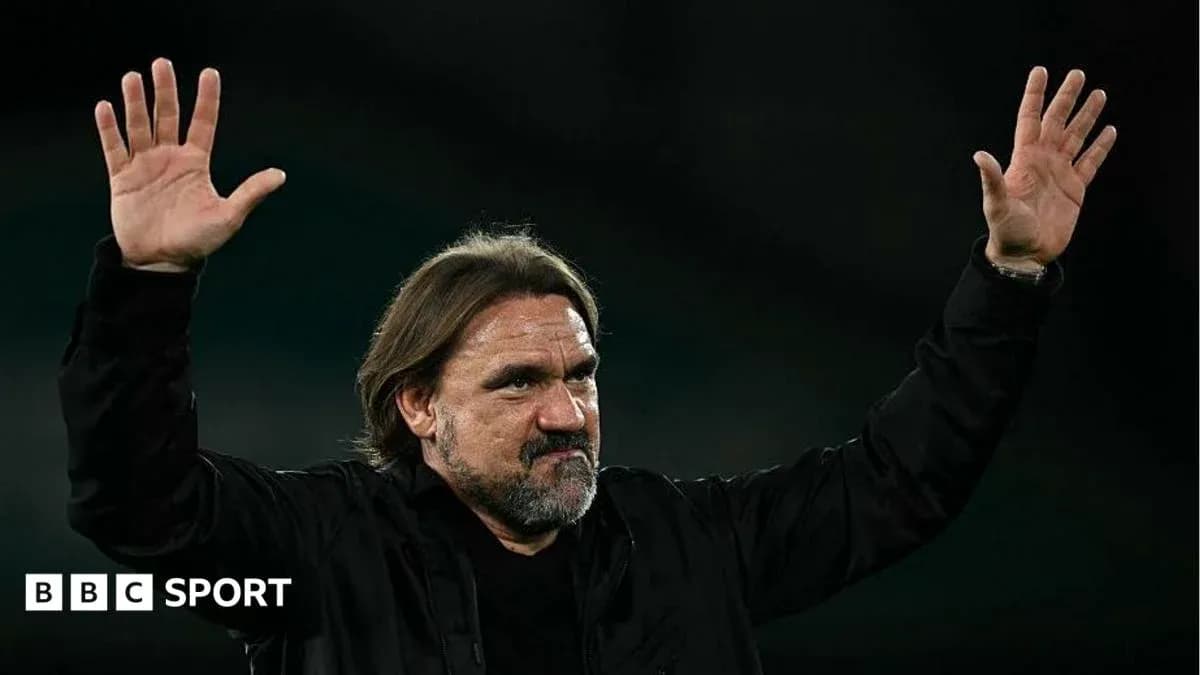
Daniel Farke’s team underlined their early-season surge with a 4-1 dismantling of Newcastle United on Monday night, stretching their unbeaten start to four games. Eight points from 12. Their best opening to a top-flight campaign since 2001-02. It has not come out of nowhere.
This revival began nine months ago with a gamble at the Etihad.
The night everything flipped
On 29 November against Manchester City, Leeds trudged into the dressing room 2-0 down and staring at a routine beating. Farke tore up his back four and rolled out a back three.
The effect was instant. Leeds fought back to 2-2 and pushed City deep into stoppage time before finally being undone. They lost the match, but found their identity.
From the next game – a home win over Chelsea on 3 December – the numbers tell the story. Just five defeats in 29 league matches. Across that span, their points haul would place them fifth in a notional table. That is not a blip. That is a body of work.
The defensive stability is obvious. Among clubs present throughout that period, only Arsenal, City and Nottingham Forest have conceded fewer goals since the switch. But the change has reshaped the whole side, not just the back line.
Building a taller, tougher Leeds
Farke and new sporting director Adam Underwood entered the 2025 summer window with a clear brief: Leeds had to grow up – and grow upwards.
They targeted height and heft for the Premier League grind, players who could “add a special physicality” to a squad that had been one of the smallest in the division. Of the 10 permanent signings, eight – Jaka Bijol, Sebastiaan Bornauw, Dominic Calvert-Lewin, James Justin, Lukas Nmecha, Noah Okafor, Lucas Perri and Anton Stach – all stand over 6ft.
Farke admitted in July 2025 it was no accident. Leeds were stepping into a league where every cross, every set-piece, every aerial duel can decide a season. They needed to be able to stand their ground and head it clear.
This summer, after losing Pascal Struijk to Brighton, the plan continued. In came World Cup defenders Tarik Muharemovic of Bosnia-Herzegovina and Switzerland’s Nico Elvedi to stiffen the back three. Behind them, 6ft 5in James Trafford, signed from Manchester City for an initial £40m, became the most expensive British goalkeeper in history for the second time.
Muharemovic did blot his copybook with the mistake that allowed Bazoumana Toure a late consolation for Newcastle, but that slip sits against an impressive body of work. He has played every league minute so far, a towering presence in front of Trafford.
Further forward, the recruitment looks just as sharp. Harry Wilson, one of last season’s standout Premier League performers, arrived on a free from Fulham and has slotted straight into Farke’s high-energy, front-foot approach.
This is not a scattergun rebuild. It is a profile-driven squad being assembled piece by piece.
From relegation fear to European whispers
The transformation feels even more striking when set against where Leeds were not so long ago.
They lost eight of their first 13 league matches in 2025-26 and slumped to 18th. Relegation loomed. Reports swirled that Farke, fresh from edging Burnley to the Championship title, was already fighting for his job.
The formation shift and targeted recruitment turned that anxiety into momentum. The defence tightened. Confidence returned. Results followed. Leeds climbed away from danger and have not looked back.
Now the question is no longer whether they can stay up. It is whether they can stay up there – in the slipstream of the elite, chasing a first European campaign in 24 years.
Calvert-Lewin, finally unleashed
No player embodies the new Leeds more than Dominic Calvert-Lewin.
Used as a lone striker in a 4-3-3, he had laboured, isolated and short of service. With the move to a back three and a front two, he suddenly has company. Space. Crosses. Chaos around him.
Since last December, only Erling Haaland, Ollie Watkins and Joao Pedro have scored more Premier League goals than his 14. It is the kind of form that once made him a fixture in England squads.
Farke toggles between 3-4-3 and 3-5-2, but the principle is the same: Calvert-Lewin with bodies around him. Often it is Nmecha. Often it is Okafor, who has seven goals and an assist in his last 11 league games. Either way, the No 9 is no longer wrestling centre-backs alone.
“I enjoy having bodies around me,” Calvert-Lewin has said. You can see it. He looks like a centre-forward again, not a target man on an island.
A record in sight, and England watching
Crystal Palace visit Elland Road on Saturday, and there is history on the line.
If Calvert-Lewin scores, he will become the first Leeds player to find the net in six consecutive home league games since Arthur Hydes in 1932. Ninety-three years of club history sit between those names.
He missed out on England’s World Cup squad, but with three goals in all competitions already this season, his timing could be perfect. Thomas Tuchel names his squad for a Nations League quadruple-header on Friday.
Leeds are rising. Their centre-forward is roaring again. The table is only just taking shape, but the question now feels unavoidable: is this the start of another Leeds United European story?