LAFC II vs Ventura County: A Thrilling 3-2 Showdown
Under the lights of Titan Stadium, Los Angeles FC II and Ventura County produced the kind of wild, momentum-swinging 3–2 that feels less like a group-stage skirmish and more like a playoff dress rehearsal. Following this result in MLS Next Pro’s 2026 season, both sides walk away with sharpened identities: LAFC II as chaotic comeback artists at home, Ventura County as a ruthless away machine that still hasn’t solved its late-game frailty.
I. The Big Picture – Two Contenders, One Fractured Script
Heading into this game, the standings already framed this as a high-stakes clash. Los Angeles FC II sat 2nd in the Pacific Division and 5th in the broader Eastern Conference table, with 19 points from 11 matches. Their overall goal difference was officially listed at -1, even as their season statistics painted a more expansive attacking picture: 22 goals scored in total against 24 conceded, an overall average of 2.0 goals for and 2.2 against per match. At home, they had been efficient and ruthless: 4 wins from 5, 10 goals for and only 6 against, averaging 2.0 scored and 1.2 conceded.
Ventura County arrived as one of the division’s most dangerous travelers. They were 3rd in the Pacific Division and 6th in the Eastern Conference, also on 19 points but from 12 matches, with a goal difference of 2. Their season totals showed 24 goals scored and 20 conceded overall, with a balanced attacking profile: 10 at home, 14 on their travels. Away, they had been outstanding: 5 wins from 7, 11 goals scored and 10 conceded, averaging 2.0 goals for and 1.4 against. This was a side built to hurt opponents on their travels, and for 45 minutes they did exactly that.
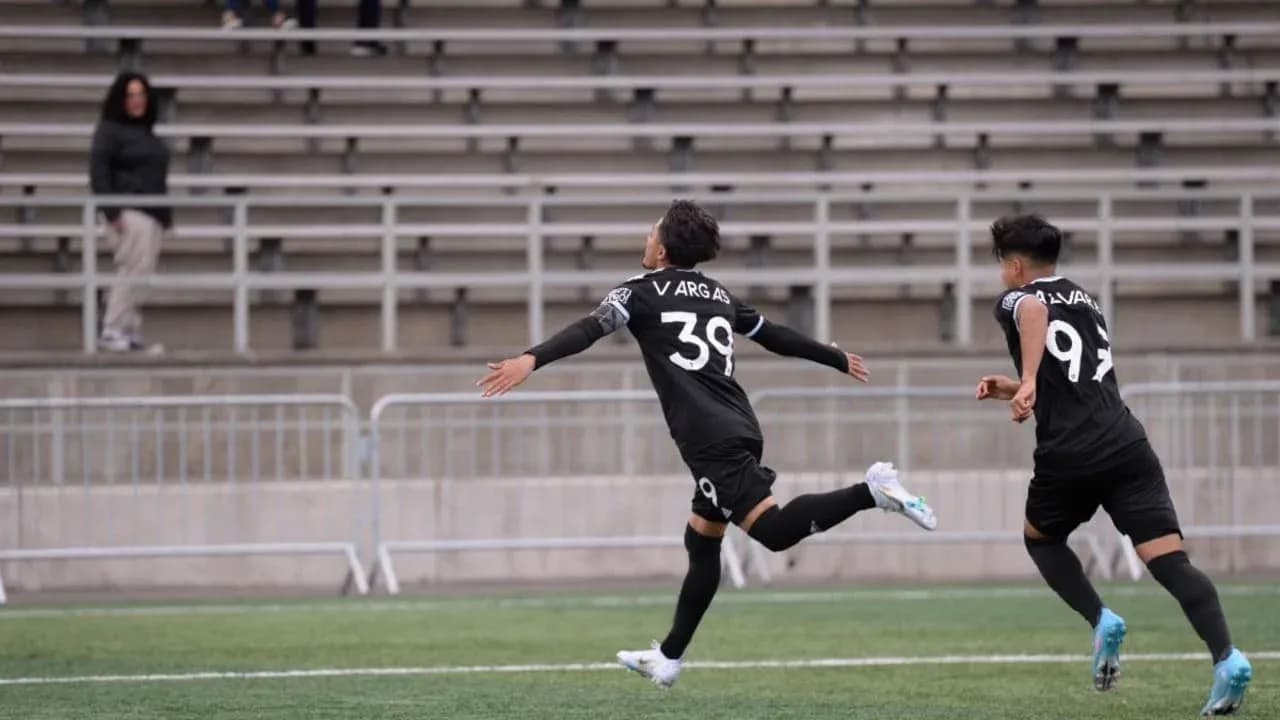
Ventura County struck first and carried a 1–0 lead into half-time. But the second half belonged to LAFC II, who turned a deficit into a 3–2 victory, reinforcing their status as one of the league’s most volatile but dangerous home teams.
II. Tactical Voids and Disciplinary Undercurrents
With no official list of absentees, both coaches leaned heavily into their available depth. Los Angeles FC II’s starting XI blended youth and versatility: E. Scally and L. Goodman anchored the back line, while S. Kaplan and S. Nava offered energy and ball progression in the middle third. Ahead of them, the attacking trident of M. Evans, T. Mihalic, and M. Aiyenero formed the cutting edge of a side that has failed to score in only one match this season in total.
The bench options were equally telling. S. Liu, G. Zambrano, and J. Santiago provided fresh legs and direct running; B. Moyado and C. Diaz offered defensive and transitional cover; E. Rodriguez and G. Whitchurch added width and creativity. Every substitution vector – [IN] replaced [OUT] – was less about damage limitation and more about escalating the tempo.
Ventura County’s lineup, by contrast, was built around structure. The Vanney brothers, M. Vanney and D. Vanney, formed the spine alongside E. Martinez and Pepe, while G. Arnold and V. Garcia offered vertical thrust from midfield. Up front, E. Preston and J. Placias operated as dual threats, supported by R. Dalgado’s industrious work between the lines. On the bench, A. Medina and I. Luna provided attacking insurance, while C. Gozdieski and A. Villatoro could reshape the midfield if the game state demanded more control.
Disciplinary trends framed the risk profiles. LAFC II’s yellow-card distribution this season shows a clear second-half spike: 33.33% of their cautions arrive between 46–60 minutes, with another 14.29% in the 76–90 window. They have also seen a red card in the 46–60’ range, underlining how their high-intensity approach after the break can tip into recklessness. Ventura County’s yellows are even more back-loaded: 29.41% between 46–60’, 29.41% between 61–75’, and a late-game surge of 35.29% in the final quarter-hour. This match followed that pattern, with both sides walking the disciplinary tightrope as the tempo rose and the game opened up.
III. Key Matchups – Hunter vs Shield, Engine Room vs Enforcer
Without individual scoring charts, the “Hunter vs Shield” duel in this fixture was collective rather than personal. LAFC II’s home attack, averaging 2.0 goals per match, was pitted against Ventura County’s away defense, which had been conceding 1.4 per outing on their travels. Over 90 minutes, LAFC II blew through that away average, hitting three and exposing Ventura’s vulnerability when forced to defend deeper and longer than they prefer.
On the flip side, Ventura County’s away attack – also averaging 2.0 goals per game – met an LAFC II home defense that had previously been relatively secure, conceding 1.2 per match. Ventura still hit their away attacking benchmark with 2 goals, underlining their efficiency on the break and in transitional moments. The scoreline became a pure expression of both teams’ season-long statistical DNA: Ventura almost always find a way to score; LAFC II almost always find a way to respond, especially at Titan Stadium.
The “Engine Room” battle was fought in the middle third. For LAFC II, S. Kaplan and S. Nava were tasked with balancing a team that, overall, concedes 2.2 goals per game in total. Their job was to protect a back line that has yet to keep a single clean sheet this season, home or away, and to feed the front line quickly once possession was won. For Ventura County, G. Arnold and V. Garcia acted as the enforcers, shielding a defense that is more solid than spectacular. With 4 clean sheets in total and a total goals-against average of 1.7, Ventura’s structure depends on the midfield screen staying compact; when that line was broken in the second half, LAFC II’s attackers were ruthless.
IV. Statistical Prognosis – Chaos as a Feature, Not a Bug
From an analytical standpoint, this 3–2 feels entirely consistent with the season-long numbers. LAFC II, with 22 goals for and 24 against in total, are a team built for high xG exchanges rather than control. Their biggest home win of 3–1 and their heaviest away loss of 4–1 underline the volatility. Ventura County’s profile – 24 scored, 20 conceded in total, with a perfect 100.00% penalty conversion from their single spot-kick – suggests a side that usually maximizes its chances and rarely leaves a match without scoring.
Following this result, any xG model would likely frame future meetings between these two as high-event, high-scoring affairs. LAFC II’s inability to keep clean sheets, combined with Ventura’s consistent away threat, almost guarantees both teams to score scenarios. But Titan Stadium has become a kind of amplifier for LAFC II’s strengths: on their travels, Ventura County’s 2.0 goals-for average is impressive; at this venue, it still was not enough.
In narrative terms, this was a match where structure met chaos and chaos won. LAFC II leaned into their attacking volatility, trusted their depth, and turned a half-time deficit into a statement win. Ventura County, for all their away resilience, were dragged into a game state that exposed the thin margin between their controlled aggression and late-game instability. If this is a preview of a potential 1/8-final playoff collision, the lesson is clear: against LAFC II, no lead is safe, and no defensive plan survives the second half at Titan Stadium.