Kendry Páez's Journey: From Prodigy to Redemption
Kendry Páez finally pulled on a Chelsea shirt at the weekend. Not under the lights at Stamford Bridge. Not in the Premier League.
For Cobham Next Gen, away at Arsenal, in front of a scattering of academy regulars.
Three years after Chelsea agreed a £17.27m deal to prise him from Independiente del Valle, the Ecuadorian playmaker came off the bench in the 12th minute and began what now feels like a rescue mission rather than a coronation.
He is 19. He was supposed to be here as a prodigy. He arrives instead as a question.
From record-breaker to reality check
Páez’s story was meant to be straightforward: wonderkid in Ecuador, fast-tracked star in Europe, another jewel in Chelsea’s youth-heavy rebuild.
He smashed records early. Youngest debutant and goalscorer in Ecuador’s top flight at 15. Copa Libertadores football that same season. Then the international stage.
At 16 years and 131 days, he became the second-youngest South American to play in a World Cup qualifier, behind Diego Maradona. A month later he was the youngest South American ever to score in one, netting in a 2-1 win away to Bolivia.
By the time Chelsea struck their deal in 2023, he already had 18 caps and two goals for Ecuador. The club looked at that profile and saw the future.
They brought him into the building early, letting him train with the first team before he was even eligible to play. They went beyond football too, arranging security for Páez, his family and the family of Moisés Caicedo when violence erupted in Ecuador in early 2024.
This was a club investing in a life, not just a left foot.
Then came the bumps.
Páez was filmed in a New York strip club while on international duty. On the pitch, his first European loan at Strasbourg started brightly – Young Player of the Month in Ligue 1 in September – before the glow faded.
“We expect more, clearly,” then-manager Liam Rosenior said later that season. “I’m tired of using the excuse of the player’s youth.”
One goal in 21 appearances told its own story. The loan was cut short despite the shared ownership between Strasbourg and Chelsea.
River Plate followed, a two-year loan to one of South America’s giants. A fresh start, a familiar continent, huge expectations.
Again, the pattern repeated. One goal in 14 games, just 461 minutes on the pitch, and a sense that both sides were frustrated. His display in the Superclásico defeat to Boca Juniors at the Monumental in April drew criticism in Argentina, where doubts about his attitude surfaced.
Shortly afterwards, River president Stefano Di Carlo named Páez among 15 players training away from the first team. Some in Buenos Aires felt he deserved more chances. Others felt the club had already seen enough.
The loan ended by mutual consent. The golden boy of Ecuador was back at square one.
“He’s like a son to us”
Back home, concern has turned into something closer to anxiety.
Michel Deller, owner of Independiente del Valle, spoke with the tenderness of someone who watched Páez grow up.
“He’s like a son to us. We care about him deeply,” Deller told Hincha Amarillo. “He’s a good kid who’s had a tough time and has made decisions that have complicated his life.
“We are always hopeful he’ll show his exceptional talent once again but right now, it’s up to him to decide what to do with his life.”
That line hangs heavy over everything: it’s up to him.
Chelsea and those around Páez do not dismiss the concerns. They just argue they’ve been blown out of proportion. This is a teenager who has already played more than 100 senior matches, including 70 for Independiente, and has 27 caps and a World Cup on his CV.
To them, he’s a 19-year-old who needs time and structure, not a cautionary tale.
Alonso’s verdict and a new starting point
Structure now looks like Cobham and the academy.
New head coach Xabi Alonso did not sugar-coat his view: Páez is “not in my plans”. Chelsea list him as an academy player on their website. A club that once fast-tracked him now parks him in the Under-21s.
The loan market offered an escape route. Chelsea tried to find him a move within English football, but FIFA rules blocked any overseas switch – the club had already used all six of their available international loan slots.
So here he is, back at Cobham, in a newly branded side – Cobham Next Gen – and starting again from the bottom rung of the ladder.
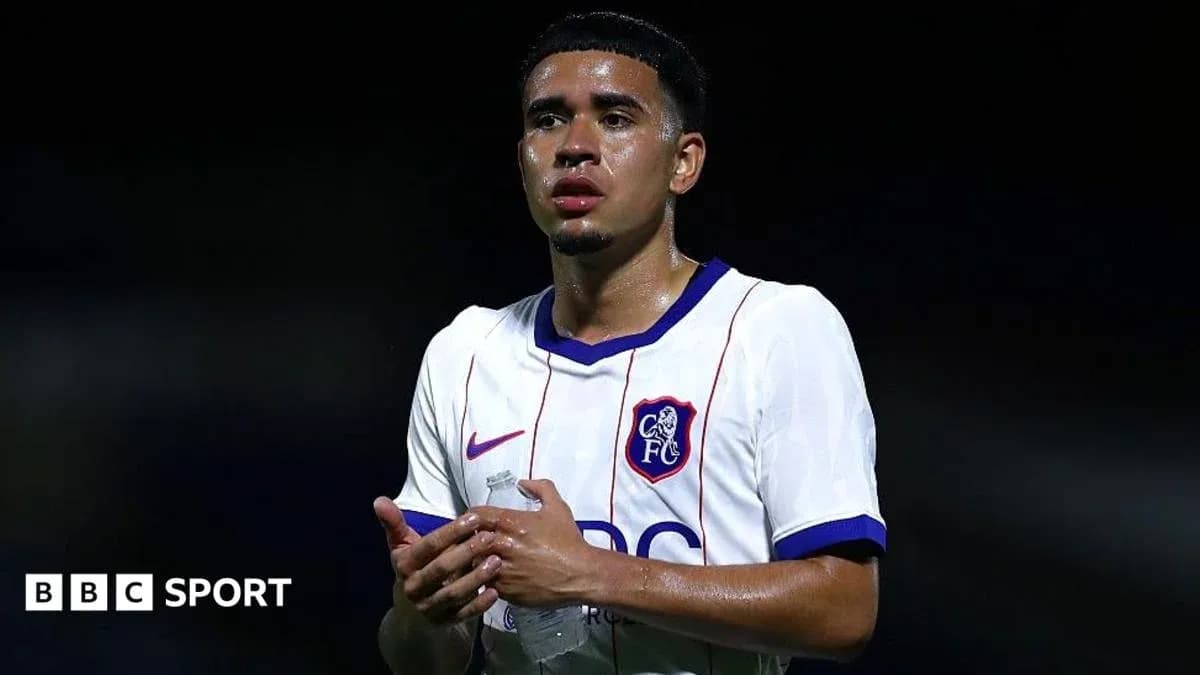
On Tuesday night at Wycombe in the EFL Trophy, he cut a slightly isolated figure. Spanish-speaking, largely on his own before kick-off, joining the warm-up but mostly keeping his distance until he came on in the 62nd minute.
For most of his cameo he drifted on the fringes, a right-sided No 10 in a system mirroring Alonso’s back three. The game seemed to pass him by.
Then, in stoppage time, the talent flickered.
From a short corner, Páez whipped an outswinging cross into the box. Harrison Bettoni tapped it in. Moments later, another delivery from the right caused chaos as Chelsea chased an equaliser in front of just 778 fans.
It wasn’t much. But it was something. A reminder that the left foot is still there, still capable of changing a moment, if not yet a match.
Chelsea lost. Páez walked off as a footnote rather than a headline. Yet inside the club, those small flashes matter.
A salvageable story
For all the noise, this is not a player with a thin résumé.
Páez is not Chelsea’s youngest talent, but he is one of their most experienced. More than 100 senior games before 20 is a platform very few academy players can match.
Chelsea have been encouraged by his attitude since he returned to Cobham. Day-to-day, he trains in a stable, elite environment. Family were in the stands at Wycombe, another small but important detail in the attempt to rebuild his confidence and focus.
The club can now monitor him closely. Scouts from across the English Football League and beyond regularly attend academy fixtures. If he strings performances together, doors will open.
Inside his camp there is optimism – not blind, but real – that a strong few months could earn him a first loan in England in January. If not, the hope is that one of Chelsea’s six international loan slots frees up and another overseas move becomes possible.
The stakes are clear. The talent that once made him one of South America’s most coveted teenagers has not vanished. It has just been buried under expectation, scrutiny and a few bad choices.
Now the stage is smaller. The crowds are thinner. The spotlight is softer.
For Kendry Páez, that might be exactly what he needs. The next cross, the next loan, the next decision – they will tell whether this is a detour on the way to the top, or the moment the story changes for good.