Just Fontaine's 13 Goals: The Unmatched World Cup Record
Just Fontaine scored 13 goals at a single World Cup. That number alone feels absurd in the age of data, load management and defensive blocks.
Then you remember he did it in six games. In borrowed boots. As a last-minute replacement who was not even meant to start.
No wonder the record has become football’s Everest.
A record under siege
Every four years his name resurfaces, a yardstick for greatness and a trick question for pub quizzes. Then it sinks back into the shadows while Pele, Lionel Messi and Kylian Mbappe dominate the conversation about the game’s immortals.
Yet here in 2026, the spotlight has swung back. The numbers demand it.
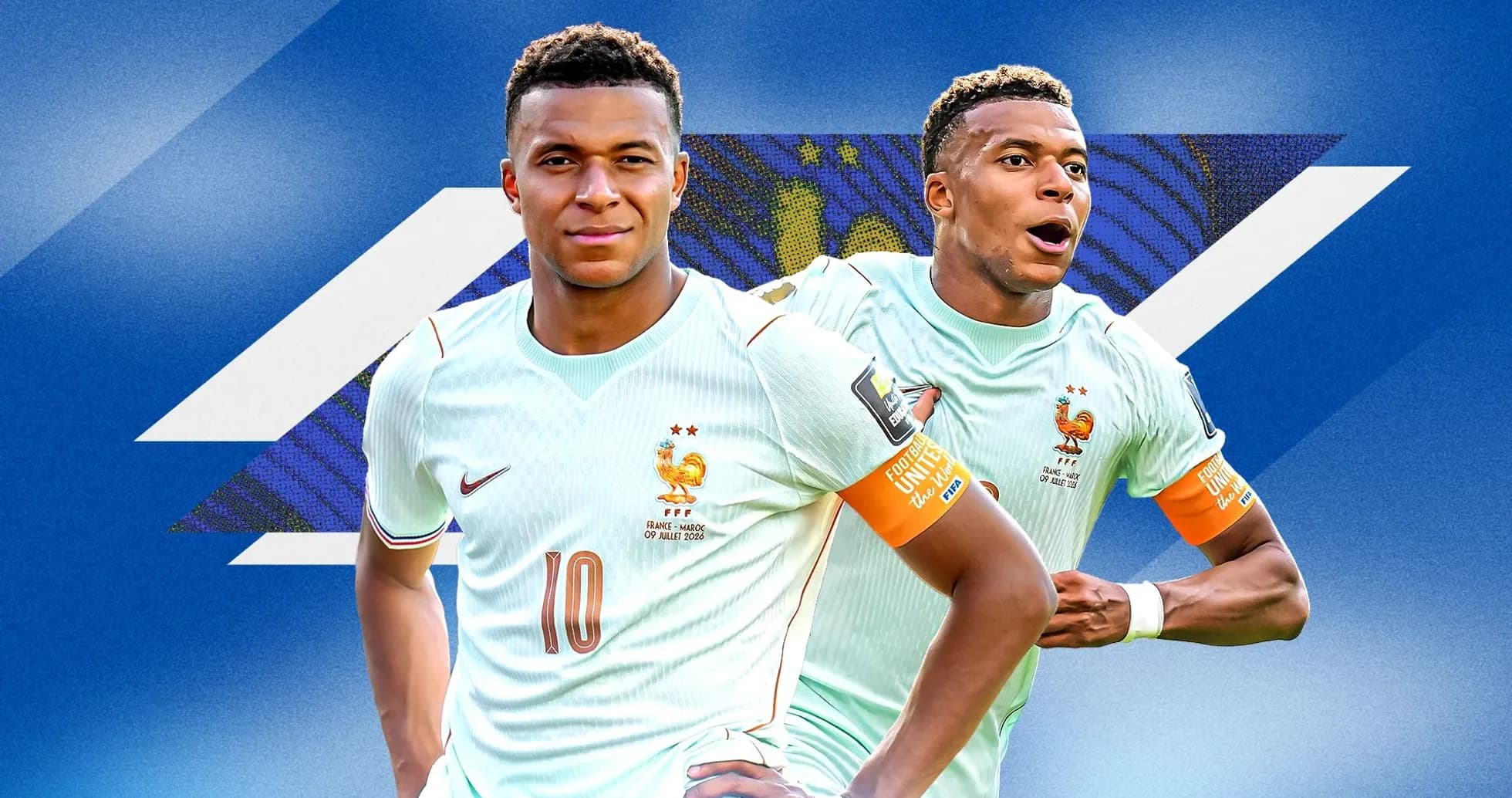
Mbappe is already on eight goals at this World Cup. Messi and Erling Haaland sit on seven. Harry Kane and Jude Bellingham trail by just one. The Golden Boot race has turned into a shoot-out between some of the most ruthless finishers the game has ever seen.
They have help. The expanded 48‑team format hands the elite an extra round, with nations reaching the semi‑finals guaranteed eight matches. Even with that cushion, Fontaine’s total looms large. Thirteen goals. Six games. No modern star has seriously threatened it for nearly seven decades.
The record is not just high. It’s distant.
The man behind the number
To younger fans, Fontaine is a statistic. A line on a graphic when broadcasters flash up “all‑time World Cup scorers”. To those who watched 1958, or who have gone back to the grainy footage, he is something else entirely.
He was born in Marrakesh in August 1933, when Morocco was still a French protectorate. By the time Morocco gained independence in 1956, Fontaine was already embedded in French football, scoring freely in Ligue 1. So when Sweden hosted the World Cup two years later, he wore the blue of France, not the red and green of his birthplace.
That backdrop gave this year’s France v Morocco quarter-final an extra layer: the Just Fontaine derby.
His route to that 1958 stage, though, was anything but straightforward. As sports journalist and historian Philip Barker points out, Fontaine was not supposed to be there as the leading man.
He was not first choice. Rene Bliard was. An injury in a warm-up game opened the door. The change came so late that Fontaine had to borrow boots from team-mate Stephane Bruey for the opening match because he had none that fit.
Try to imagine that now, in an era of bespoke moulds and personalised colourways.
Fontaine had undergone knee surgery on his meniscus during the season and had been a doubt for the tournament. The setback left him fresher than many of his peers, who arrived in Sweden after long, punishing campaigns.
When France manager Albert Batteux finally promoted him to the starting XI, Fontaine had just five caps. He was not a mystery, though. He was already a champion.
Reims, goals and a quiet confidence
Fontaine led the line for Reims, the dominant force in France at the time. In 1957‑58 they won the league and cup double. It was one of four Ligue 1 titles he collected – one with Nice, three with Reims.
A year later he would drag Reims all the way to the European Cup final, scoring 10 goals in the 1958‑59 competition, the top scorer in Europe’s elite club tournament. Real Madrid beat them in the final, but Fontaine’s reputation was sealed.
He was revered in that dressing room. Raymond Kopa, the French star who dazzled for Real Madrid and went on to win the 1958 Ballon d’Or, rated him highly. Fontaine finished third in that Ballon d’Or vote, sharing a room with Kopa on international duty and trading ideas on how to read the game.
He was not obsessed with records. Speaking to the BBC in 2002, Fontaine said he never thought about becoming top scorer in Sweden.
“In those days there was not so much pressure on us,” he recalled. Only two journalists followed the team. The French bosses were so sure they would exit early that they gave the players just three shirts each. The message was clear: enjoy yourselves, you won’t be here long.
The atmosphere was so relaxed that Fontaine even turned down a penalty in the third-place match. His mind, he insisted, was not on any goal tally.
The goals came anyway.
Lighting the fuse in Sweden
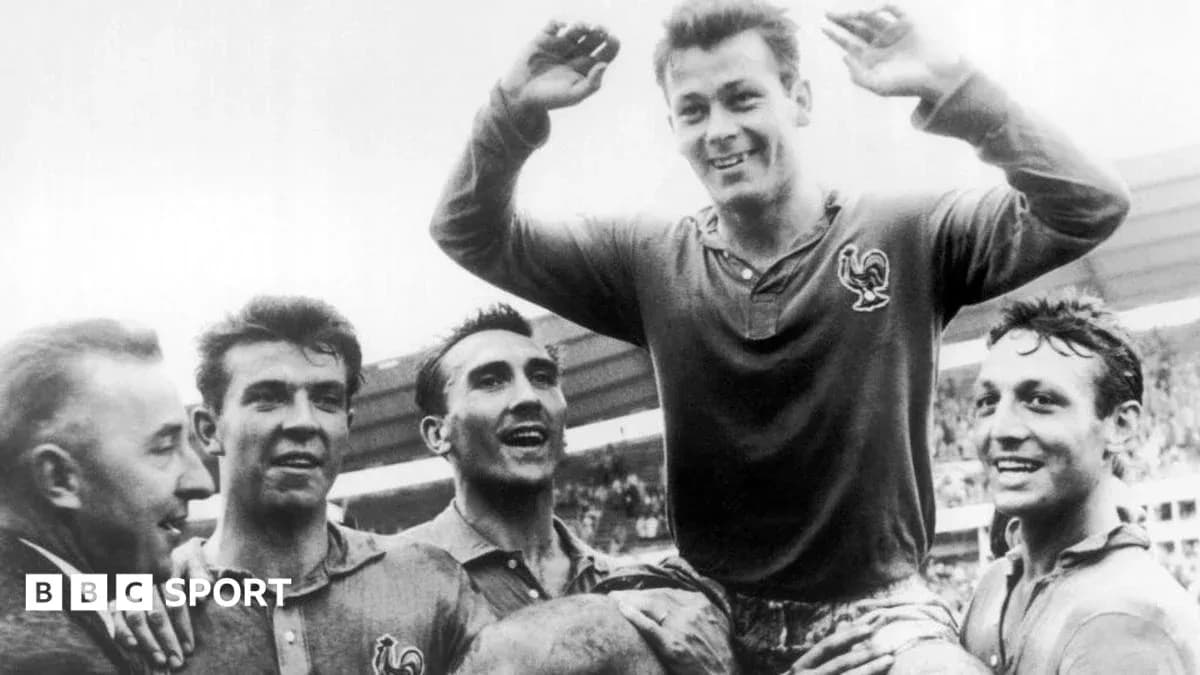
Fontaine opened the tournament with a hat-trick in a wild 7‑3 win over Paraguay. That game lit the blue touch-paper.
He scored in every match France played. Group stage. Knockouts. Semi-final. Third-place play-off. The run included a strike against the Brazil of 17‑year‑old Pele, who powered his country to a 5‑2 win in the semi-final and on to the title.
The third-place game against West Germany offered Fontaine one last chance to fill those borrowed boots. He took it with four more goals in a 6‑3 victory, the final flourish of a campaign that still defies belief.
Thirteen goals, yes. But look at how he scored them.
A striker ahead of his time
The footage is black and white. The football is not. In an era of heavy leather balls and lenient refereeing, when goalkeepers could be barged into the net, Fontaine did not bully his way to the record.
He glided.
Against Paraguay he timed late runs into the box, slipped behind the defensive line, finished low into corners with the calm of a modern No 9. Barker notes how much pace he showed, how he led the line in what L’Equipe called the “English style”: courageous, combative, stubborn.
Score a hat-trick in your first World Cup game and confidence surges. Fontaine rode that wave all the way through the tournament.
His third goal against West Germany stands out. He picked up the ball near halfway, burned past defenders and slid his finish into the far corner. Watch it now and it feels eerily similar to Michael Owen’s famous run for England against Argentina in 1998.
Fontaine’s finishing suited the era. The 1958 World Cup produced 126 goals, the second-highest tally in a 16-team tournament after 1954. France were the top scorers with 23. They played with a front five that, as Barker points out, racked up 22 goals between them.
With Fontaine and Kopa combining, that French side belongs in any conversation about the nation’s greatest teams. The 1998 and 2018 vintages have the medals, but 1958 laid the foundations.
Yes, some of the defending looks slow by modern standards. The speed of France’s passing and movement, though, would trouble any side from any era. Only the 1958 Brazil team, one of the most revered in history, could stop them.
What might have been
Fontaine never played at another World Cup. His international career was cut short by injury, the same body that gave him that explosive month in Sweden denying him the chance to return on the biggest stage.
It leaves a lingering question. What might France have done in 1962 or 1966 with that level of penalty-box menace in their ranks?
His legacy did not end when he hung up his boots. Fontaine helped form the French players’ union, the UNFP, becoming its first president in 1961. He stepped into coaching, taking charge of France for two games in 1967, then later managing PSG and Toulouse before spending two years in the dugout with Morocco, the country of his birth.
He ran sports shops. He stayed around the game. And whenever someone asked who held the World Cup scoring record, he enjoyed the moment of recognition.
Barker recalls Fontaine joking that if he came back in 200 years, his record would still stand. L’Equipe simply called it “unbeatable”.
Chasing a ghost
Fontaine died on 1 March 2023, aged 89. He lived long enough to see France win the World Cup twice, to see Mbappe explode onto the scene as the new spearhead of Les Bleus, and to hear the talk that one day this new superstar might chase down his mark.
Now Mbappe is in range. So are Messi and Haaland. The format is kinder, the sports science sharper, the boots very much not borrowed.
Yet that number still feels heavy. Thirteen. Six games. One World Cup.
If someone finally catches him in 2026, the football world will rightly hail a modern phenomenon. But it will also be forced to look back, properly, at the man who did it first – the striker from Marrakesh who never planned to start, never aimed for a record, and left the World Cup with a total that has haunted generations.