Bottesford Town's Journey to Special Olympics Glory
On a hot July evening in Scunthorpe, as England’s elite chase a World Cup final in New York, another group in Central Park are chasing something just as precious: a shot at Special Olympics gold.
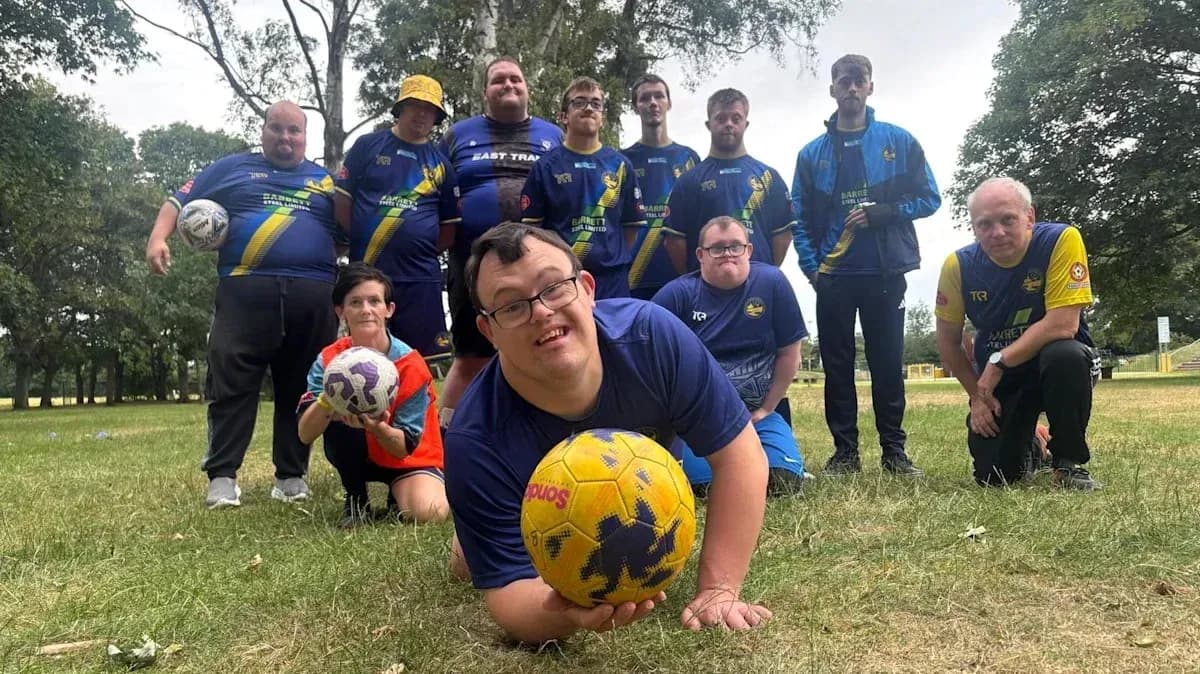
Under the shade of tall trees in the heart of North Lincolnshire, a squad in matching colours move through their drills. Shouts, laughter, the thud of the ball. No TV cameras, no roaring stands. Just a team who have spent a decade turning uncertainty into purpose.
This is Bottesford Town’s disability side, a group that began as a team for players with Down’s syndrome and has grown to embrace footballers with a range of intellectual disabilities. Autism, ADHD, learning disabilities – different labels, one badge, one pitch.
The progress is impossible to miss. Eight years ago, some of these players were taking tentative steps, learning to talk to new teammates, to trust a pass, to stay in position. Now they are training for the Special Olympics GB National Summer Games at Alexander Stadium in Birmingham, where they will compete between 26 and 30 August.
They are no longer just turning up for a kickabout. They are preparing for a tournament.
“I feel happy,” says Jake, pausing between routines when asked how he feels about the Games. He doesn’t hesitate when it comes to his role. “I take corners,” he explains, then offers a quick masterclass on how to “wrap” the ball into the net.
Jake already has pedigree. He won silver at the Special Olympics in 2017. This time the target is clear: two goals and a gold medal.
Special Olympics GB exists for stories like his. The organisation offers people with intellectual or learning disabilities the chance to play sport within their communities all year round. With around 1.5 million people in Great Britain living with an intellectual disability, its mission is to reach and transform as many of those lives as possible.
For Jake’s mum, Sue, this team has been a lifeline as much as a football club. She has been there from the start, helping with fundraising, organising transport, making sure the players get to games and back again. Her other son, Aiden, who also has disabilities, is now learning to coach the side.
She remembers how it all started at Bottesford Town about 10 years ago, a team set up for young adults with Down’s syndrome that soon widened its doors to others with autism, ADHD and various learning disabilities.
“My son Jake, he’s got Down’s syndrome and he loves playing football but struggled to play it mainstream,” she says. “He found it too difficult and couldn’t keep up with the team.”
So she went to Bottesford Town FC and asked for a chance. A pitch, a strip, a place where Jake and his friends could belong.
“For Jake to be able to play football was just such a big thing for him,” she says. “It’s his passion. He loves football and he wanted to be able to play it.”
The impact has gone far beyond technique. Yes, the first touch has improved, the passing is sharper, the positioning smarter. But the friendships have deepened, the confidence has grown, and the players have built a world that is theirs.
“When your child is born and you find out they have a disability, it’s a complete unknown,” Sue says. “But my commitment was always that my boys would access as much as possible in their lives.”
Bottesford Town FC have backed that promise. Sue calls them “amazing”, and the facilities prove her right: a sports hall for training, a 4G pitch that means no winter cancellations, no long breaks, no excuses.
The journey has not been smooth. The team were accepted into the Special Olympics in 2021, only for the Games to be cancelled because of the Covid-19 pandemic. For some players, the setback bit deep.
“It set quite a few of them back. Jake was one of those who struggled,” Sue admits.
Then came the financial mountain. To get two teams to this year’s Games – to cover travel and accommodation – they needed £10,000. Fundraising became as relentless as any pre-season.
Manager Michael Potts has watched the group respond. Training has “ramped up” as Birmingham approaches, the sessions sharper, the focus harder. The players, he says, are “excited”. The 4G surface has helped, giving them a consistent platform to develop, week after week.
As the squad has expanded to include people with a wider range of intellectual disabilities, the coaching staff have had to adapt. Different needs, different communication styles, different ways of learning the same game. They have adjusted sessions, tweaked drills, found new ways to support every player.
In goal, Mason stands tall. He talks about a “rock solid” defence in front of him, a keeper’s pride in the line he marshals. Asked if he has any advice for England’s men as they chase their own glory, he keeps it simple: they should “train hard” and the goalkeeper should concentrate on “throwing the ball out” properly.
He knows what pressure feels like. At his last competition, he saved a penalty. He wants gold as much as any striker.
Taylor, a defender who joined the team 10 years ago, nods to the work being done. Training, he says, is going well. His message to others is blunt: train hard. His personal prediction? Four goals.
As the sun dips and the shadows lengthen across Central Park, the session winds down but the intensity does not. Cones are collected, balls are bagged, yet the talk is still about Birmingham, about medals, about what might be.
Walking back through the park, it is the small details that linger: the shouts of encouragement, the quick high-fives after a well-timed tackle, the quiet concentration of a player practising the same pass again and again.
This is not a story of charity or sentiment. It is a story of a football team preparing for a major tournament, of players who want to test themselves on a national stage.
The next time they gather under these trees, will they be carrying Special Olympics medals in their kitbags – or planning how to go one better?