Ipswich vs Liverpool: Premier League Clash Analysis
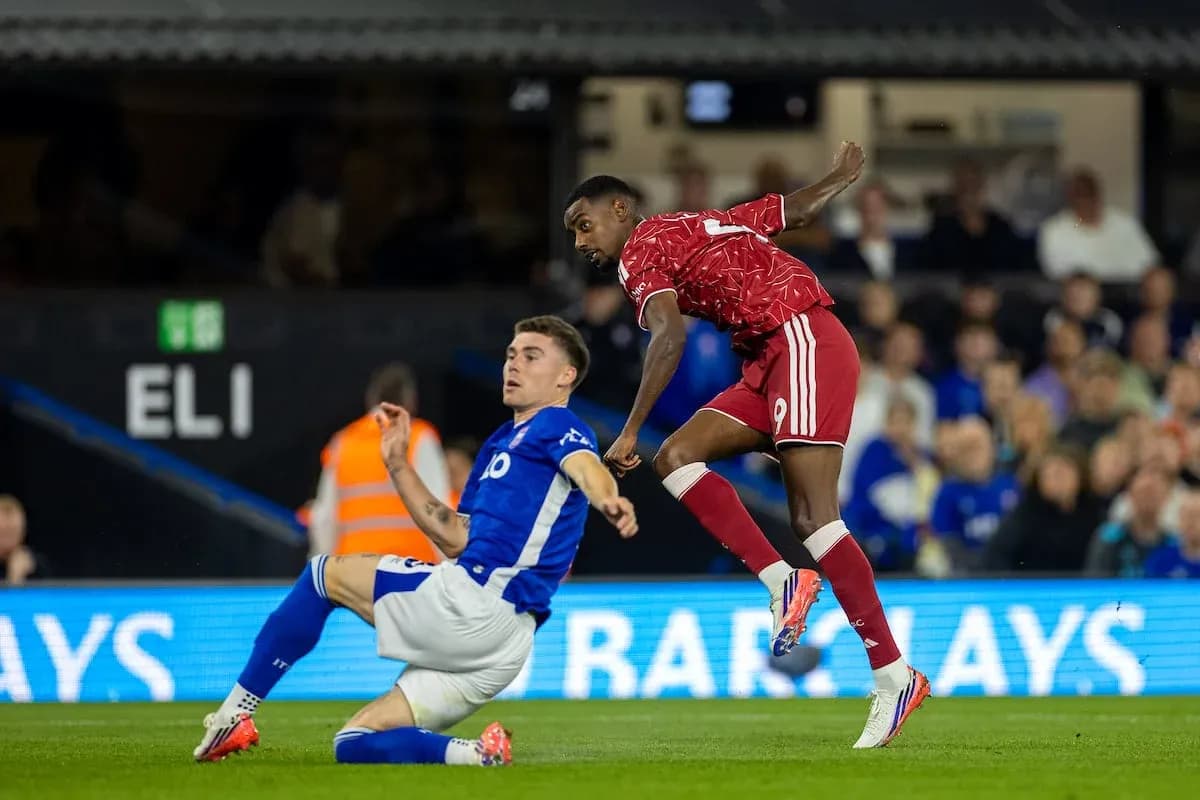
Portman Road under the Friday night lights offered a stark snapshot of where these two sides stand in the Premier League hierarchy. Ipswich, newly reintroduced to the elite and sitting 14th with 3 points from 3 matches, were handed a sobering 2–0 home defeat by a Liverpool side already humming under Andoni Iraola and occupying 6th with 5 points from their opening three games. The scoreline matched the pattern of their early-season numbers: Ipswich’s total goal difference of -4 (4 scored, 8 conceded) was ruthlessly exposed by a Liverpool team whose overall balance of 6 for and 4 against gives them a total goal difference of +2.
Both coaches mirrored each other on the whiteboard, rolling out 4-2-3-1 systems that told very different stories once the whistle blew. For Ipswich, Gary O’Neil’s shape was about survival and springing forward in moments; for Liverpool, it was a platform for territorial control and high-tempo combination play.
Ipswich: Brave Structure, Brittle Edges
O’Neil’s selection was bold but coherent. K. Scherpen anchored the side behind a back four of D. O’Shea, I. Diop, J. Greaves and L. Davis. Ahead of them, S. Lukić and E. Palacios formed a double pivot tasked with both shielding and progressing, while a fluid band of three — A. Fatawu on the right, J. Enciso centrally, D. Maeda from the left — supported lone forward Emersonn.
Heading into this game, Ipswich’s seasonal profile already hinted at the tension in their approach. At home they had averaged 1.0 goals scored and 1.5 conceded, while on their travels they had managed 2.0 goals for but leaked 5.0, underlining a team that can punch but leaves its chin exposed. Overall, 4 goals for and 8 against in 3 matches, with no clean sheets and one game where they failed to score, painted a side still learning the defensive demands of this level.
The absence list only sharpened those edges. A. Matusiwa and J. Philogene were both ruled out through injury, while J. Taylor’s knee problem removed another option. Matusiwa’s ball-winning and Philogene’s one‑v‑one threat would have been invaluable against a Liverpool side that thrives when opponents cannot escape pressure. Instead, the creative and transition burden fell almost entirely on Enciso and Fatawu.
Enciso, already among the league’s leading creators with 2 assists and a total of 83 passes at an 87% completion rate heading into the fixture, was the natural conduit between midfield and attack. His 11 shots and 4 key passes in the early rounds showed a player unafraid to take responsibility. Yet here, Liverpool’s press often forced him to receive with his back to goal, turning him from playmaker into pressure valve.
On the right, Fatawu’s season to date — 1 assist, 7 successful dribbles from 15 attempts, and 44 duels contested with 21 won — promised direct running to pin back Liverpool’s left flank. But with Ipswich’s defensive line repeatedly forced deep, his starting positions grew ever more conservative, and his energy was often spent tracking M. Kerkez’s overlaps rather than attacking them.
Defensively, Ipswich’s issues were systemic rather than individual. The double pivot struggled to compress space in front of Diop and Greaves, and with no clean sheets at home or away in the league so far, the pattern continued. Their disciplinary profile — 75% of their yellow cards this season arriving between 31–45 minutes and 25% between 46–60 — hints at a team that often arrives late into challenges once the tempo rises. Against Liverpool’s rotating front four, that risk was ever-present, even if this particular contest passed without major disciplinary drama.
Liverpool: Control, Variety and a Relentless Front Four
If Ipswich are still discovering their Premier League identity, Liverpool under Iraola already look like a side with a clear blueprint. The 4-2-3-1 here was less a formation and more a moving organism. Alisson Becker sat behind a back four of R. Araújo, J. Jacquet, V. van Dijk and Kerkez, with D. Szoboszlai and A. Mac Allister orchestrating from deep. Ahead of them, Víctor Muñoz, F. Wirtz and C. Gakpo interchanged constantly behind A. Isak.
Heading into this match, Liverpool’s numbers underlined a side difficult to beat and consistently dangerous. Overall they had scored 6 and conceded 4 in 3 games, averaging 2.0 goals for both at home and away. On their travels, 4 goals scored and just 2 conceded in 2 matches showcased an away side comfortable imposing its game. There were no league defeats yet, and one away clean sheet already on the board.
Isak, the league’s top-rated forward so far, epitomised their cutting edge. With 3 total goals from 7 shots (5 on target) and an average rating of 7.77, he arrived at Portman Road as the division’s most clinical spearhead. His movement between Ipswich’s centre-backs and into the channels consistently stretched Diop and Greaves, forcing Lukić and Palacios to drop deeper than O’Neil would have liked.
Behind him, Gakpo’s dual status as both top assister and one of the league’s highest-rated players made him the key “engine room” figure. Across the opening rounds he had supplied 3 assists, scored 1 goal, and produced 8 key passes from 88 total, while also tackling (6 total) and intercepting (5) at a level that made him as much a presser as a creator. Operating nominally from the left but drifting inside, he repeatedly found pockets between Ipswich’s full-backs and pivots, forcing constant defensive recalibration.
In deeper zones, Mac Allister and Szoboszlai controlled the rhythm, recycling possession and stepping into half-spaces to overload Ipswich’s double pivot. Víctor Muñoz and Wirtz then added another layer of unpredictability, rotating between central and wide positions to drag markers away from Isak’s runs.
Liverpool’s disciplinary and intensity profile this season also fed into the narrative. Their yellow cards are spread across the match, with a clear spike between 46–60 minutes (40% of their bookings), reflecting a team that raises the press after half-time. That surge often turns balanced games in their favour; Ipswich, already fragile after conceding twice before the interval, struggled to escape that second-half suffocation.
At the back, Van Dijk’s leadership and the physical presence of Araújo gave Liverpool dominance in aerial and one‑v‑one duels, while Kerkez, despite his disciplinary record — 2 yellow cards and a reputation for aggressive defending — offered width and penetration. His tackling (6 total) and 3 blocked shots in the early rounds underscored a defender who lives on the front foot, and Ipswich rarely managed to exploit the space he left behind.
Absences, Edges and the Statistical Verdict
Both squads were shorn of important names. Ipswich’s missing trio of Matusiwa, Philogene and Taylor deprived O’Neil of ball-winning steel, direct wing threat and depth. Liverpool’s absentee list — C. Bradley, F. Chiesa, H. Ekitike, J. Gomez and G. Leoni — looked heavier on paper but was softened by their depth. Bradley’s and Gomez’s injuries removed rotation options in defence, while Chiesa and Ekitike would have added explosive attacking alternatives; yet Iraola could still call on L. Koumas, B. Barcola and R. Ngumoha from the bench if required.
From a penalty perspective, Liverpool carried a small but telling edge. They had been awarded one spot-kick in the league and converted it, with no misses, reinforcing the sense of a side that capitalises on fine margins. Ipswich, by contrast, had yet to take a penalty this season.
In the “Hunter vs Shield” matchup, the numbers were always tilted towards the visitors. Isak’s form and Liverpool’s away average of 2.0 goals scored met an Ipswich defence conceding 1.5 at home and 2.7 overall. Without the protection of Matusiwa and with no clean sheets in any venue, Ipswich’s back line was always likely to bend; Liverpool ensured it broke twice before full-time.
In midfield, the “Engine Room” duel was similarly skewed. Enciso and Fatawu, both bright and brave, were effectively outnumbered by the combination of Mac Allister, Szoboszlai and Gakpo, with Wirtz and Víctor Muñoz adding layers of support. Ipswich’s reliance on transitional bursts was no match for Liverpool’s sustained pressure and positional play.
Following this result, the trajectories of the two sides feel starkly different. Ipswich remain a spirited, tactically coherent side whose 4-2-3-1 can trouble opponents when their pressing triggers and transitions click, but their defensive averages and lack of clean sheets underline the need for greater compactness and perhaps a more conservative approach against elite visitors. Liverpool, meanwhile, look every inch a top-six contender: structurally sound, rich in creative options, and with a centre-forward in Isak whose early-season finishing justifies the statistical optimism that surrounds Iraola’s project.