Indy Eleven's Strong Finish: Defeating Forward Madison 2–0
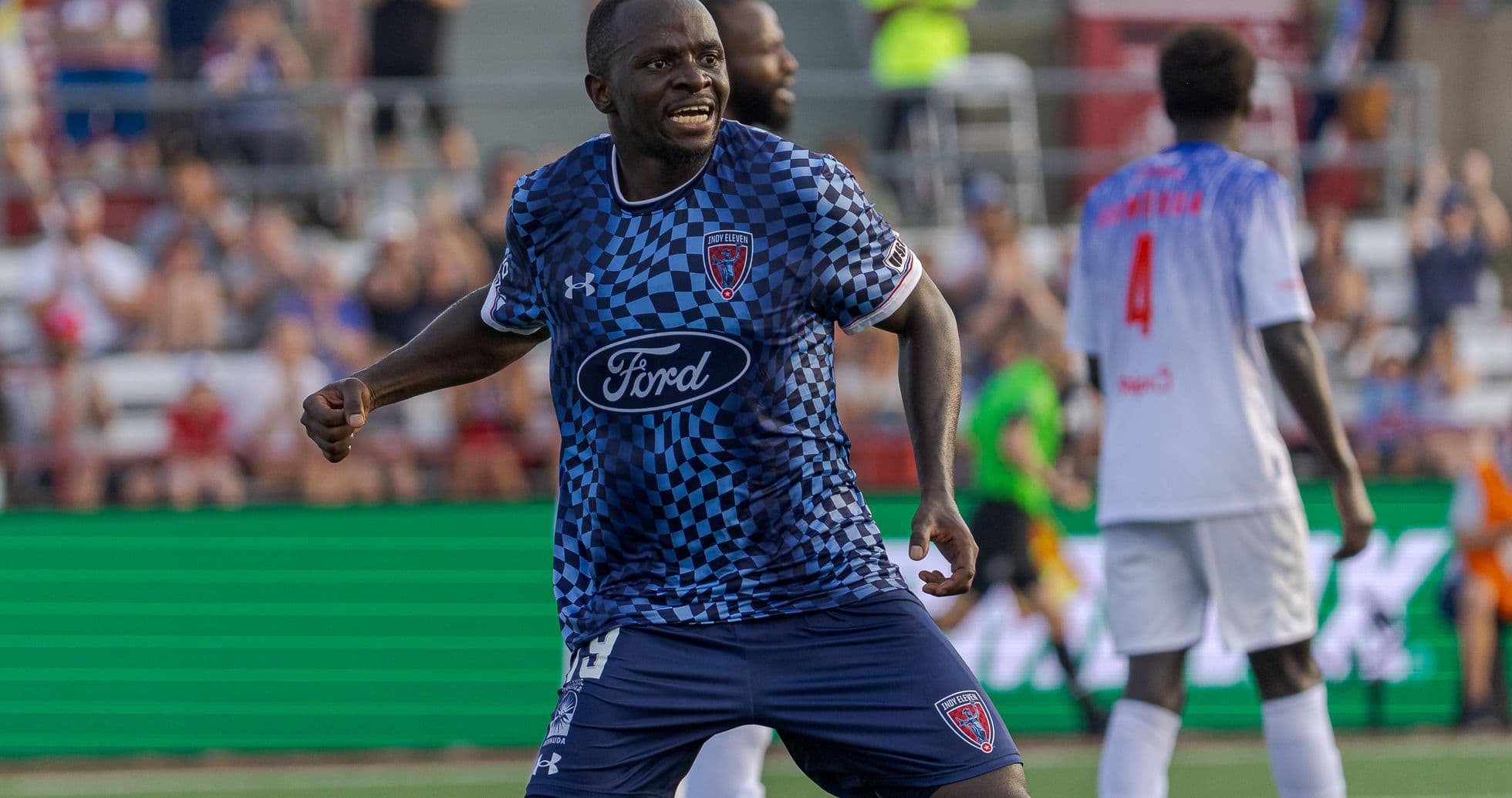
Under the lights at Michael A. Carroll Stadium, Indy Eleven closed out their USL League One Cup group-stage story with a performance that felt like a manifesto. A 2–0 home win over Forward Madison did more than settle a single fixture; it crystallised the contrasting identities of two sides heading in opposite directions within Group 4.
Following this result, the table tells a stark tale. Indy sit 4th in the group with 5 points and a goal difference of +3, built on 8 goals for and 5 against overall. Forward Madison, rooted in 7th with 0 points and a goal difference of -5, have mustered just 2 goals while conceding 7. The group-stage label may soften the language, but the numbers scream: Indy are trending upward, Madison are hanging on.
Indy’s seasonal DNA is now clear. Across the campaign they have played 3 fixtures in this competition, winning 2 and losing 1, with no draws. Their attack has been sharp and relatively balanced: 6 goals in total, split evenly between home and away. At home, they average 1.5 goals per game; on their travels, that jumps to 3.0, for an overall average of 2.0. Defensively, they concede 1.0 goal per game at home and 2.0 away, 4 in total at 1.3 per match. It is not a lockdown back line, but it is efficient enough to support an assertive attacking posture.
Forward Madison arrive at the opposite extreme. They have played 3 matches, lost all 3, and are still searching for a first point. On their travels, they average 1.0 goal scored but ship 3.0 goals per away game; overall, they score 0.7 and concede 2.3 per match. The goal difference of -5 (2 scored, 7 conceded) is not an accident; it is a structural problem.
I. The Big Picture: Systems Without Shapes
Neither coach revealed a formal shape in the data, but the personnel hint at intent. Sean McAuley’s Indy Eleven started with R. Charles-Cook in goal, a back line likely anchored by L. Neidlinger, M. Rasheed, and P. Craig, and a midfield core built around the composure of A. Quinn and the metronomic C. Lindley. Ahead of them, B. Rendon, J. O'Brien, J. Blake, and K. Williams provided the connective tissue to E. Kizza up front.
On the other side, Matt Glaeser’s Forward Madison leaned into mobility and verticality. T. Manske led the line, flanked and supported by the likes of J. Bolma, M. Segbers, and C. Ngoubou, with R. Carmichael as a central reference point. In deeper zones, G. Kanyane and H. Karamoko were tasked with shielding a back line featuring J. Shannon and K. Toure.
II. Tactical Voids: Discipline and Fragility
With no explicit injury list provided, absences were less about who was missing and more about what was missing: control and composure, especially for Madison.
Indy’s disciplinary profile this season is relatively measured. Their yellow cards cluster in the 31–45 and 61–75 minute ranges, each accounting for 28.57% of their cautions. That late-first-half and early-second-half edge suggests a side that tightens the screws around key transitional phases without spiralling into chaos. No red cards have been recorded in their cup campaign, reinforcing the image of a team that can play on the front foot without self-sabotage.
Madison’s card map is far more volatile. They pick up 25.00% of their yellows in the opening 0–15 minutes, another 37.50% in the 46–60 window, and 25.00% between 61–75. That means 62.50% of their cautions arrive in the 46–75 stretch, a period when matches are often decided. More damning is the red-card profile: 100.00% of their dismissals come between 76–90 minutes. This is a side that not only fades, but unravels late.
In a match Indy won 2–0 and controlled the tempo, that fragility would have shaped the final half-hour. Even without minute-by-minute event data, the patterns suggest Indy were able to lean on a team that historically buckles under sustained pressure.
III. Key Matchups: Hunter vs Shield, Engine Room vs Enforcer
The “Hunter vs Shield” battle here was less about a single talisman and more about a collective attacking unit against a porous defensive record. Indy’s overall scoring rate of 2.0 goals per match met a Madison defence conceding 2.3 per game, with a particularly soft underbelly away from home at 3.0 goals conceded per away fixture. The 2–0 scoreline fits neatly into that intersection: Indy hit close to their attacking baseline; Madison again failed to reach theirs.
In the absence of explicit top-scorer data, the forward trident of K. Williams, J. Blake, and E. Kizza emerges as the symbolic “Hunter.” Williams, wearing 10, is the natural creative fulcrum, floating between lines to knit play. Blake and Kizza provide the vertical threat and penalty-box presence. Against a back line anchored by J. Shannon and K. Toure, with G. Kanyane trying to screen, the duel was always going to be about whether Madison could compress space between their lines. Their season-long concession rate suggests they could not.
The “Engine Room” matchup revolved around C. Lindley and A. Quinn for Indy against Madison’s G. Kanyane and H. Karamoko. Lindley’s role as organiser and first receiver from the back three or four allowed Indy to dictate the tempo. Quinn, wearing 14, offered progressive passing and second-phase control. For Madison, Kanyane and Karamoko were forced into reactive defending, chasing shadows rather than stepping into passing lanes. The result: Indy’s midfield line acted as a stable platform, while Madison’s was constantly retreating.
IV. Statistical Prognosis: xG Without Numbers
Even without explicit xG values, the underlying data points to a predictable expected-goals landscape. Indy, who have failed to score in 0 matches this cup campaign, are structurally reliable in the final third. Madison, by contrast, have failed to score in 2 of their 3 fixtures and have yet to keep a clean sheet, with 0 shutouts home or away.
Layer that over the disciplinary trends and you get a clear probabilistic picture: Indy generating multiple high-quality chances as the game wears on, Madison’s defensive structure degrading under pressure, and late-game indiscipline exacerbating their vulnerability. A 2–0 home win fits that script almost perfectly: Indy assertive but not reckless, Madison competitive in moments but ultimately undone by their own structural flaws.
Following this result, Indy Eleven emerge from the group stage as a side with a defined identity: aggressive, balanced between home and away, and mentally stable in key phases. Forward Madison leave with a different story: flashes of attacking potential, but a defensive and disciplinary framework that simply cannot sustain them at this level.