Huntsville City Dominates Carolina Core in 3–0 Victory
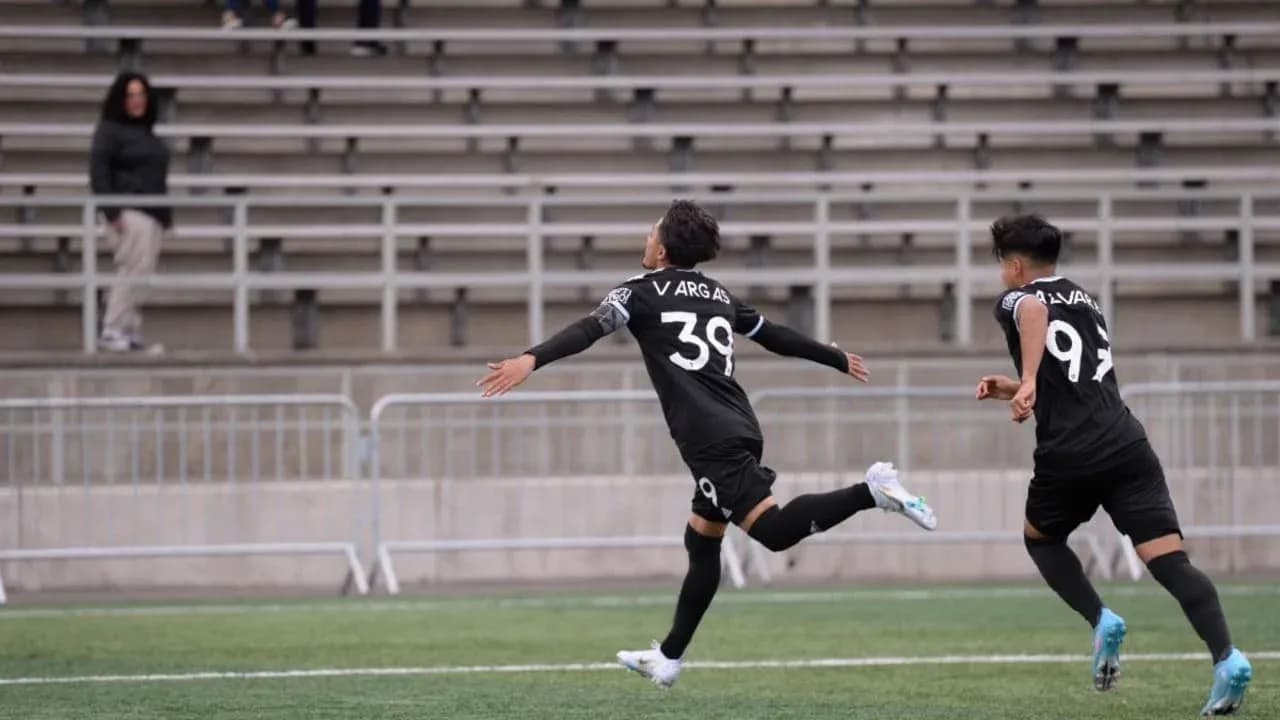
Under the lights at Joe W. Davis Stadium, Huntsville City’s 3–0 win over Carolina Core felt less like a routine group-stage outing and more like a statement about where these two projects currently stand in MLS Next Pro.
I. The Big Picture
Following this result, Huntsville City consolidate their status as one of the Eastern Conference’s early pace-setters. Across the season they have now played 8 matches in total, winning 5 and losing 3, without a single draw. Their overall scoring profile is aggressive: 18 goals for and 17 against, an attacking average of 2.3 goals per match in total and 2.0 at home, offset by 2.1 goals conceded in total and 1.0 at home. The goal difference in total is a slender +1, but nights like this 3–0 home win show how quickly that can stretch when their attacking rhythm clicks.
Carolina Core, by contrast, remain mired near the bottom of the Eastern Conference. In total this campaign they have played 9 matches, with just 1 win and 8 defeats, scoring 11 and conceding 22 for a goal difference of -11. On their travels the numbers are stark: 0 wins, 0 draws and 5 defeats, with 4 goals scored and 13 conceded, an away average of 0.8 goals for and 2.6 against. The 3–0 scoreline in Huntsville fits almost too neatly into that pattern of away-day suffering.
II. Tactical Voids and Selection Choices
With no official injury or suspension list provided, the story of absences is instead written in who the coaches trusted from the start.
Chris O’Neal’s Huntsville City XI blended technical midfielders and mobile forwards. W. Mackay anchored the side from the back, with a defensive line including J. Gaines, N. Prince, L. Christiano and M. Molina tasked with maintaining the home defensive standard that has seen only 3 goals conceded at home in total this season. Ahead of them, the engine of the team was clearly built around M. Yoshizawa, N. Pariano and M. Veliz, with L. Eke, M. Ekk and J. Van Deventer providing the attacking thrust.
Donovan Ricketts set Carolina Core up around goalkeeper N. Holliday, with a back line featuring N. Martinez, S. Yepes Valle, N. Evers and J. Caiza. In midfield and attack, T. Zeegers, M. Diakite, R. Aguirre, T. Raimbault, A. Tattevin and D. Diaz formed a flexible band of workers and runners, but one that has struggled all season to convert possession into goals, particularly away from home.
Disciplinary trends also shaped the tactical tone. Huntsville City’s yellow-card distribution shows a clear spike after the interval: 27.78% of their cautions arrive between 46–60 minutes, with another 22.22% between 76–90 minutes and 22.22% from 91–105 minutes. They play on the edge as matches stretch, often pressing high and counter-pressing after losing the ball. Carolina Core, meanwhile, are even more combustible: 23.33% of their yellow cards come between 46–60 minutes and 20.00% between 76–90 minutes, with an additional 20.00% from 16–30 minutes. They have also seen a red card in the 46–60 minute window (100.00% of their reds in that range), a sign that when they chase games after the break, discipline can fray badly.
III. Key Matchups
Hunter vs Shield
The fundamental duel in this fixture was Huntsville City’s free-scoring attack against Carolina’s fragile away defence. On their travels, Carolina concede 2.6 goals per match in total, and they had already suffered a heaviest away defeat of 4–1 this season. Huntsville, by contrast, average 2.0 goals at home and have a biggest home win of 3–0 in total – a scoreline they duly matched here.
The Huntsville front line of L. Eke, M. Ekk and J. Van Deventer pressed high against a Carolina back four that has already conceded 13 away goals in total. Without a natural statistical reference for individual scorers from the league’s top-scorer charts, the “hunter” is really the collective: quick combinations between Yoshizawa, Pariano and Veliz into the feet of Eke and Ekk, plus the wide movements of Van Deventer to stretch Carolina’s defensive shape.
On Carolina’s side, the “shield” was meant to be the central pairing around N. Evers and S. Yepes Valle, screened by M. Diakite. But with no clean sheets in total this season – 0 at home, 0 away – the structural cracks were always likely to be exposed by a Huntsville side that has only failed to score once in total this campaign.
Engine Room
In midfield, Huntsville’s control came from their trio of Yoshizawa, Pariano and Veliz. Their job was to dictate tempo and prevent transitions that might allow Carolina’s more direct players, such as Zeegers, Raimbault or Tattevin, to run into space. Huntsville’s season-long card profile – particularly the 27.78% yellow-card spike between 46–60 minutes – suggests a team that raises intensity immediately after the interval, often through aggressive pressing and tactical fouls. That phase of the game is precisely where Carolina are both most combative and most vulnerable to disciplinary lapses.
Carolina’s midfield, with Diakite and Aguirre at its core, needed to absorb that pressure and find D. Diaz and A. Tattevin early. Yet their broader pattern – 6 yellow cards between 16–30 minutes (20.00%) and 7 between 46–60 minutes (23.33%) – hints at a unit that often tackles from behind the play rather than setting the rhythm. Against Huntsville’s confident home passing, that reactive posture translated into late challenges and broken structure rather than controlled aggression.
IV. Statistical Prognosis and Tactical Verdict
Even without explicit xG numbers, the season-long metrics frame this 3–0 as a logical outcome rather than an outlier. Huntsville’s overall attacking average of 2.3 goals per match, combined with Carolina’s 2.4 goals conceded per match in total and 2.6 away, points towards a multi-goal home performance as the baseline expectation. Defensively, Huntsville’s home record of 1.0 goal conceded per match, plus 2 clean sheets in total, suggested they were well placed to shut down a Carolina attack averaging just 0.8 goals away.
Huntsville’s penalty record – 1 penalty in total, scored with a 100.00% conversion rate and 0 missed – underscores their clinical edge in decisive moments, even if no spot-kick was needed here. Carolina, with 0 penalties won in total, lack that shortcut back into matches when open play breaks down.
Following this result, the trajectories feel divergent. Huntsville City look like a volatile but dangerous playoff contender, capable of explosive scorelines in both directions but increasingly solid at home. Carolina Core, still without an away point and without a clean sheet in total, face a tactical reckoning: tighten the defensive block around Evers and Yepes Valle, reduce the volume of cards in those 46–60 and 76–90 minute windows, and find a more reliable supply line to Diaz and Tattevin. Until that happens, nights like this 3–0 in Huntsville will remain less a surprise and more an inevitability written in the numbers.