Huntsville City vs Atlanta United II: A Tactical Breakdown of the 6–2 Clash
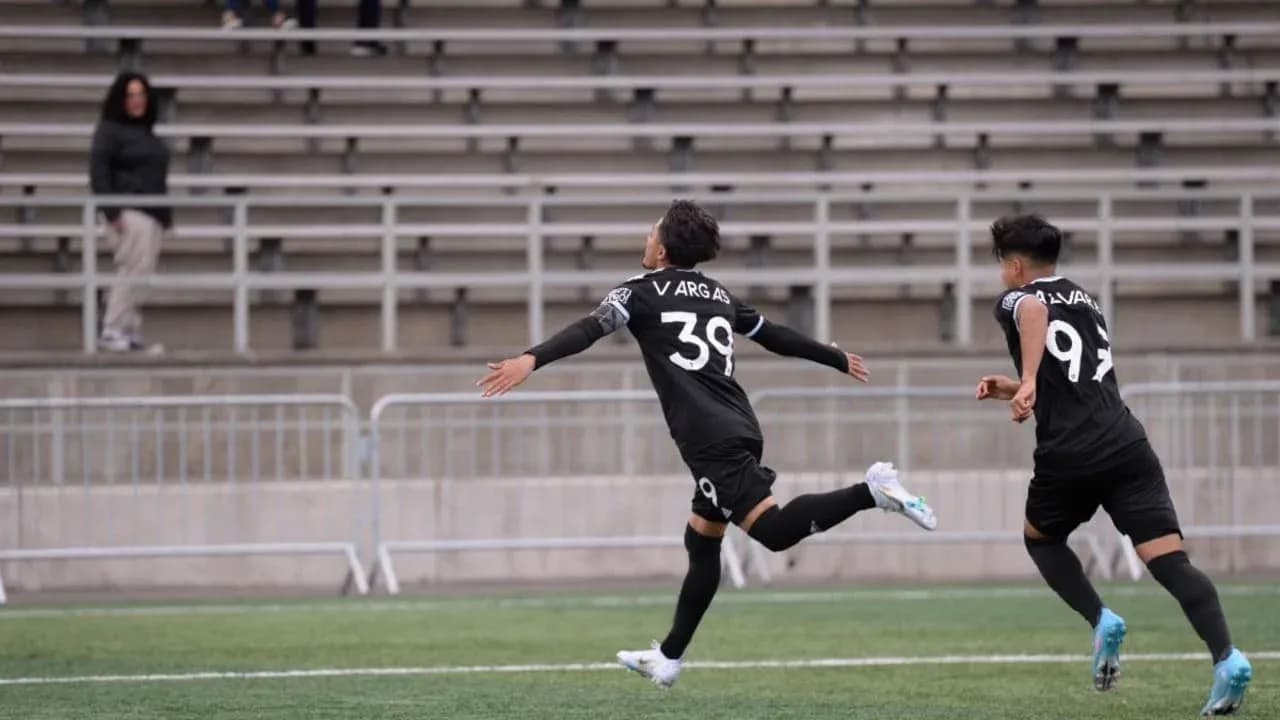
Under the lights at Joe W. Davis Stadium, a night that began as a statement of intent from Huntsville City turned into a brutal lesson in game management and structural fragility. In an MLS Next Pro Group Stage clash, Huntsville raced into a 2–0 half-time lead, only to be overwhelmed 6–2 by an Atlanta United II side that sits higher in both the Central Division and Eastern Conference standings.
Following this result, the league table context sharpens the narrative. Huntsville City, ranked 3rd in the Central Division and 6th in the Eastern Conference with 18 points, have built their season on volatility: 6 wins, 0 draws, 4 losses in total, with 23 goals for and 22 against in the standings snapshot. Their season statistics push that to 24 goals for and 23 against in total, underlining a side that scores freely but lives permanently on the edge.
Atlanta United II, 2nd in the Central Division and 4th in the Eastern Conference with 19 points, arrived as a more balanced proposition. Overall they had 20 goals for and 13 against in the standings (a goal difference of 7), and season stats confirm a total of 20 scored and 14 conceded. On their travels, Atlanta had already shown a ruthless streak: 7 away matches, 4 wins, 0 draws, 3 defeats, with 14 goals for and 9 against away.
The fixture bore all the hallmarks of a playoff-calibre matchup – two aggressive, front-foot teams whose season DNA leans towards chaos rather than control. Huntsville’s biggest home defeat before this was 2–6; Atlanta’s biggest away win was 2–6. Those extremes collided here, and the visitors’ attacking clarity ultimately shredded the hosts’ structure.
Tactical Voids and Discipline
With no explicit injury or suspension list provided, both coaches seemed to have close to full decks, but the underlying disciplinary profiles of the teams shaped the flow once the game tilted.
Huntsville City’s yellow-card pattern this season is telling. In total, 30.77% of their yellows arrive between 76–90', and another 15.38% between 91–105'. That late-game spike speaks of a team that often defends on emotional overload once fatigue sets in. Red cards are split evenly: 50.00% in the 31–45' window, 50.00% between 76–90'. This is a side that can lose control either just before half-time or deep into the second half – precisely the phases when Atlanta’s pressure tends to rise.
Atlanta United II’s disciplinary curve is steadier but no less dangerous. Their yellow cards are spread, with 21.74% between 61–75' and another 21.74% between 76–90', reflecting an aggressive press that doesn’t taper off late. More ominously, their red cards are distributed across 46–60', 61–75', and 76–90' – each window accounting for 33.33% of their total reds. Atlanta play on the edge, but they do so with a structure that usually protects them.
In this match, the discipline narrative was less about single flashpoints and more about accumulated psychological pressure. Once Atlanta began to turn the tide after the break, Huntsville’s tendency to pick up late cards dovetailed with their defensive averages: they concede 1.8 goals at home on average and 2.3 in total, with only 3 clean sheets overall. When the dam cracked, it did so completely.
Key Matchups
Hunter vs Shield
For Huntsville, the “hunter” was collective rather than individual. With 24 goals in total and an average of 2.4 goals both at home and away, their attacking unit of L. Eke, M. Ekk, F. Reynolds, N. Pariano, and M. Yoshizawa has been built to swarm rather than rely on a single talisman. At home, they had 12 goals for in total, reinforcing Joe W. Davis Stadium as an attacking platform.
Atlanta’s “shield” coming in was one of the better in the conference. They had conceded just 14 goals in total, with an away average of 1.4 goals against and 10 conceded on their travels. Their back line, anchored by figures like M. Senanou, M. Cisset, and I. Ettinger in front of J. Donaldson, typically bends but rarely breaks.
For 45 minutes, Huntsville’s fluid front line found gaps between Atlanta’s centre-backs and full-backs, racing to a 2–0 lead by half-time. But the shield adjusted. Atlanta’s defensive line stepped higher, compressed the space where Eke and Ekk could receive, and forced Huntsville’s build-up into riskier central channels. Once turnovers began to mount, the match flipped.
Engine Room
The midfield duel was where the game was truly decided. Huntsville’s core – with M. Veliz and M. Molina as key connectors and M. Yoshizawa drifting between lines – initially dictated tempo. Their season averages of 2.4 goals for and 2.3 against in total are the numbers of a side whose midfield is built to create more than it protects.
Atlanta’s engine room, with A. Gill, A. Torres, and M. Tablante, grew into the contest. Their season profile – 2.0 goals for and 1.4 against in total – hints at a more balanced midfield, capable of both progression and protection. Once they began to win second balls and trap Huntsville’s pivots, Atlanta could unleash wide threats like C. Dunbar and E. Dovlo and feed the front line relentlessly.
From the bench, Huntsville had options like J. Swanzy, X. Aguilar, and J. Van Deventer, but their introduction could not re-establish control. Atlanta’s substitutes – including the likes of P. Weah, M. Pineda, and A. Henry – instead added fresh legs to a press that was already suffocating Huntsville’s build-up.
Statistical Prognosis and Tactical Verdict
Following this result, the statistical profiles of both teams feel even more pronounced. Huntsville now look like the league’s quintessential high-variance side: on their travels and at home, they average 2.4 goals scored but concede heavily (1.8 at home, 2.8 away, 2.3 in total). Their biggest home loss and Atlanta’s biggest away win both reading 2–6 is no coincidence; this is a team whose aggressive offensive posture leaves them brutally exposed when the press is broken.
Atlanta, by contrast, confirm their status as a playoff-grade machine. On their travels they score 2.0 goals on average and concede 1.4, with 2 away clean sheets in total. Their ability to turn a 2–0 deficit into a 6–2 away win is not just about momentum; it is about structural resilience, bench depth, and a midfield that can flip a game’s geography.
In xG terms – even without explicit numbers – the pattern is clear. Huntsville’s early surge would have produced a strong first-half xG, but Atlanta’s second-half dominance, chance volume, and six-goal haul point to a side whose attacking mechanisms scale over 90 minutes. Huntsville’s late-card tendencies (30.77% of yellows in 76–90') and red-card risk in that same window intersect fatally with Atlanta’s willingness to keep attacking until the final whistle.
Tactically, this match will be a reference point for both. Huntsville must decide whether their current high-risk identity is sustainable against top-tier opposition, especially with promotion play-offs on the horizon. Atlanta, meanwhile, leave Huntsville with a statement: in a league of wild scorelines, they are one of the few teams capable of marrying chaos in the final third with enough defensive solidity to ride out early storms and still win by four.