Houston Dynamo FC II Dominates St. Louis City II in 4–1 Victory
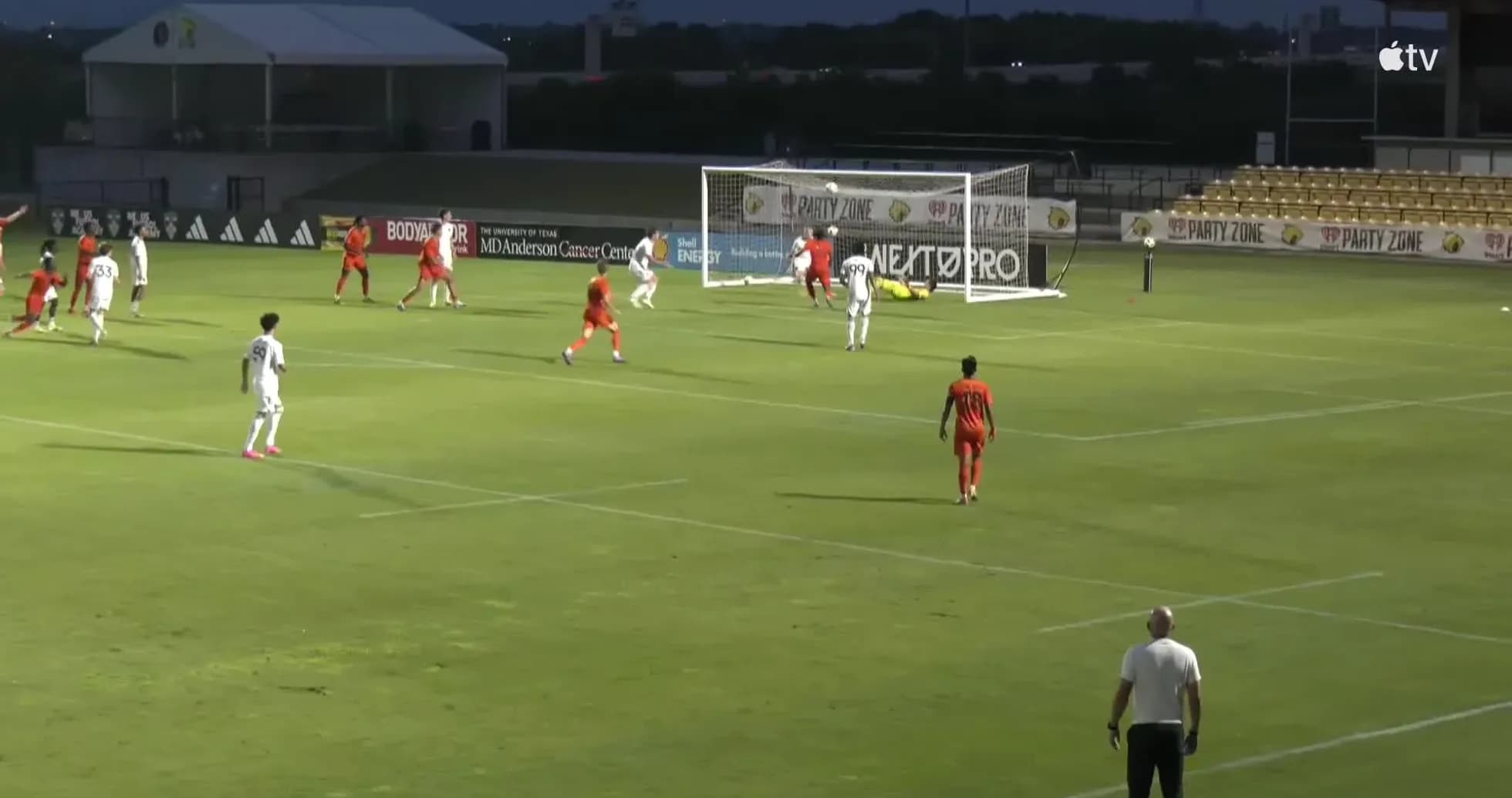
On a warm night at CITYPARK, the league’s most ruthless frontrunner walked into one of its most confident homes and turned a supposed top-of-the-table arm wrestle into a statement. St. Louis City II, second in the Eastern Conference and Frontier Division with 23 points and a goal difference of 9 heading into this game, were dismantled 4–1 by a Houston Dynamo FC II side that already sat top of both tables on 26 points with a goal difference of 20. Over 90 minutes, Houston’s perfect seasonal profile – 9 wins from 9, 24 goals for and only 4 against overall before kick-off – translated almost perfectly onto the CITYPARK pitch.
The opening act suggested something different. St. Louis, who had been devastating at home with 5 wins from 6 and 14 home goals heading into this game, started with the swagger of a side used to dictating the tempo on their own turf. Their season-long attacking DNA at home – an average of 2.7 goals for and only 1.5 against – was reflected in a front-foot approach built around the mobility of P. Ault and the late surges of P. McDonald from deeper positions.
L. McPartlin anchored the structure, with K. Hiebert and Z. Lillington forming the defensive core in front of him, while the flanks were patrolled by the energetic pairing of S. Marion and R. Lynch. In midfield, C. Pearson and T. Pearce tried to knit possession, with J. Wagoner and A. Jundt tasked with connecting lines and giving Ault service between defenders. The first half’s 1–1 scoreline hinted at a genuine contest, St. Louis trading blows with a Houston side that had been averaging 2.8 goals for and only 0.4 against overall.
Yet Houston’s structure always felt more assured, more inevitable. Pedro Cruz, in goal, was the calm base of a defensive unit that had kept 4 clean sheets at home and 1 on their travels heading into this game, conceding only 4 goals away at an average of 0.8. In front of him, N. Betancourt, I. Mwakutuya, E. Hata and R. Miller formed a back line that rarely overcommitted, content to absorb St. Louis pressure and wait for the turnover moments that define Houston’s identity.
The “engine room” battle was where the match truly swung. Gustavo Dohmann, M. Arana and M. Dimareli patrolled central spaces with a blend of control and aggression that slowly squeezed the life out of City II’s passing lanes. Dohmann, in particular, operated as the metronome, recycling possession and drawing St. Louis’ midfield out of shape. Every time Pearson or Pearce tried to step forward, they were met by Houston’s compact block, and the transition was instant: one or two passes into the feet of S. Mohammad or J. Bell, and suddenly St. Louis were retreating towards their own box.
Up front, the “Hunter vs Shield” storyline was embodied by Arthur Sousa. Houston’s attack had been ruthless on their travels heading into this game – 11 away goals at an average of 2.4 – and Sousa was the focal point around whom that threat revolved. His movement between Hiebert and Lillington repeatedly forced St. Louis’ back line to collapse centrally, opening half-spaces for Bell and Mohammad to attack. The 4–1 full-time scoreline was less about individual brilliance and more about relentless structural pressure: every Houston wave felt like it might end in a chance.
Defensively, St. Louis’ season-long numbers hinted at a vulnerability that Houston were perfectly built to exploit. On their travels, Houston had scored up to 4 goals in a single away match heading into this game, while St. Louis’ biggest home defeat of the season had already been a 1–4 scoreline – a warning that when their high-risk, aggressive approach goes wrong, it can go very wrong. That pattern repeated here. Once Houston moved ahead after the break, City II’s need to chase the game opened vast spaces for Houston’s runners, and the visitors punished them with clinical efficiency.
Disciplinary trends also shaped the tactical tone. St. Louis’ yellow card profile this season shows a peak between 46–60 minutes, where 31.58% of their cautions arrive, and a further 21.05% between 61–75 minutes. That tendency to grow more reckless just after half-time mirrored the match narrative: as Houston tightened their grip, City II’s challenges became more desperate, disrupting their own rhythm and gifting Houston more set-piece and transition platforms. By contrast, Houston’s yellows are more evenly spread, with a pronounced late-game surge – 22.73% of their bookings between 61–75 minutes and another 22.73% between 76–90 minutes – reflecting a side that remains aggressive but controlled as they protect leads.
From the bench, St. Louis had options – C. Welsh, N. Martinez, J. Barclay, A. De Gannes, S. Paris, A. Gbadehan, L. Cornelius and Y. Ota – but the structural issues were too deep for fresh legs alone to solve. Houston, with D. Gonzalez, D. Herrera, M. Gardner, O. Bolanos, A. Brummett, M. Jiana, M. Harris, R. Vedishchev and Alan in reserve, could rotate without losing intensity, preserving their high press and vertical threat deep into the second half.
Following this result, the statistical prognosis around both teams hardens. Houston’s perfect run extends beyond 9 wins, their goal difference stretching further from the already imposing 20 they carried into CITYPARK. Their xG profile – implied by 25 goals from 9 fixtures before this match and an ability to limit opponents to just 4 overall – speaks of a side that not only creates volume but also suppresses danger at source. St. Louis, for all their attacking verve and an overall average of 2.3 goals for and 1.3 against heading into this fixture, are reminded that against the league’s most complete unit, marginal defensive lapses and disciplinary spikes are ruthlessly punished.
In narrative terms, this was less a shock and more a confirmation. Houston Dynamo FC II arrived as the standard-bearers of MLS Next Pro’s 2026 season; they left CITYPARK having proved that even one of the league’s most formidable homes cannot blunt their edge. For St. Louis City II, the challenge now is not to question their identity, but to refine it – to ensure that their high-octane, front-foot football can withstand the tactical and emotional stress that a side like Houston inevitably applies.