Group J: Messi's Last Dance with Algeria, Austria, and Jordan
Anyone predicting a gentle stroll for Argentina through Group J would do well to rewind to 2022. They led Saudi Arabia at half-time in their opener, lost one of the World Cup’s great shocks, and then needed second-half goals to break down both Mexico and Poland. This team knows all about turbulence before the trophy lift.
Now they land in North America as reigning champions, chasing history, with three very different obstacles in their path: Algeria, hardened and back on the big stage; Austria, turbocharged by Ralf Rangnick; and Jordan, wide-eyed debutants who have already bloodied bigger noses in Asia.
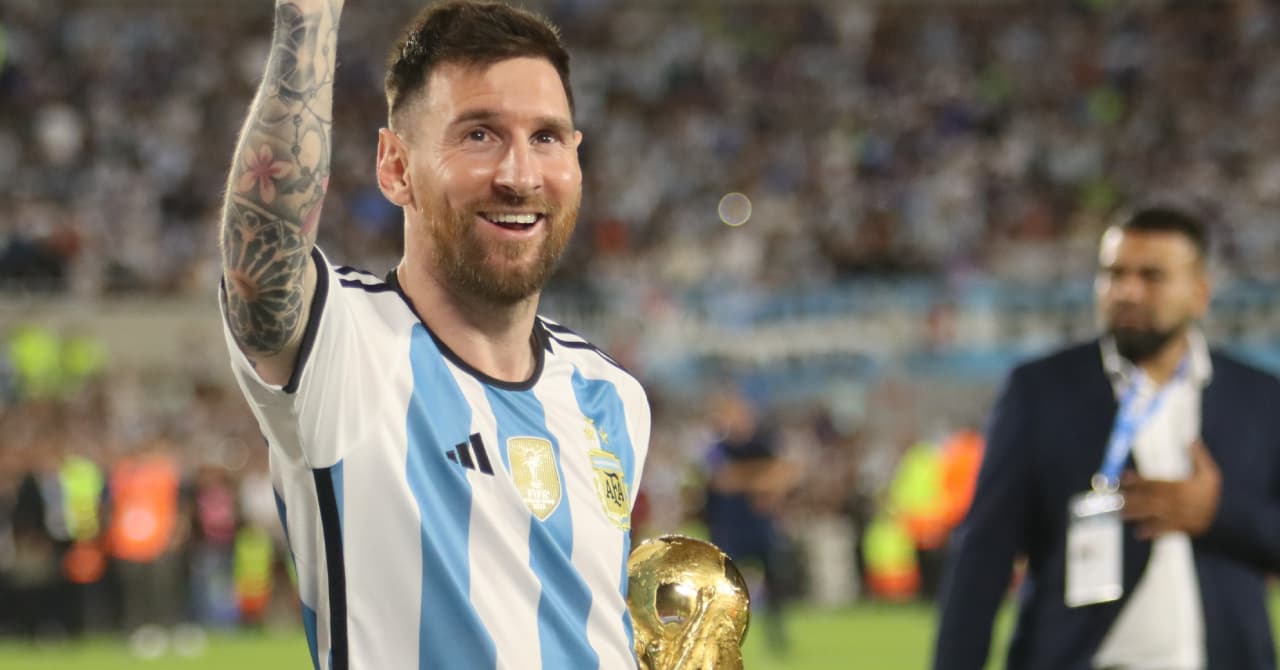
At the centre of it all, inevitably, stands Lionel Messi. Eight Ballons d’Or, three World Cups reached, one finally won. He will turn 39 during the tournament. This feels like the last act.
The question hangs over Group J: can anyone spoil the farewell?
Algeria: Petkovic’s Pragmatists With Mahrez at the Helm
Algeria return after missing two straight World Cups, still chasing the high of 2014, when they pushed Germany to extra time in the last 16 and left Brazil with a reputation as one of the tournament’s great spoilers. Twelve years on, the ambition is similar: reach the knockouts and be the team nobody wants to face.
They arrive under Vladimir Petkovic, the meticulous coach who took Switzerland to the 2018/19 Nations League finals and the quarter-finals of Euro 2020, where they knocked out Turkiye and stunned France before falling to Spain on penalties. He knows how to organise a side for tournament football and how to make favourites uncomfortable.
Algeria’s route here was efficient. They topped CAF Group G, powered by Mohamed Amoura’s 10 goals – seven more than anyone else in their section. The Wolfsburg forward rattled in a hat-trick against Mozambique and began his Bundesliga season with eight goals in 19 games before his form cooled with an 11-match drought. Petkovic, though, has seen enough to trust that Amoura can ignite again under the World Cup lights.
Around him, there is a spine of European experience. Houssem Aouar, once capped by France, brings Roma and Lyon pedigree to midfield. Amine Gouiri, fit again after injury, underlined his threat with two goals in a 7-0 friendly demolition of Guatemala in Genoa in March. Nabil Bentaleb, now at Lille, adds steel and savvy from his Tottenham days.
At the back, there is intrigue. Luca Zidane, son of Zinedine, makes his first World Cup squad having recovered from a broken jaw and chin suffered with Granada in April. On the flank, Anis Hadj Moussa arrives off a storming season at Feyenoord, where he produced 14 goals and seven assists and forced himself into the conversation as one of Algeria’s most dangerous outlets.
Rayan Ait-Nouri’s year has been more complicated. The Manchester City wideman started the club’s first three games before slipping to the fringes between an ankle injury and AFCON duty, although Pep Guardiola did hand him a seven-game run of starts across February and March. His pace and direct running remain a weapon, particularly in transition.
And then there is Riyad Mahrez.
Now captain, now based at Al-Ahli in the Saudi Pro League, Mahrez needs eight more goals to become Algeria’s all-time leading scorer. He already has 38 goals and 43 assists from 113 caps, a ledger decorated by the 2019 AFCON title, that miracle Premier League crown with Leicester City in 2016, the African Footballer of the Year award that followed, and the treble with Manchester City in 2023. At 35, he is still the reference point, the man his teammates look for when the game tightens.
He showed at the 2025 AFCON group stage that his left foot remains decisive, scoring three times in two matches as Algeria cruised through with a perfect record.
The stakes in Group J are clear for Petkovic’s side. With Jordan the obvious outsiders, their final group game against Austria looms as a de facto play-off for automatic qualification. With eight third-placed teams also advancing, Algeria have room for manoeuvre, but the expectation is simple: in their fifth World Cup appearance, they should reach the knockouts for only the second time.
They have the coach. They have the captain. Now they need the performance.
Argentina: Champions With a Target on Their Backs
No one has retained the World Cup since Brazil in 1958 and 1962. Argentina travel with the intention of ripping that statistic out of the record books.
Lionel Scaloni has already rewritten plenty of history. He delivered the Copa America in 2021, ending a 28-year drought. He followed it with the World Cup in Qatar in 2022. Then he doubled down with another Copa America in 2024. No Argentina manager had ever combined continental and global glory before; Scaloni has done it in a three-year burst that has redefined an era.
His squad is not a museum piece of that 2022 triumph. It is an evolution, but the core remains familiar. Emiliano Martinez, the penalty-box showman who turned the Qatar final into a personal stage, still wears the gloves. Cristian Romero and Lisandro Martinez form a snarling, front-foot defensive pairing. In front of them, Rodrigo De Paul, Alexis Mac Allister and Enzo Fernandez knit together one of the most complete midfields in the tournament: industry, control, and the ability to quicken the tempo in a heartbeat.
Up front, the options are almost unfair. Julian Alvarez, the chameleon forward, can operate wide, through the middle or in support of another striker. Lautaro Martinez, relentless and ruthless, leads the line with the authority of a man used to carrying the burden at club level.
There are absences. Angel Di Maria, forever etched into Argentine folklore after his goal in the Copa America final and his performance in Lusail, has stepped away from international football. Franco Mastantuono, the teenage Real Madrid midfielder whose emergence had captivated scouts and fans alike during qualification, did not make the final squad. Scaloni, never sentimental in selection, has chosen continuity and balance over romance.
The only real scare has been Messi’s body. A hamstring issue with Inter Miami in May prompted a sharp intake of breath across Argentina. Scaloni’s public assessment was cautious but calm, insisting the early reports were “not that bad”. The expectation is that Messi will be fit for the opener against Algeria in Kansas City.
His presence in North America is more than a sporting subplot; it is a cultural event. This will be a record sixth World Cup for Messi. Nobody seriously imagines there will be a seventh. He finished CONMEBOL qualifying as top scorer with eight goals and, even at 38, remains the single most important figure in the squad. Everything still bends to his orbit.
Group J, on paper, should be his stage to control. Argentina have the depth, the cohesion and the scars of past shocks to keep their focus sharp. The real scrutiny, the real judgement, will come in the knockout rounds.
But if this is the final World Cup chapter of Messi’s career, it starts here, against a familiar kind of danger.
Austria: Rangnick’s Relentless Pressers
Austria return to the World Cup after 28 years away, but they do not arrive as tourists. They arrive as a problem.
Ralf Rangnick is the architect. Since taking charge, he has imposed his philosophy with typical clarity: aggressive pressing, high tempo, vertical attacks. He has not just tweaked the national team; he has reshaped it, aligning it with the Red Bull blueprint he helped design.
The results have followed. At Euro 2024, Austria reached the last 16, finishing above both France and the Netherlands in their group. That run, and the conviction with which they played, shifted expectations. World Cup qualification confirmed that this was no one-off. The squad heading to North America might be the strongest the country has fielded since that third-place finish in 1954.
The backbone of the side is forged in the Bundesliga. Fourteen of the 26 players ply their trade in Germany, used to the intensity and pressing triggers Rangnick demands. In midfield, RB Leipzig provide a ready-made trio: Christoph Baumgartner, Xaver Schlager and Nicolas Seiwald, all either developed or refined within the Red Bull system.
Marcel Sabitzer, with 95 caps, brings experience and a knack for big-game moments from Borussia Dortmund. Konrad Laimer, a relentless runner at Bayern Munich, powers the wide midfield lanes, turning defence into attack in a few strides.
At the back, David Alaba captains the team at 33, his versatility and composure giving Rangnick options across the defensive line. At the other end of the age spectrum, Carney Chukwuemeka has chosen Austria over England, a significant commitment from a player with a high ceiling, while Paul Wanner of PSV Eindhoven, also 20, could use this stage to announce himself beyond club football.
Then there is Marko Arnautovic. Vice-captain, 36 years old, 47 goals from 132 caps – the country’s all-time leading scorer. He travels with the awareness that this may be his final major tournament. His presence, his personality, still loom large in a squad increasingly built around younger legs.
The star, though, is Baumgartner.
He arrives in the form of his life, fresh from a season at RB Leipzig that yielded 13 goals and 10 assists in the Bundesliga. Those numbers place him among the most productive central midfielders in Germany. His timing between the lines, his knack for arriving late in the box, his composure in tight spaces – all of it makes him a nightmare assignment for Group J defences.
Austria’s opener against Jordan in Santa Clara gives them a platform. Win it, and the path to the top two becomes clear. With Algeria likely to be their direct rival for an automatic spot, Rangnick’s organisation and the sheer depth of quality in his squad make Austria a strong candidate to follow Argentina into the knockouts.
They are not here to make up the numbers. They are here to test how far a clear idea and a relentless press can carry an underdog.
Jordan: The Newcomers Chasing Their Moment
For Jordan, everything about this World Cup is new. The anthem, the tunnel, the first whistle. It is their debut on the biggest stage, and they have fought hard to be here.
They qualified by finishing second in their AFC third-round group, behind South Korea but ahead of Iraq, Oman, Palestine and Kuwait. That is not a soft path. It is a sign of a team that knows how to survive tight campaigns and high-pressure nights.
On the touchline stands Jamal Sellami, a Moroccan coach with a strong domestic record at home and a continental title with Morocco’s local-national team at the 2018 African Nations Championship. He has been open about his ambition: to follow the trail Morocco blazed in Qatar, when they became the first African and Arab side to reach a World Cup semi-final.
Half of his squad – 13 of 26 – play their club football in Jordan. That domestic core gives the team a cohesion many bigger nations envy. Combinations are rehearsed, relationships well-worn. In a short tournament, where some sides need weeks to find rhythm, Jordan arrive with an identity already in place.
They have not escaped misfortune. Striker Yazan Al-Naimat, one of their key attacking outlets, tore his ACL in December and misses the tournament. It is a significant blow to their cutting edge.
Defensively, captain Ehsan Haddad marshals the backline from Al-Hussein, while Yazan Al-Arab brings experience from FC Seoul, one of the few in the squad based outside the Middle East. They will need to be almost perfect without the ball to stay alive in this group.
All hope in attack, though, narrows onto one name: Mousa Al-Tamari.
The Rennes forward is widely regarded as the finest player Jordan has produced. He became the first Jordanian to play in Ligue 1 and carries the nickname “Jordanian Messi” at home, a label that underlines the level of expectation resting on his shoulders. His dribbling, his ability to beat a man and create something from nothing, is Jordan’s best – and perhaps only – route to a genuine upset.
The schedule offers a sliver of opportunity. The opener against Austria in Santa Clara is their most realistic chance of a result. A point there would be a statement that Jordan have not come just to swap shirts and take photographs. Any reward from the Algeria match would be historic.
Then comes Argentina at AT&T Stadium in Dallas to close the group. Whatever the stakes by then, it will be the biggest night Jordanian football has ever known.
Group J, then, is not just about whether Argentina can glide through or whether Messi can script one last masterpiece. It is about whether Algeria can reclaim their 2014 menace, whether Austria’s press can crack the hierarchy, and whether Jordan can seize a moment that might define their footballing story for generations.