Gotham FC and Boston Legacy Draw 1-1 in Tactical Standoff
NJ/NY Gotham FC W and Boston Legacy W shared a 1-1 draw at Sports Illustrated Stadium in a match that was tactically tight and defined by contrasting structures. Gotham’s 4-2-3-1 sought control through the double pivot and an advanced line of three creators behind Esther González, while Boston’s 3-1-4-2 relied on a compact back three, a single holding midfielder, and direct vertical play into a mobile front two. The statistical profile – Gotham edging possession 53% to 47% and shots 6–5 – reflects a marginal territorial advantage for the hosts, but Boston’s more efficient shot profile and three yellow cards underlined a physically committed, counter-punching approach that successfully disrupted Gotham’s rhythm.
I. Scoring Sequence & Disciplinary Log
Disciplinary log (chronological, all cards):
- 21' Barbara Olivieri (Boston Legacy W) — Foul
- 28' Samantha Rose Smith (Boston Legacy W) — Foul
- 45+2' Laís Araújo (Boston Legacy W) — Foul
Card verification: Gotham 0, Boston 3, Total: 3.
The first significant tactical inflection came on 21', when forward Barbara Olivieri’s yellow for “Foul” signaled Boston’s willingness to defend aggressively from the front, pressing Gotham’s first phase and preventing clean progression through Jess Carter and Tierna Davidson. Seven minutes later, midfielder Samantha Rose Smith was booked, again for “Foul” at 28', reinforcing how Boston’s midfield line, particularly Smith as a right-sided central midfielder, was tasked with breaking up Gotham’s attempts to combine between the lines via Jaedyn Shaw and Sarah Schupansky.
Gotham’s territorial play was rewarded on 37', when Jaedyn Shaw struck for the hosts. Operating as the central attacking midfielder in the 4-2-3-1, Shaw’s goal encapsulated Gotham’s plan: use the double pivot of Jaelin Howell and Savannah McCaskill to circulate possession, then find Shaw between Boston’s midfield and defensive lines. Her “Normal Goal” gave Gotham a 1-0 lead and briefly stretched Boston’s 3-1-4-2 shape.
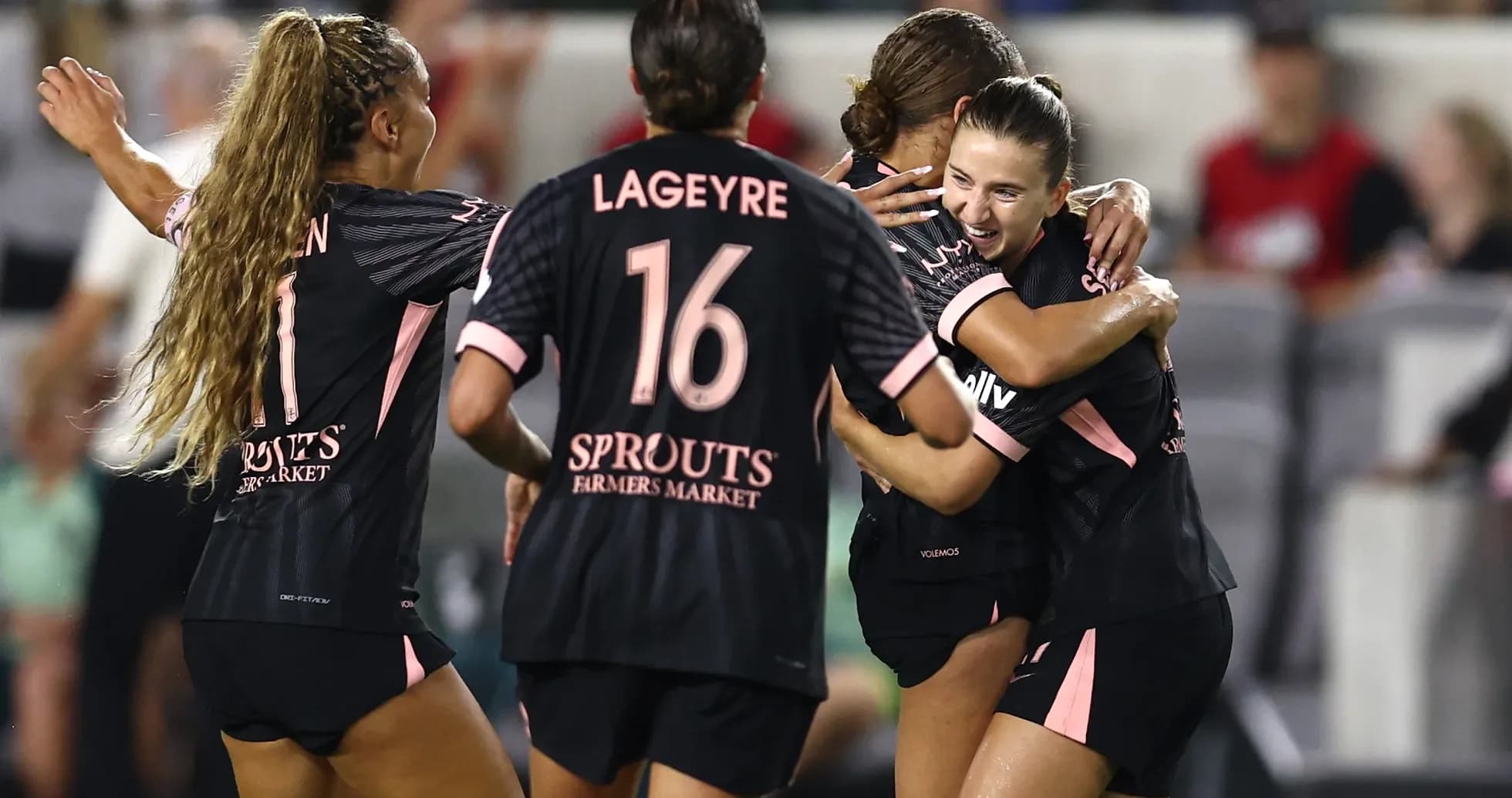
Boston’s response was immediate and structurally telling. On 40', Alba Caño equalized, assisted by Olivieri. The combination of a forward (Olivieri) creating and a midfielder (Caño) finishing reflected Boston’s emphasis on quick vertical transitions from their front two into late-arriving midfield runners. That made it 1-1 and rebalanced the match before halftime.
Just before the interval, at 45+2', Laís Araújo collected Boston’s third yellow, again for “Foul”. The booking for a central defender in the back three underlined the strain Gotham’s advanced line and González’s presence placed on Boston’s last line whenever Gotham managed to play through pressure. The halftime score was 1-1, accurately mirroring a game where Gotham had more of the ball but Boston had carved out enough dangerous moments in transition.
In the second half, Boston adjusted personnel without changing base shape. At 57', a double substitution reshaped their defensive and attacking profiles: Jorelyn Carabalí (IN) came on for Samantha Rose Smith (OUT), adding fresh legs and defensive solidity in wide or back-line roles, while Aissata Traore (IN) came on for Barbara Olivieri (OUT), maintaining the front-line mobility but with a different physical and pressing profile. No further goals followed, and the match closed at 1-1.
II. Tactical Breakdown & Personnel
Gotham’s 4-2-3-1 was built on controlled possession and structured occupation of zones. Ann-Katrin Berger, with 3 goalkeeper saves, anchored a back four of Margaret Purce, Jess Carter, Tierna Davidson, and Guro Reiten. The full-backs, Purce and Reiten, were key to width in settled possession, stepping high to pin Boston’s wing midfielders and create 2v1s on the flanks. Carter and Davidson were tasked with risk-managed build-up: circulate, but avoid turnovers that could feed Boston’s front two.
The double pivot of Jaelin Howell and Savannah McCaskill was central to Gotham’s control. Howell provided the primary screening and first outlet in front of the center-backs, while McCaskill linked more aggressively into the half-spaces, supporting the attacking trio of Jordynn Dudley, Schupansky, and Shaw. Gotham’s 295 passes, with 236 accurate (80%), show a solid but not dominant possession game – enough to keep Boston working, but not enough to completely unbalance a compact 3-1-4-2.
Shaw’s goal is the clearest tactical payoff: as the No. 10, she exploited the space behind Boston’s single pivot (Annie Karich) and in front of the back three. With Boston’s midfield four stretched horizontally to cover Gotham’s width, Shaw could receive between lines and attack the defensive unit facing its own goal. Esther González’s presence as a true No. 9 helped occupy Laís Araújo and her fellow center-backs, opening those pockets for Shaw.
Boston’s 3-1-4-2, by contrast, prioritized verticality and defensive density. Casey Murphy matched Berger with 3 saves, but did so behind a more compact, lower block. The back three of Bianca St Georges, Laís Araújo, and Emerson Elgin, protected by Karich as the single pivot, formed a narrow central box that made it difficult for Gotham to play directly into González’s feet. The wing midfielders, Nichelle Prince and Alba Caño, had dual roles: track Gotham’s full-backs and spring forward in transition.
Offensively, Boston’s 5 total shots (4 on target) from only 47% possession indicates a more selective, efficient shot profile. The equalizer – Caño scoring from an Olivieri assist – reflects the core mechanism: forwards dragging Gotham’s center-backs deep or wide, with a late-arriving midfielder attacking the vacated space. After halftime, the introduction of Carabalí and Traore at 57' slightly rebalanced the team: Carabalí added defensive coverage to help manage Gotham’s wide overloads, while Traore replaced Olivieri’s creative pressing with more direct running in behind.
Boston’s 14 fouls and 3 yellow cards all for “Foul” underscore a game plan built on interrupting Gotham’s rhythm at key moments, particularly in midfield. The bookings to Olivieri and Smith show how Boston’s first and second lines were instructed to challenge aggressively, while Araújo’s card highlighted the pressure Gotham’s central combinations could exert when they broke the press.
III. The Statistical Verdict
The raw numbers support the visual pattern of a finely balanced tactical contest. Gotham held a slight edge in possession (53% to 47%), passes (295 vs 265), and passing accuracy (236/295, 80% vs Boston’s 208/265, 78%). They also generated one more total shot (6–5), but Boston produced more shots on target (4–3), suggesting that while Gotham controlled territory, Boston found clearer looks at goal through transition and vertical play.
Defensively, both goalkeepers were equally tested in volume – 3 saves each – but the distribution of shots (Boston with more on target from fewer attempts) indicates that Gotham’s defensive structure occasionally allowed higher-quality chances when broken. Boston, meanwhile, conceded more total shots but often from less dangerous positions, helped by the protection of their back three and single pivot.
Discipline tilted clearly toward Boston: 3 yellow cards to Gotham’s 0, all explicitly for “Foul”. This asymmetry is consistent with a side that spent more time without the ball and chose to defend assertively, sometimes at the edge of the law, to disrupt Gotham’s possession phases.
Overall, the 1-1 scoreline aligns with the statistical and tactical balance: Gotham’s structured 4-2-3-1 produced control and one decisive moment through Shaw, while Boston’s compact 3-1-4-2 and transition efficiency, capped by Caño’s equalizer, ensured a deserved point despite the heavier disciplinary load.