Gornik Zabrze vs Fenerbahçe Tactical Analysis
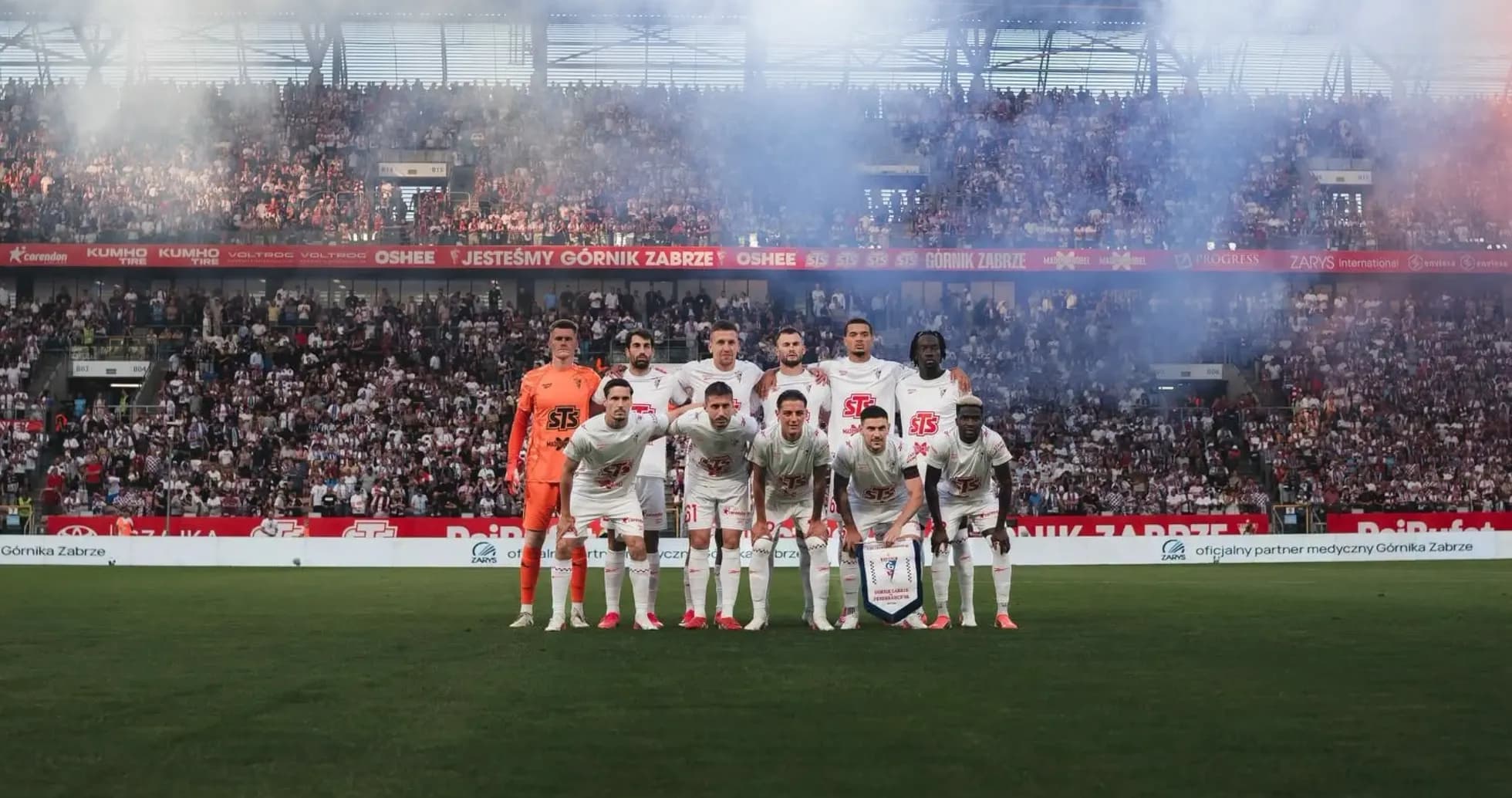
Gornik Zabrze’s 4-1-4-1 against Fenerbahçe’s 4-2-3-1 produced a finely balanced 1-1 draw at Stadion im. Ernesta Pohla, with the tactical story defined by structure, discipline and contrasting ways of managing territory rather than by sheer volume of chances.
Out of possession, Gornik’s single pivot shape was clear. Maximilian Dietz anchored in front of the back four, with Lukáš Sadílek and Kacper Urbański shuttling either side as advanced interiors. The wingers, Taofeek Ismaheel and Yvan Ikia Dimi, worked back to form a compact 4-5-1 block, which helped keep Fenerbahçe’s central supply line relatively clean but conceded controlled possession between the lines. That approach is reflected in the numbers: Gornik accepted a 48% share of the ball, but still generated 15 total shots to Fenerbahçe’s 14, and crucially hit 6 shots on goal to the visitors’ 2. When they did progress, they did so with purpose rather than circulation.
The main offensive pattern for the hosts came from wide-to-half-space combinations. Erik Janža’s left flank was particularly important: his overlaps and underlaps created the crossing situations and second-ball pressure that led to a high count of 9 corners and 5 blocked shots. With Erik Prekop as the lone forward, Gornik looked to pin Milan Škriniar and Nathan Aké centrally, then attack the channels outside them. The equaliser at 45+10’ – Michal Sáček arriving from right-back to finish from a Prekop assist – was emblematic: a full-back stepping into an advanced lane while the “front five” of Ismaheel, Ikia Dimi, Sadílek, Urbański and Prekop occupied Fenerbahçe’s back line.
Defensive Performance
Defensively, Gornik’s aggression showed up in both their card profile and their foul count. They committed only 8 fouls but collected 4 yellow cards, three of them on the back line: Sadílek for “Holding” at 11’, Janža for “Unsportsmanlike conduct” at 28’, Rafał Janicki for “Unsportsmanlike conduct” at 66’, and Josema for “Roughing” at 70’. That pattern underlines how much strain the defensive unit was under when Fenerbahçe managed to isolate them 1v1. Yet despite that pressure, Gornik limited the visitors to just 2 shots on goal, an impressive containment given the attacking talent on the pitch.
In goal, Philipp Schulze (Gornik Zabrze) had a relatively quiet but high-leverage night. The statistics credit him with 1 save, which, combined with the single goal conceded from the penalty spot, indicates that Fenerbahçe’s threat was more about territorial dominance than repeated testing of the goalkeeper. The visitors’ 10 shots inside the box suggest they reached promising zones, but Gornik’s last-ditch blocks (5) and collective collapsing around the ball meant many of those efforts never reached Schulze.
On the other side, Mert Günok (Fenerbahçe) was busier and more central to the result. He made 5 saves, a total that mirrors Gornik’s 6 shots on goal and underlines how the Turkish side needed their goalkeeper to preserve the 1-1 scoreline. With Fenerbahçe holding 52% possession and completing 372 accurate passes from 432 (86%), they controlled the rhythm for long spells, but they were also repeatedly exposed in transition when Gornik broke the first line of pressure. Günok’s interventions bridged the gap between a team that largely dictated the ball and one that still conceded the better quality of chances on target.
Fenerbahçe's Strategy
Fenerbahçe’s 4-2-3-1 relied on the Fred–Mattéo Guendouzi double pivot to steer the game. They built methodically, using Jayden Oosterwolde and Nélson Semedo to stretch the pitch horizontally while Marco Asensio and Kerem Aktürkoğlu drifted inside to overload the half-spaces. The early penalty converted by Talisca at 12’ gave them a platform to manage the tempo, and their passing metrics show a side comfortable circulating the ball until a gap appeared. However, the shot profile – 14 attempts, but only 2 on goal and 5 blocked – points to a lack of incision in the final third, with too many attacks ending in crowded efforts rather than clean looks.
Ismail Kartal’s in-game management was proactive. The double change at 46’, with İrfan Can Kahveci (OUT) and Asensio (OUT) replaced by İsmail Yüksek (IN) and Mason Greenwood (IN), shifted the emphasis towards more direct running and vertical threat. Later introductions – Anthony Musaba for Aktürkoğlu at 70’ and Oğuz Aydın for Talisca at 80’ – further tilted the front line towards pace and depth. Yet the late spate of yellow cards – Semedo for “Tripping” at 86’, Greenwood for “Roughing” at 90+1’, Fred for “Unsportsmanlike conduct” at 90+2’ and Guendouzi for “Delay of game” at 90+3’ – revealed a side increasingly reactive and stretched as they tried to protect the draw and disrupt Gornik’s transitions.
Substitutions and Tactical Adjustments
Gornik’s substitutions were more about energy maintenance than structural change. Maksym Khlan (IN) for Dietz (OUT) and Sondre Liseth (IN) for Prekop (OUT) at 63’ freshened the pivot and the focal point, while Peter González (IN) for Ikia Dimi (OUT) at 73’ and Bruno Durdov (IN) for Sadílek (OUT) at 81’ sustained the running power in midfield. The 4-1-4-1 remained intact, preserving the compact mid-block that had frustrated Fenerbahçe’s central combinations.
Statistically, the draw feels like a clash of styles cancelling each other out. Fenerbahçe’s superior pass completion and marginal possession edge underline their control of the ball, but Gornik’s advantage in shots on goal (6–2), corners (9–7) and blocked efforts (5–5, despite less possession) suggests the hosts carved out the more dangerous moments when they did attack. Both sides finished with 5 blocked shots, reinforcing the picture of two compact defensive units protecting their boxes aggressively.
Discipline tilted heavily towards the visitors: 15 fouls and 5 yellow cards for Fenerbahçe against 8 fouls and 4 yellows for Gornik Zabrze, for a total of 9 cards. That imbalance, coupled with the late-game bookings, highlights how much Fenerbahçe had to lean on tactical fouling and game management to secure their away result in this 2nd Qualifying Round tie. From a tactical lens, Gornik will be encouraged by how their structure translated into clear chances, while Fenerbahçe will feel their control of possession did not convert into enough meaningful shots on goal.