Ghana's Dilemma: Overcoming England's Challenge
Ghana escaped. Just.
Ranked 73rd in the world and 39 places below Panama, the Central Americans were supposed to be the foil in Ghana’s World Cup opener, not the protagonists. Yet for long stretches, the Black Stars chased shadows, clung on, and ultimately staggered away with a 1-0 win that owed as much to Carlos Queiroz’s in-game adjustments and his players’ sheer will as it did to any clear superiority.
England are next. Group favourites. Tournament contenders. There will be no such margin for error.
A famous name, a real dilemma
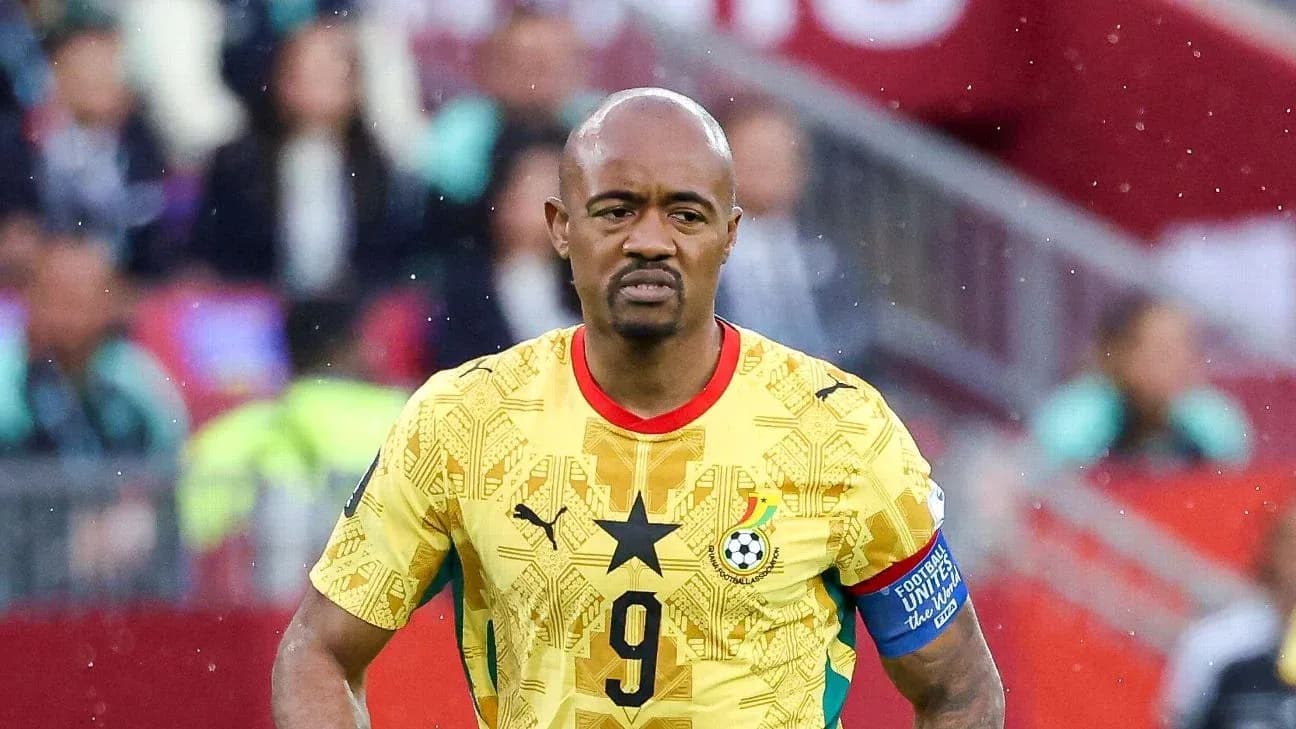
At the heart of Queiroz’s selection headache sits Jordan Ayew.
He is the captain. The most experienced player in the squad. A centurion in caps, the son of Abedi Pele, and now one of only four Ghanaians to feature at three World Cups after appearances in 2014 and 2022. He carries institutional memory, dressing-room authority, and the kind of gravitas that cannot be coached.
He also struggled badly against Panama.
Ayew’s lack of pace was repeatedly exposed. When he did receive the ball, his decisions too often slowed Ghana’s attacks or killed them outright. One moment summed it up: Antoine Semenyo slipped a pass into space, then burst forward, waiting for the return. Ayew had time, grass in front of him, and a simple ball to play. He chose to dribble into traffic and lost possession.
Panama did not punish those errors. England will.
A static centre forward will be easy prey for an England defence that, for all its flaws, will not allow a veteran striker to turn and pick his spot at his own tempo. Brandon Thomas-Asante, who teed up Caleb Yirenkyi’s winner, offers speed and aggression but not Ayew’s experience, and he has yet to test himself against a side loaded with the calibre of player England will roll out.
So Queiroz faces a stark choice. Bench his captain in a game that cries out for leadership? Or persist with him in a role that no longer fits his physical profile?
There is a third way. Use Ayew where his brain, not his legs, does the work.
When he dropped deeper against Panama, linking play rather than trying to run in behind, Ghana looked more coherent. In an advanced midfield role, Ayew can receive between the lines, connect the double pivot to the forwards, and exploit pockets of space in front of England’s back four. There, his lack of outright speed matters less; his vision and timing matter more.
A set-up with Ayew operating underneath Semenyo and one of Thomas-Asante or Abdul Fatawu offers a balance: intelligence and control in the half-spaces, pure pace and power on the last line. That is where England are more vulnerable. That is where Ghana can hurt them.
Partey’s return is non-negotiable
If Ayew is a puzzle, Thomas Partey is the answer to a different, more urgent question: how do Ghana avoid being overrun in midfield?
Elisha Owusu endured a torrid time against Panama. He was not alone; the team’s first-half structure left him exposed. But the contrast with what Partey can offer is stark.
England’s midfield is the real thing. Jude Bellingham and Declan Rice dictated a 4-2 dismantling of Croatia in their opener, driving through lines, setting the tempo, and suffocating any attempt at control. If Ghana go into that battle without their most accomplished midfielder, they risk spending 90 minutes chasing white shirts.
Partey must start. And he must start alongside Yirenkyi, who impressed with his energy and timing against Panama.
Together, they can sit in front of the defence, close the central lanes that Croatia exploited, and force Rice to think more about defending than joining attacks. That platform would allow Ayew to drift into pockets, receive on the half-turn, and bring Semenyo and the wide forwards into play, rather than Ghana simply hacking clear and waiting for the next wave.
With Partey, Ghana can claim spells of possession and take the sting out of England’s rhythm. Without him, they risk another long evening of suffering.
Exposing England’s soft edges
For all the noise around England’s attacking firepower, their win over Croatia came with a warning label. They conceded twice and looked shaky whenever the ball went wide and the tempo rose.
Reece James lost his man on one Croatian goal. On the opposite flank, Nico O’Reilly shone going forward but showed why he is still “a work in progress” defensively. The spaces behind and beside England’s full-backs were there, and Croatia found them whenever they attacked quickly before the defence could reset.
This is Ghana’s opportunity.
Semenyo’s direct running can pin James and O’Reilly back, forcing them into uncomfortable one-on-ones. Thomas-Asante’s relentless movement and physicality can drag centre-backs into areas they do not want to go. Fatawu and Ernest Nuamah can isolate their markers, attack the outside, then cut in or slide passes across the box.
The blueprint is clear: move the ball forward early, commit numbers, and ask England’s defenders to make repeated decisions at high speed. Croatia did that and scored twice. Ghana have the legs and the power to do the same, if they trust their front line and keep the transitions sharp.
No more slow starts
Against Panama, Ghana spent an hour on the back foot. Panama dictated the ball, carved out the clearer chances, and forced the Black Stars into a reactive, nervy performance. Only when Queiroz pushed Semenyo into the middle and dialled up the press with second-half substitutions did the game tilt.
That kind of slow burn will not survive contact with Thomas Tuchel’s England.
The Three Lions looked rattled when Croatia pressed them high in the first half, forcing loose passes in midfield and uncertainty at the back. Croatia’s reward was two goals and several more openings before the interval.
England still scored twice in that same period. That is the danger. If Ghana sit deep as they did against Panama, Harry Kane and his supporting cast will not wait politely for adjustments. They will punish every loose ball, every gap in the back line, and they may have the contest effectively settled before Queiroz can reach his whiteboard.
Ghana must start at the level they reached after the break in their opener, not grow into it. The game needs to become a contest of will and stamina, a grind that tests England’s nerve and patience as much as their technique.
Turn it into a fight. Make every duel matter. Stretch the game into the final quarter of an hour with something still on the line.
Survive the dead ball
One area offers England a cold, ruthless edge: set pieces.
On the World Cup’s opening matchday, they posted the highest non-penalty expected goals and the most shots on target from dead-ball situations. Kane’s second against Croatia came from a simple, brutal truth: he was left unmarked from a Rice corner and made the punishment inevitable.
Ghana cannot afford that kind of lapse.
Whether Lawrence Ati-Zigi recovers in time to start or Benjamin Asare keeps his place after replacing him at half-time against Panama, the message is the same: every corner, every wide free kick must be treated as a crisis. Markers cannot switch off. Zonal lines cannot drift. One mistake, and England’s captain will bury it.
The first step is prevention. Do not give away cheap fouls around the box. Do not leave the same holes in central defensive areas that Panama exploited. This is where Partey’s positioning and anticipation become invaluable, cutting out danger before it becomes a set-piece scenario.
Penalties are an even harsher reality. Kane has made a career out of turning the spot into his stage, using subtle feints in his run-up and an encyclopaedic study of goalkeepers’ habits. Asare and Ati-Zigi must do their homework in return. Guesswork will not be enough.
Queiroz framed the challenge after the Panama win. “We have to suffer; there is no other way,” he said, underlining how costly every point at this World Cup will be and how ready his players are to pay that price.
England will test that resolve more than any other side in the group. The question now is simple: can Ghana turn one narrow escape into a statement, or will their flaws be laid bare under the brightest lights?