Genoa Fury as De Bruyne's Goal Sparks VAR Controversy
The new Serie A season lasted less than a full matchday before the first refereeing row exploded. It arrived at Marassi, in a game that was goalless, tense and finely balanced – until Kevin De Bruyne struck and Genoa lost their heads.
Napoli beat Genoa 2-0 at the Stadio Luigi Ferraris, but the scoreline tells only part of the story. For Genoa, the match turned on a single flashpoint and a familiar name on the teamsheet: referee Marco Di Bello.
The flashpoint: Vasquez, De Bruyne and a swallowed whistle
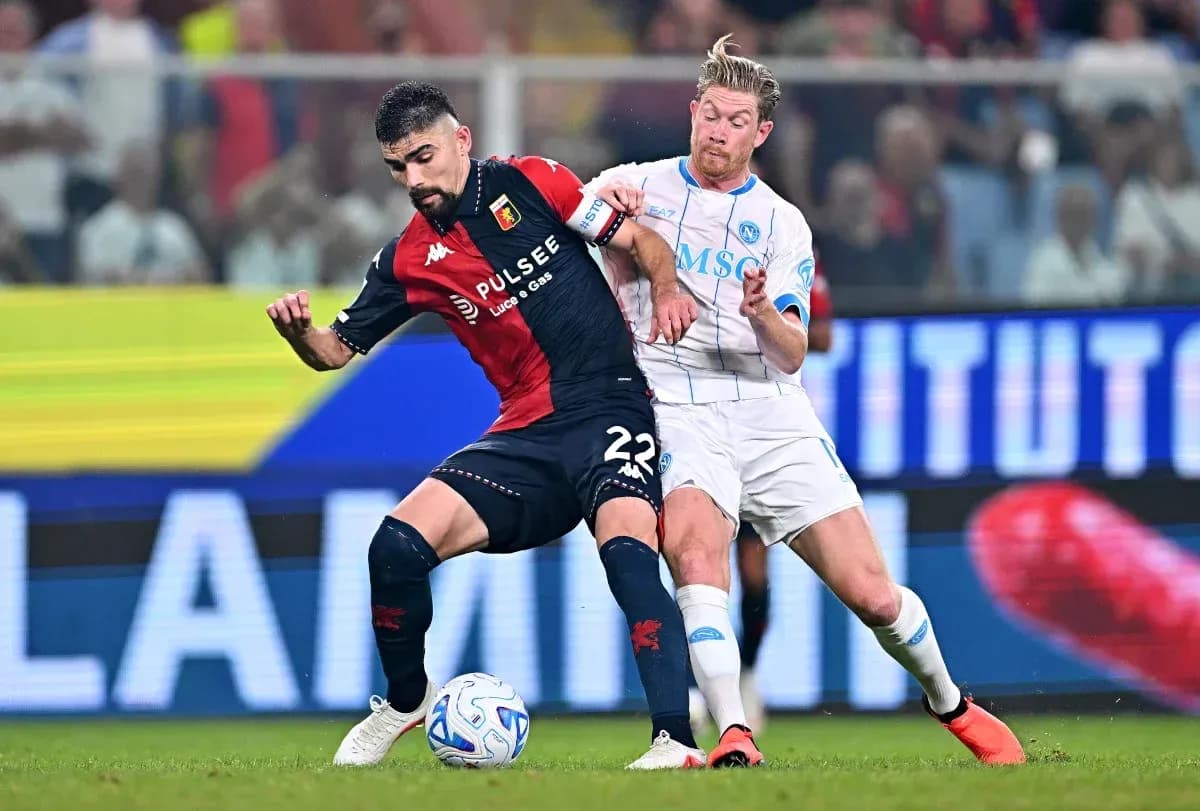
The controversy came with the game still at 0-0. A loose ball dropped in the Genoa box. Johan Vasquez stepped in front of De Bruyne, trying to shield it. A nudge came from behind. Vasquez went down. De Bruyne didn’t wait for any whistle; from seven yards out, he buried the chance.
Di Bello had a clear view. He raised the whistle to his lips, then hesitated, then let play continue as the ball hit the net. The decision went to VAR, but the officials in the booth opted against sending him to the monitor. Their judgment: no clear and obvious error.
Inside Marassi, disbelief turned to anger. On the Genoa bench, it felt like déjà vu.
Lopez: “All of Italy saw what happened”
After the final whistle, Genoa’s Chief of Football Diego Lopez did not bother to disguise his frustration.
“All of Italy saw what happened today,” he told Sky Sport Italia and DAZN Italia, pointing directly at the incident on Vasquez. “Fortunately, there are cameras, so all of Italy saw that there was a clear push on Vasquez to create the opportunity for Napoli to score. The referee saw it and decided not to blow his whistle, then the referee decided not to view it again.”
Lopez’s anger went beyond one decision. It was rooted in history – and in the identity of the man in charge.
“This referee was also in the VAR booth last season in the game against Napoli, so naturally when we heard he had been assigned to this match, we were worried,” Lopez said.
“Last season it was 2-2 until the last minute and Napoli were awarded a penalty. He was also in Roma-Genoa, where our goalkeeper was hit in the face during a goal. Both times, the referees later acknowledged these were errors in Open VAR.”
Open VAR, DAZN’s programme where the referees’ association reviews and explains key decisions from the latest Serie A round, had already logged Di Bello-linked mistakes involving Genoa. That context only sharpened the sense of grievance.
“We tried to calm the players, because they knew Genoa had already suffered two recognised errors at the hands of this referee,” Lopez added. “We know that officials are human and can make mistakes, but all of Italy saw what happened today.”
Napoli punish the chaos
Once the deadlock broke, Napoli showed no mercy. The momentum swung decisively. De Bruyne, already at the heart of the storm, turned provider soon after his opener. He slipped the ball through for Antonio Vergara, who finished to make it 2-0 and kill any realistic hope of a Genoa comeback.
From there, Napoli managed the game, while Genoa’s players wrestled with the feeling that the contest had been tilted at the crucial moment.
On the pitch, Leo Ostigard and his teammates battled to restore some control, but Napoli’s forward line – with Rasmus Hojlund pressing and stretching the defence – kept Genoa pinned back. The damage had been done.
VAR under the spotlight – again
This was supposed to be the season when Italian referees tightened the threshold for VAR intervention, stepping in only for “clear and obvious” mistakes. That phrase now sits at the heart of the argument.
The De Bruyne–Vasquez incident lit up television studios across the country. Pundits split into two camps: those who saw a foul on Vasquez, and those who argued the defender tried to manufacture contact instead of dealing with the ball. The referee, backed by VAR, sided with the latter view.
On opening weekend, with the league eager for a calmer narrative around officiating, Serie A instead finds itself asking an old question: where does interpretation end and error begin?
For Genoa, that question is no longer theoretical. It’s tied to a specific referee, specific matches, and a growing sense of injustice that now stretches into another season.