Gabriel's Tug-of-War Exposes Manchester United's Fragile Era
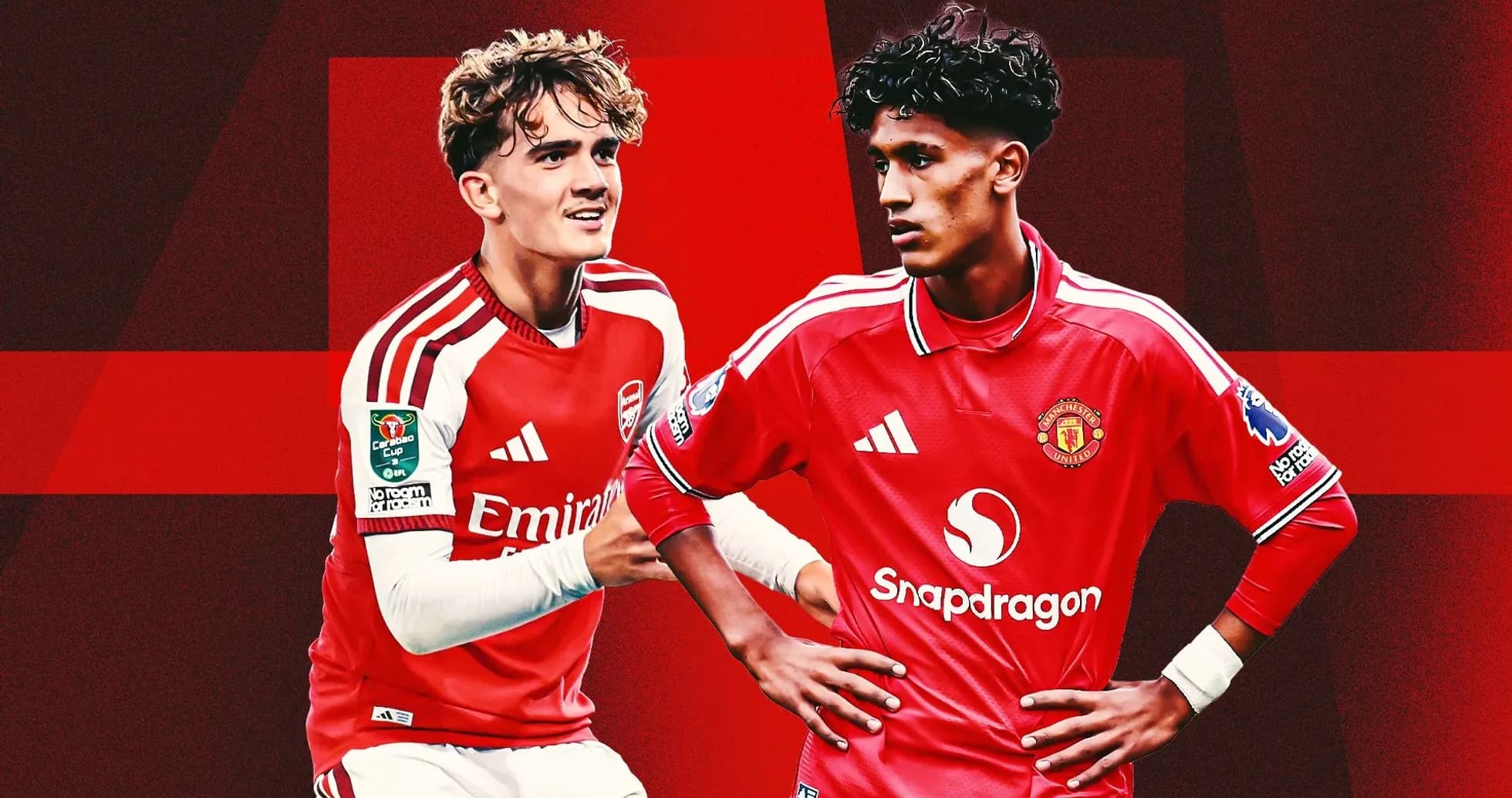
Real Madrid want him. So do Barcelona. Paris Saint-Germain and Bayern Munich are circling as well. Manchester United, though, are digging their heels in over Gabriel – the 15-year-old forward they believe could be the brightest talent to come through Carrington since Marcus Rashford.
Right now, they’re losing the argument.
United have no intention of signing off on his exit, and senior figures are scrambling behind the scenes to change his mind. For INEOS chairman Sir Jim Ratcliffe, already the target of protests over unpopular calls, this is a nightmare scenario. Letting a once-in-a-generation prospect slip away before he even turns 16 would be a brutal look for a regime trying to restore credibility.
The problem? Gabriel can walk.
He’s under contract until next summer but is not a full-time scholar, and when he turns 16 on October 16, he could technically leave for nothing if he holds a European passport.
United are now poring over the fine print.
His father, Joe O’Cearuill, played twice for Ireland. His mother has Greek Cypriot roots. Under post-Brexit rules, that heritage matters. As a potential dual national, Gabriel could move to any club in the European Union before turning 18 – and the continent’s biggest sharks are already circling.
A talent who’s stopped turning up
United fought off Manchester City to keep Gabriel last year. This fight feels different. It feels like his head has already gone.
He was due to join first-team training on Saturday. He didn’t show. He hasn’t been seen at Carrington all week.
Michael Carrick had planned to name him in the squad for Wednesday night’s Carabao Cup third-round tie against Brighton at Old Trafford. Had he stepped on the pitch, Gabriel would have become the youngest player ever to feature for United’s senior side. That chapter has been ripped out. His involvement is off the table.
For a club whose academy hasn’t produced a genuine global superstar since Rashford, Gabriel has been the great hope. The kid who might change everything.
The player behind the hype
The fuss isn’t built on Instagram clips. Gabriel has been shredding age groups for years.
He joined United at 11. He’s a two-footed forward, slippery in tight spaces, agile enough to twist away from pressure, and ruthless when he sees the whites of the goalkeeper’s eyes. The Lionel Messi comparisons are lazy and unhelpful, but the Neymar parallels make more sense stylistically – that same low centre of gravity, that same flair, that same urge to embarrass defenders.
He even wears the same model of Nike boots as the Brazilian after signing a lucrative extension with the brand in March 2025. The commercial world has already spotted him.
On the pitch, the numbers are staggering. Last season he broke into United’s Under-18s at just 14, another record. He scored 20 goals in 21 league games, collected the first-ever Premier League U18s Player of the Year award, and became the youngest winner of United’s Jimmy Murphy Young Player of the Year.
In August, he jumped to the U21s. On debut against Ipswich, he produced two assists and a deft chip in a 5-0 win. A week later he scored again as United hammered Leicester City 4-1.
This is not a normal 15-year-old. He’s miles ahead of the curve. Which is exactly why the pressure is building for Carrick to unleash him in a senior team starved of inspiration in the final third.
The Dowman effect
Gabriel’s impatience hasn’t developed in a vacuum. Just look at what’s happening at Arsenal.
The Premier League has already seen one teenage phenomenon in Ethan Nwaneri, who became the youngest player in the competition’s history at 15 years and 181 days when he came on against Brentford in September 2022. His trajectory has been uneven – loans to Marseille and Borussia Dortmund, a half-century of appearances for Arsenal, and still just 19 – but he’s proof that a teenage breakthrough doesn’t have to be a gimmick.
Now Max Dowman has taken the baton in north London and turned the volume up again.
Dowman became the Premier League’s second-youngest player when Mikel Arteta sent him on against Leeds United in August 2025. In March, he broke James Vaughan’s record as the league’s youngest goal-scorer with a brilliant solo strike against Everton at 16 years and 139 days. In May, he became the youngest title-winner in Premier League history. This week, he joined Wayne Rooney as only the second 16-year-old to score a brace for a Premier League side in a major competition, steering Arsenal past Ipswich 4-2 in the Carabao Cup.
Fourteen senior games already. A mix of swagger and physical strength that means Arteta can trust him in the chaos of elite football. Arteta has even mentioned him in the same breath as Messi, but he’s drip-feeding the exposure, choosing his moments carefully.
“We have to look after him. He's 16 years old. You don't see that in this league,” Arteta said after the Ipswich win, stressing the unique physical demands of English football and the need to pick the right context and preparation every time Dowman plays.
Dowman is the poster boy for the “if you’re good enough, you’re old enough” mantra. Gabriel is watching. So are his advisers.
Why United can’t just copy Arsenal
Here’s the catch: Gabriel is not Dowman.
Physically, he’s nowhere near as developed. He’s slight, often the smallest player on the pitch. His bravery and determination help close the gap, but throwing him into the Premier League meat grinder too soon could be disastrous – especially if he starts well.
If he explodes on debut, the clamour would be deafening. Carrick would be pushed to play him every week. That’s a huge load on a teenager still growing into his body.
Arteta has the luxury of choice. Arsenal’s squad is stacked, their form consistent, their second string strong enough to win games on its own. Dowman can dip in and out, learning without carrying the team.
United are nowhere near that level. Performances swing wildly. Drop Gabriel after a few cameos and Carrick gets hammered for being too cautious. Persist with him if he struggles and the narrative flips: overrated, overhyped, another kid who couldn’t live up to the noise.
So far, Carrick has resisted the temptation. Former United academy graduate Danny Simpson, who broke through under Sir Alex Ferguson, believes that restraint is smart.
Speaking to GOAL courtesy of Free Bets, Simpson drew a sharp contrast with his own pathway.
He pointed out that as a youngster he could come on for 10 minutes when United were already 2-0 or 3-0 up, often in a “second XI” strong enough to win the league. Dowman, he argued, benefits from a similar environment at Arsenal – a team “flying in confidence, full of top, top talent, winning games,” where even the back-up options are “just as good”.
“Maybe United at the minute is a bit different,” Simpson said. He understands the excitement around Gabriel, but insists Carrick will “know what to do and when to” – just as he has with another gifted youngster, Shea Lacey. For now, Simpson believes Gabriel should train with the first team, soak up the standards and wait.
The problem is that teenagers don’t always want to wait.
Yamal, Europe and the lure of the fast track
Gabriel doesn’t just see Dowman. He sees Lamine Yamal.
Barcelona handed Yamal his debut in 2023 at 15 years, nine months and 16 days. He was skinny, light, and a magnet for heavy challenges, but his explosive acceleration and sharp decision-making allowed him to survive – and then thrive.
La Liga, with its emphasis on possession and structure rather than relentless transitions, offered a softer landing than the Premier League. Time on the ball is more generous, the game less frantic. In England, Yamal’s rise might have taken longer.
From Gabriel’s point of view, Barca or Real Madrid might look like a fast lane to superstardom. The reality is more complicated.
When Yamal broke through, Barcelona were on their way to the La Liga title under Xavi but had crashed out of the Champions League in the group stage. The forward line was in flux. Raphinha, Ousmane Dembele and Ferran Torres were not at their current level. There was room for disruption. Yamal filled the gap.
Today, that landscape is very different. Barca have Yamal established, Raphinha in his prime, plus Anthony Gordon, Karim Adeyemi and Gabriel Jesus in the attacking pool. At Real Madrid, Jose Mourinho can already call on Kylian Mbappe, Vinicius Junior, Jude Bellingham and Yan Diomande. PSG and Bayern are no easier to crack.
Where, exactly, does a 16-year-old Gabriel walk into those line-ups? He doesn’t. He waits. Just somewhere else, far from home, with less patience for mistakes and far more competition.
United’s offer, for all the current noise, is a clearer path to minutes than anything the European giants can genuinely promise.
The entitlement question
This saga cuts deeper than one teenager’s future. It strikes at the culture of the modern game and the mood around United.
The club cannot allow themselves to be held to ransom by a player who is still 18 months away from sitting his GCSEs. However gifted he is, he remains a prospect, not a finished product.
Carrick and the academy staff have nurtured him carefully so far. They will continue to do so if he stays and recalibrates his expectations. If he refuses, there is little value in dragging this out. A long-running stand-off would only distract from United’s attempt to recover from a poor start to the season.
Whether he’s being pushed by those around him or simply intoxicated by the attention, Gabriel is acting like a player who believes the rules don’t apply to him. History at this club says otherwise.
George Best, Sir Bobby Charlton, Ryan Giggs, David Beckham, Paul Scholes, Gary Neville – none of them had a free ride. They fought, they waited, they met the highest standards on and off the pitch.
Former United boss Ruben Amorim, sacked in January after a troubled spell, at least nailed one point before he left. He spoke of a “feeling of entitlement” around the club, warning that constant praise and instant gratification don’t help young players. Difficult moments, he argued, can be good for them. “Let's stay. Let's fight. Let's overcome.”
He got a lot wrong, but he was right about that.
Right now, with his current mindset, Gabriel doesn’t look ready to carry the weight of the famous red shirt. The most important lesson any youngster must absorb at Manchester United is brutally simple: no one is bigger than the club.
If that truth doesn’t land with him soon, United may be better off letting him chase the fast track elsewhere – and finding out, the hard way, that there are no shortcuts to greatness.