Gabriel's Future: Manchester United's Battle to Keep Their Prodigy
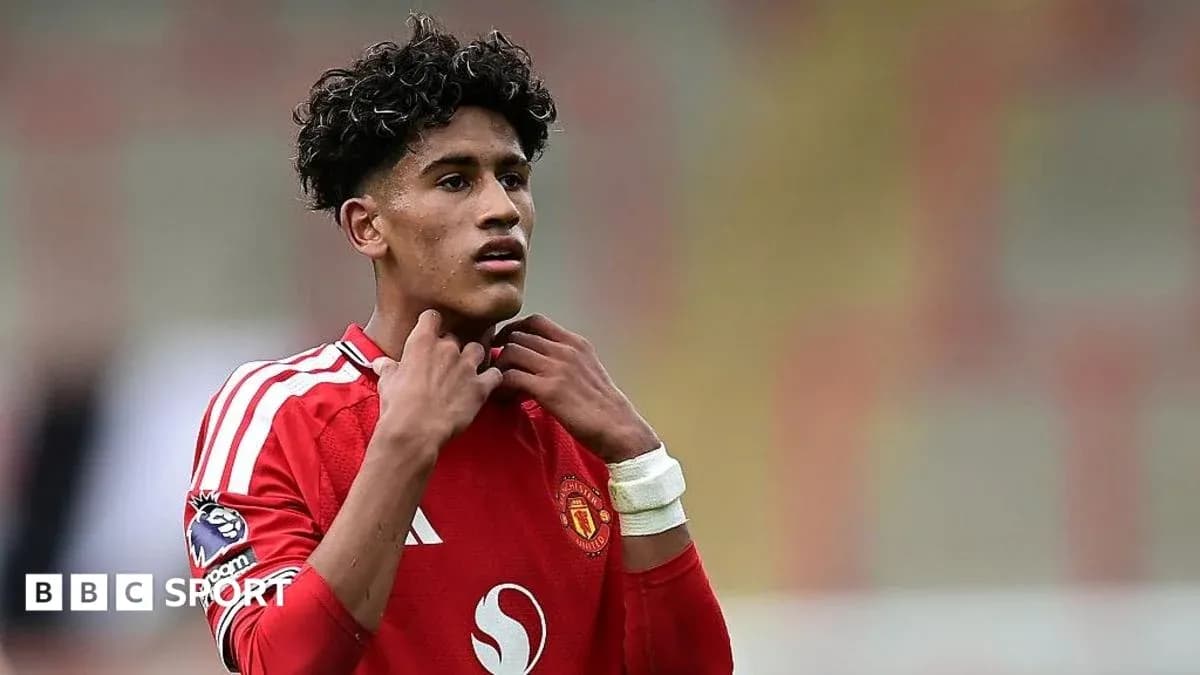
Real Madrid want him. So do Barcelona, Paris Saint-Germain and Bayern Munich. Manchester United, though, are staring at the very real prospect of watching Gabriel – the brightest talent in their academy – walk out of the door before his 16th birthday.
And this time, they might not be able to stop it.
A prodigy on the brink
United insist they have no intention of sanctioning his exit. Senior figures are now scrambling, not just to sell him the project, but to change his mind entirely.
The stakes are obvious. INEOS chairman Sir Jim Ratcliffe has already felt the heat from supporters over a string of unpopular calls since taking charge of football operations. Lose a once-in-a-generation prospect on his watch and the anger will be relentless.
Gabriel is contracted until next summer, but there’s a catch. He is not part of the club’s full-time model or a scholar. That technicality matters. With the right passport, he can leave for Europe as soon as he turns 16 on October 16.
United are urgently exploring that detail. His father, Joe O’Cearuill, played twice for Ireland. His mother is of Greek Cypriot descent. Under post-Brexit rules, a dual national can move from England to an EU club before 18. It opens a door United would rather see slammed shut.
They already kept him out of Manchester City’s reach once. This battle feels different. It feels like one they’re losing.
The first warning sign
The first real alarm came last weekend. Gabriel was due to train with the first team on Saturday. He didn’t show. He hasn’t been seen at Carrington all week.
Michael Carrick had planned to include him in the squad for Wednesday night’s Carabao Cup third-round tie against Brighton at Old Trafford. Had he stepped on the pitch, Gabriel would have become the youngest player ever to feature for United’s senior side.
That debut is off the table. For now, so is the fairytale.
United’s academy has not produced a genuine superstar since Marcus Rashford. Gabriel has carried that burden of hope since he arrived at 11. A two-footed forward, he glides through tight spaces, twists out of pressure and finishes with a cold, ruthless edge.
The Lionel Messi comparisons do him no favours, but the Neymar parallels are harder to ignore. The low centre of gravity. The feints. The swagger. He even wears the same model of Nike boots as the Brazilian after signing a lucrative extension with the brand in March 2025.
Numbers that make Europe sit up
The numbers explain the frenzy. Last season, Gabriel broke into United’s Under-18s at just 14 – another record – and scored 20 goals in 21 league games. That haul earned him the first-ever Premier League U18s Player of the Year award and United’s Jimmy Murphy Young Player of the Year prize, as the youngest recipient in history.
In August, he jumped to the U21s. On debut against Ipswich, he produced two assists and a delicate chip in a 5-0 rout. A week later, he scored again as United hammered Leicester City 4-1.
This is not a kid keeping pace with his age group. He’s lapping it. No wonder there is such a clamour for Carrick to unleash him, especially with United crying out for inspiration in the final third and with the success story of Max Dowman at Arsenal fresh in everyone’s minds.
The Dowman effect
The Premier League has seen this movie before. In September 2022, Ethan Nwaneri became the youngest player ever to feature in the competition at 15 years and 181 days when he came on for Arsenal against Brentford. His development has been uneven, with loans to Marseille and Borussia Dortmund, but he now has over 50 appearances for the Gunners and remains only 19.
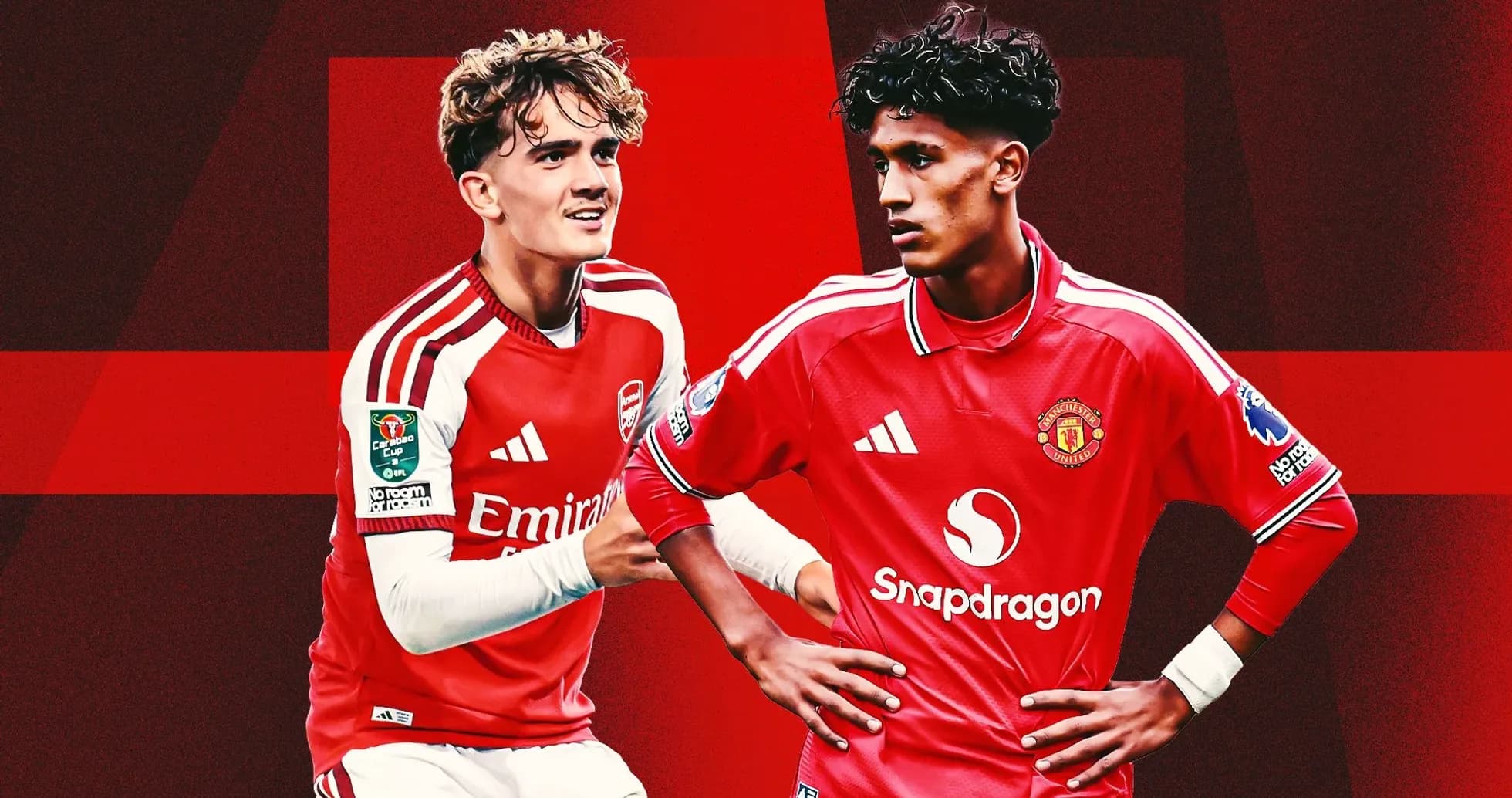
Arsenal doubled down on the “if you’re good enough, you’re old enough” mantra with Dowman. He became the league’s second-youngest player when Mikel Arteta threw him on against Leeds in August 2025. In March, he broke James Vaughan’s record as the Premier League’s youngest goal-scorer with a brilliant solo strike against Everton at 16 years and 139 days.
He didn’t stop there. In May, he became the youngest title-winner in Premier League history. This week, he joined Wayne Rooney in a tiny club as only the second 16-year-old to score a brace for a Premier League side in a major competition, driving Arsenal to a 4-2 Carabao Cup win over Ipswich.
Fourteen senior games in, Dowman has shown enough flair and physical presence that Arteta can’t ignore him. The Arsenal manager has even mentioned him in the same breath as Messi, while still handling him with extreme care, picking his moments.
“We have to look after him. He’s 16 years old. You don’t see that in this league,” Arteta said after the Ipswich game, stressing the unique demands of English football and the need to put Dowman in the right context every time he plays.
Why Gabriel’s case is different
Gabriel is not Dowman physically. He is slight, often the smallest player on the pitch. His bravery and determination close some of that gap, but not all of it.
Throwing him into the Premier League too early could go badly wrong for United, especially if he lights it up straight away. That sounds counterintuitive, but an instant impact would trigger an immediate demand: play him every week. A boy still growing would suddenly be asked to carry a club that can’t find consistency.
Arteta can rotate Dowman because Arsenal’s squad is stacked. He can win games with or without the teenager. United do not have that luxury. Their form lurches from one extreme to the other. If Carrick brought Gabriel in and then pulled him back out, he’d be accused of being too cautious while the team struggles.
If Gabriel came in and failed to impose himself, the backlash would be just as loud. Overhyped. Overrated. Another false dawn.
Carrick’s restraint, then, has been deliberate. And, in the eyes of former United defender and academy graduate Danny Simpson, entirely justified.
Speaking to GOAL courtesy of Free Bets, Simpson drew a sharp contrast between Dowman’s environment and Gabriel’s.
He pointed out that he broke through at a time when United were dominant. He could come on at 2-0 or 3-0 up, often alongside a “second XI” strong enough to win the league. Dowman, Simpson argued, is enjoying something similar: stepping into a side brimming with confidence and quality, where even the backups are “just as good”.
United today are not that United. The safety net has gone.
“I know we all want to see Gabriel play and it’s exciting, but it’s just a very different situation to Max Dowman at Arsenal,” Simpson said, backing Carrick to judge the timing and pointing to the careful introduction of Shea Lacey as a template. Let Gabriel train. Let him learn. His time, Simpson insisted, will come.
The lure of Europe’s giants
Patience is hard to sell to a teenager watching his peers explode onto the biggest stages. Even if Gabriel accepts that his situation is different to Dowman’s, he only has to look to Spain for another example: Lamine Yamal.
Yamal made his Barcelona debut at 15 years, nine months and 16 days. He was skinny, vulnerable to heavy tackles, but his speed and intelligence allowed him to out-think defenders. La Liga’s rhythm helped too. The league places more emphasis on possession and tactical control than on the relentless, physical transitions that define the Premier League.
In that environment, a pure technician can flourish quickly. In England, where time on the ball is a luxury, Yamal’s rise might have taken longer.
Gabriel may believe Barcelona or Real Madrid can fast-track him in the same way. On the surface, it makes sense. Underneath, it’s more complicated.
When Yamal broke through, Barca were on their way to the La Liga title under Xavi but had crashed out of the Champions League in the group stage. The forward line was in flux. Raphinha, Ousmane Dembele and Ferran Torres were not at their current levels. There was space for a teenager to disrupt the hierarchy.
That landscape has shifted. Barcelona now boast Yamal, a peak Raphinha, Anthony Gordon, Karim Adeyemi and Gabriel Jesus in attack. Across the Clasico divide, Jose Mourinho can choose from Kylian Mbappe, Vinicius Junior, Jude Bellingham and Yan Diomande at Real Madrid.
At PSG and Bayern, the picture is similar. Big squads. Big stars. Big queues for minutes.
Wherever Gabriel goes, he will have to wait. The irony is that his clearest route to regular senior football is probably at the club he is currently edging away from.
United’s line in the sand
If Gabriel insists on having everything now, he risks losing almost everything later.
United, for their part, cannot allow themselves to be held to ransom by a boy still 18 months away from sitting his GCSEs. Talent or not, the principle matters. Carrick and the academy staff have guided him carefully so far and will continue to do so if he steps back from the brink.
If he doesn’t, United cannot afford a saga that drags through the season, poisoning the atmosphere and distracting from a much-needed recovery on the pitch. Whether pushed by family, advisers or his own ambition, Gabriel is walking a dangerous line, emboldened by a sense of privilege that does not sit well in a dressing room still trying to reassert its standards.
The club’s great homegrown figures – George Best, Sir Bobby Charlton, Ryan Giggs, David Beckham, Paul Scholes, Gary Neville – all fought through setbacks. Nothing was handed to them. The bar was high, every day, on and off the pitch.
Ruben Amorim, heavily criticised and eventually sacked in January, did at least nail one thing during his short tenure. He warned of a culture of entitlement creeping into the club, insisting that difficult moments can be good for young players, that not every setback needs to be cushioned with praise.
“Let’s stay. Let’s fight. Let’s overcome,” he said. That was his message.
Right now, Gabriel stands at that crossroads. Stay and fight for the shirt, or chase a faster route elsewhere. One path is harder, slower, and rooted in a club that still offers him the clearest shot at becoming the player he wants to be.
The other is glamorous, tempting and crowded with names already ahead of him.
Which jersey does he really want to grow up in?