Fulham vs Manchester United: A Premier League Clash for Clarity
Craven Cottage, under a grey London sky, stages a meeting of two clubs searching for clarity in their 2026 Premier League storylines. Fulham arrive rooted in 19th place with 2 points from 5 matches, their goal difference at -3 after scoring 5 and conceding 8 overall. Manchester United, 12th with 5 points and a goal difference of 0 (8 scored, 8 conceded overall), come south still unsure whether this season will tilt toward revival or more drift.
Both sides share a common structural identity: the 4-2-3-1 has become their default. Fulham have used it in all 5 league fixtures, and Manchester United mirror them with the same consistency. The symmetry on the whiteboard sets up a tactical duel defined less by shape and more by the personalities inside it.
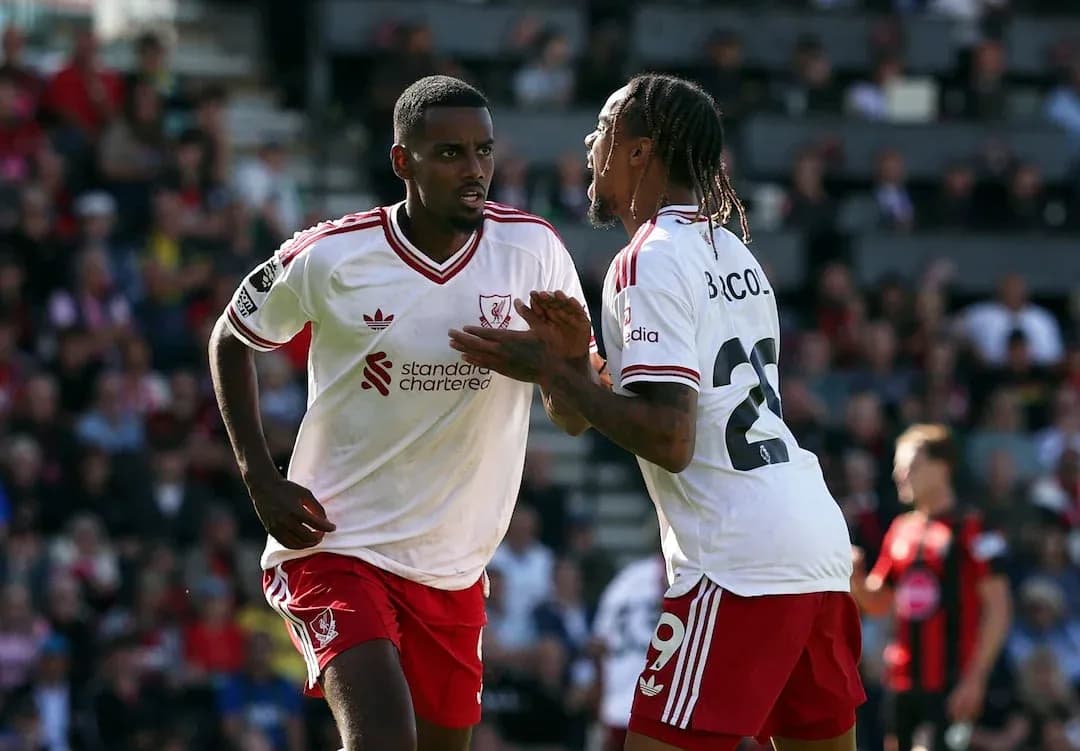
For Fulham, Álvaro Arbeloa leans into a back four of B. Leno behind T. Castagne, D. Affengruber, C. Bassey and A. Robinson. In front, the double pivot of S. Berge and S. Charles is tasked with holding the line between survival and collapse. Ahead of them, the trio of Oscar Bobb, Joshua King and A. Iwobi operate behind Gonzalo García, a forward asked to be both outlet and finisher for a side that, at home, averages 1.7 goals for but 2.3 against.
Those home numbers tell Fulham’s seasonal tale: they can hurt teams at Craven Cottage, with 5 goals scored at home from their 5 overall, but they leak heavily. They have yet to win in the league, with 0 victories overall and 3 defeats, and their single clean sheet came away from home. The late-game discipline is a concern: 50.00% of their yellow cards arrive between 76-90 minutes, a pattern that hints at fatigue or emotional fraying just as games enter their decisive phase.
Arbeloa must also navigate important absences. T. Cairney, a natural tempo-setter, is out with a knee injury, and K. Tete’s concussion removes an experienced defensive option. Without Cairney’s calming presence between the lines, the creative burden shifts further onto Iwobi’s shoulders and the drifting intelligence of Oscar Bobb, while Berge becomes not only a shield but a distributor from deep.
On the opposite bench, Michael Carrick’s United arrive with their own wounds. A. Diallo and T. Heaton are sidelined, but the more structural blows are the absences of M. Ugarte and M. de Ligt. Ugarte’s knee injury robs United of a natural ball-winner in front of the defence, while de Ligt’s back injury removes a dominant organiser. In their place, K. Mainoo and Y. Tielemans form the double pivot, with H. Maguire and Lisandro Martínez the centre-back pairing in front of S. Lammens.
Carrick’s attacking axis is more clearly defined. Bruno Fernandes, already on 3 league goals and 1 assist, is the creative and emotional core. His 325 passes with 13 key passes and 11 shots (5 on target) underline a player who both constructs and finishes. Around him, B. Mbeumo, M. Rashford and Matheus Cunha offer different angles of threat: Mbeumo’s diagonal runs from the right, Rashford’s direct surges from the left, and Cunha’s ability to drop and combine.
The “Hunter vs Shield” duel is almost literal: Bruno Fernandes, United’s leading scorer, against a Fulham defence that concedes 2.3 goals per game at home and has yet to keep a clean sheet at Craven Cottage. Maguire and Martínez, meanwhile, must hold firm against a Fulham attack that, while inconsistent, has shown it can score twice at home on its day.
In the “Engine Room,” the battle lines are finely drawn. Berge and Charles will try to compress space and deny Fernandes the pockets he thrives in. Berge’s physical presence and Charles’ mobility are designed to disrupt United’s rhythm, but they must also progress the ball to release Iwobi and Bobb. On the other side, Mainoo and Tielemans must balance control with protection. Tielemans’ passing range can unlock Fulham’s block, but if United commit too many numbers forward, Fulham’s transitional outlets down the flanks, especially through Robinson’s overlaps and Iwobi’s drifting, can punish them.
Discipline and game-state management may define the final act. United’s yellow-card pattern shows a late spike too: 50.00% of their bookings arrive from 76-90 minutes, with another 16.67% between 91-105. In a fixture where Fulham’s late-game bookings also cluster in that 76-90 window, the final quarter of an hour looks primed for chaos—tired legs, stretched distances, and duels decided more by instinct than structure.
From a statistical prognosis, Manchester United carry the sharper attacking profile. Overall they average 1.6 goals for per game, and on their travels they still manage 1.0 despite not yet winning away. They have scored 8 overall, the same as they have conceded, and their only penalty this season has been converted, reinforcing Bruno Fernandes’ reliability from the spot. Fulham, by contrast, score 1.0 overall but concede 1.6, with no penalties taken and none missed.
Defensively, neither side has been secure—United have no clean sheets overall, while Fulham have only one, away. But United’s away goals against average of 1.7 is not drastically worse than Fulham’s home goals against at 2.3, and with de Ligt missing, Carrick will likely lean on compact distances between lines rather than a high-risk press.
All signs point toward a contest where United’s superior individual quality, particularly in Bruno Fernandes, should carve out the better chances, but Fulham’s home scoring record and emotional edge at Craven Cottage keep the door open. Tactically, if Fulham can keep the game tight into that volatile final quarter-hour, exploiting United’s late-card tendencies and their own habit of living on the edge, this could become less a controlled away performance and more a test of nerve.
On balance, the numbers and matchups tilt slightly toward Manchester United finding enough incision between the lines, yet the defensive frailties on both sides suggest a scoreline where neither keeper leaves unbreached and the story is written in the margins of late, frantic moments.