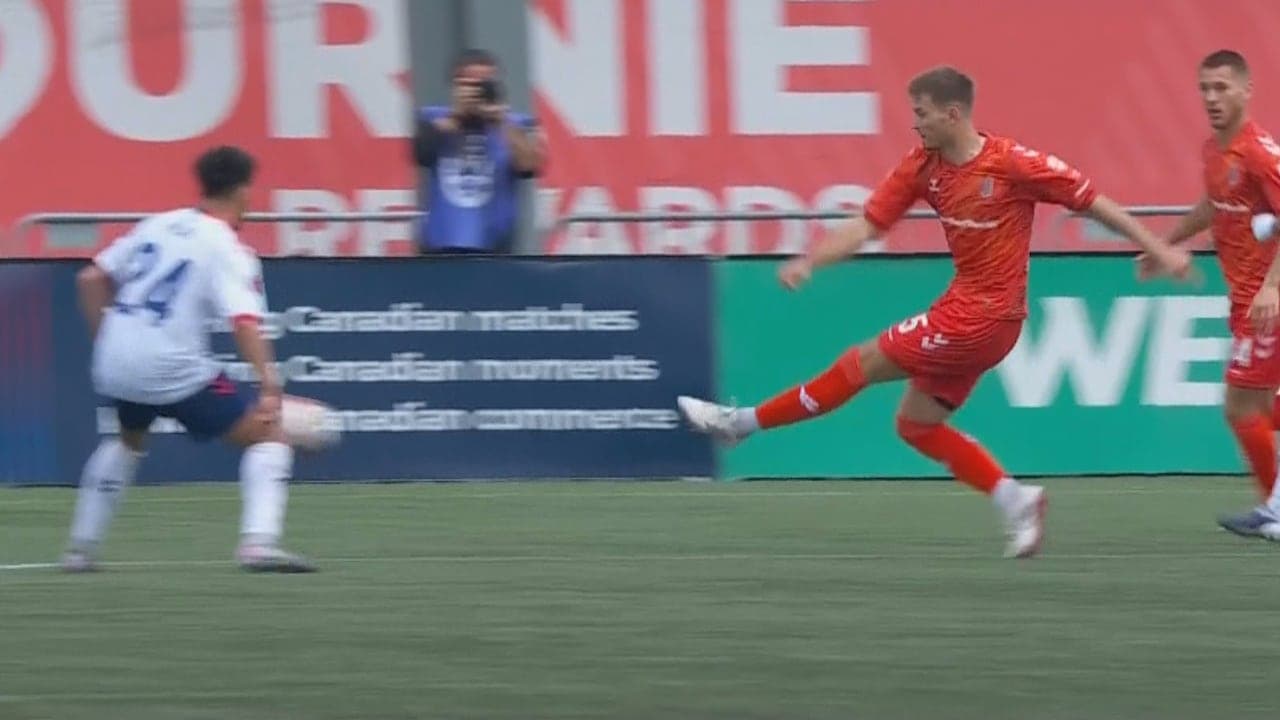
Forge Edges Supra du Quebec 1–0: A Confirmation of Control
Under grey Hamilton skies at Tim Hortons Field, Forge edged Supra du Quebec 1–0, a result that felt less like a single group-stage win and more like a confirmation of hierarchy in the Canadian Premier League. Following this result, the league leaders’ seasonal DNA – control, defensive parsimony and timely strikes – remained intact, while Supra again walked the fine line between ambition and naivety.
I. The Big Picture – Forge’s machine vs Supra’s volatility
Forge entered the day as league leaders, with 16 points from 6 matches and a goal difference of 7, built on 8 goals for and just 1 against overall. At home they had been immaculate defensively: 3 home matches, 3 clean sheets, 3 goals scored and none conceded. Their season averages underlined the method: 1.3 goals scored in total per game, only 0.2 conceded, and still no defeats in 6.
Supra du Quebec, fourth heading into this game, have been the league’s chaos merchants. In total they had played 5 matches, winning 2 and losing 3, with 5 goals scored and 6 conceded for a goal difference of -1. On their travels they were more open and more dangerous: 2 away games, 1 win and 1 defeat, 3 goals scored and 3 conceded, averaging 1.5 goals for and 1.5 against away.
Those two identities collided here: Forge’s suffocating structure against a Supra side that refuses to play within itself, even without a single clean sheet in total this season and having failed to score in 3 of their 5 league outings.
II. Tactical Voids and Discipline – Edges won in the margins
There were no listed absentees, so both coaches essentially had their full squads. For Forge, that meant the spine Bobby Smyrniotis has been quietly sharpening all spring: D. Bertaud in goal behind a defensive unit including R. Rama, D. Nimick and the quietly influential B. Paton; the midfield ballast of A. Aromatario; and the attacking trident with T. Borges and top scorer B. Wright.
Supra’s starting XI carried plenty of personality: the defensive pair of C. Auguste and K. Ferdinand, the versatile C. Bayiha, the ball-playing presence of A. Sissoko and the creative axis of S. Rea and D. Choiniere. On the bench, there was real impact potential in D. Abzi, L. A. Kwemi, M. Gerges and the high-performing defender M. Chretien.
Discipline was always going to be a subplot. Forge’s season-long card profile is controlled but spiky: yellow cards are spread through the middle phases of matches, with 25.00% of their yellows coming between 31–45 minutes and another 25.00% between 46–60 and 61–75 minutes respectively. Crucially, their only red this season has arrived in the 46–60 minute window, a reminder that their aggression can spill over right after half-time.
Supra, by contrast, live on the disciplinary edge. Their yellow-card distribution shows clear hot zones: 28.57% of their yellows between 46–60 minutes and another 28.57% between 76–90 minutes. They also carry late-game jeopardy: their only red card in total has come between 91–105 minutes, via Alessandro Biello, whose combination of 1 yellow and 1 red in just 63 minutes of league action captures the volatility perfectly. When you add repeat offenders like D. Abzi (3 yellows), M. Chretien (2 yellows) and A. Sissoko (2 yellows), Supra’s risk of going a man down in key phases is structurally baked in.
III. Key Matchups – Hunter vs Shield, Engine Room vs Enforcer
The “Hunter vs Shield” duel centred on B. Wright against Supra’s back line. Wright arrived as Forge’s primary goal threat, with 2 goals in total from just 134 minutes, plus 1 penalty won and converted. His 5 shots, 2 on target and 3 key passes speak to a forward who doesn’t just finish moves but also stitches them together. Against a Supra defence conceding 1.2 goals per game in total and 1.5 on their travels, the matchup tilted toward Forge before a ball was kicked.
Supra’s best defensive “shield” on paper has been M. Chretien. Across 5 appearances and 4 starts, he has 1 goal, 1 shot on target, 78 passes at 96% accuracy, and a perfect 4 duels won from 4. He has also blocked 1 shot and made 1 interception, the sort of profile that suggests calm under pressure. Yet even he carries disciplinary baggage: 2 yellow cards and 1 penalty conceded, a reminder that his interventions are often on the edge.
In midfield, the “Engine Room” battle was compelling. For Forge, A. Aromatario has been a quiet metronome: 270 minutes, 128 passes at 77% accuracy, 8 tackles and 9 interceptions, plus 33 duels with 19 won. He is the enforcer and organiser, the player who turns second balls into sustained pressure.
Opposite him, S. Rea is Supra’s creative hub. With 1 assist, 5 key passes and 46 total passes at 84% accuracy in just 90 minutes of league action, he is the conduit for everything positive in the final third. His 2 dribble attempts (1 successful) and 1 yellow card underline a player willing to take risks on the ball and in the press. Around him, the aggressive running of S. Mlah – 1 goal from 1 shot on target, 2 yellow cards and 1 interception in just 27 minutes – adds a chaotic energy that can unbalance defences but also leaves gaps behind.
Out wide and in the channels, the battle between Forge’s back line and Supra’s adventurous full-backs was crucial. C. Auguste, with 1 assist, 2 key passes, 3 tackles and 4 interceptions, is one of Supra’s most progressive defenders. But against a Forge side that had kept 5 clean sheets in total from 6 matches and conceded only 1 goal overall, his forward surges always risked exposing space for Borges and Wright to counter into.
IV. Statistical Prognosis – Why 1–0 felt inevitable
Even without explicit xG numbers, the season data offers a clear prognosis. Forge’s overall averages of 1.3 goals scored and 0.2 conceded, combined with 5 clean sheets in total and no defeats, describe a side that habitually keeps games in its grip. At home, 1.0 goals scored and 0.0 conceded per match is the profile of a team that is happy to win by fine margins.
Supra, on their travels, average 1.5 goals for and 1.5 against. They can hurt opponents, but they cannot yet protect what they create. With 0 clean sheets in total and 3 matches in which they have failed to score, their probability curve is wide: they are as likely to fire blanks as they are to explode.
Overlay discipline and you get the decisive tilt. Forge’s card pattern spikes around the middle of games but rarely late, while Supra’s aggression peaks precisely when legs tire – 28.57% of their yellows in both the 46–60 and 76–90 windows, plus that late red from Biello. Against a side as structured as Forge, those late bookings translate into free-kicks defended, counters halted and attacking rhythm broken.
So the 1–0 scoreline at Tim Hortons Field felt like the logical expression of both squads’ statistical identities. Forge, through Wright, Paton, Aromatario and Borges, applied just enough pressure to crack a Supra back line that lives too close to the edge. Supra, for all the promise of Rea, Mlah, Auguste and the bench threats of Abzi and Chretien, again found themselves chasing a game against a side that simply concedes almost nothing.
Following this result, the narrative is clear: Forge remain the league’s benchmark of control and efficiency, while Supra du Quebec continue to be the competition’s great unknown – capable, combustible, and still searching for the balance that turns volatility into consistent points.