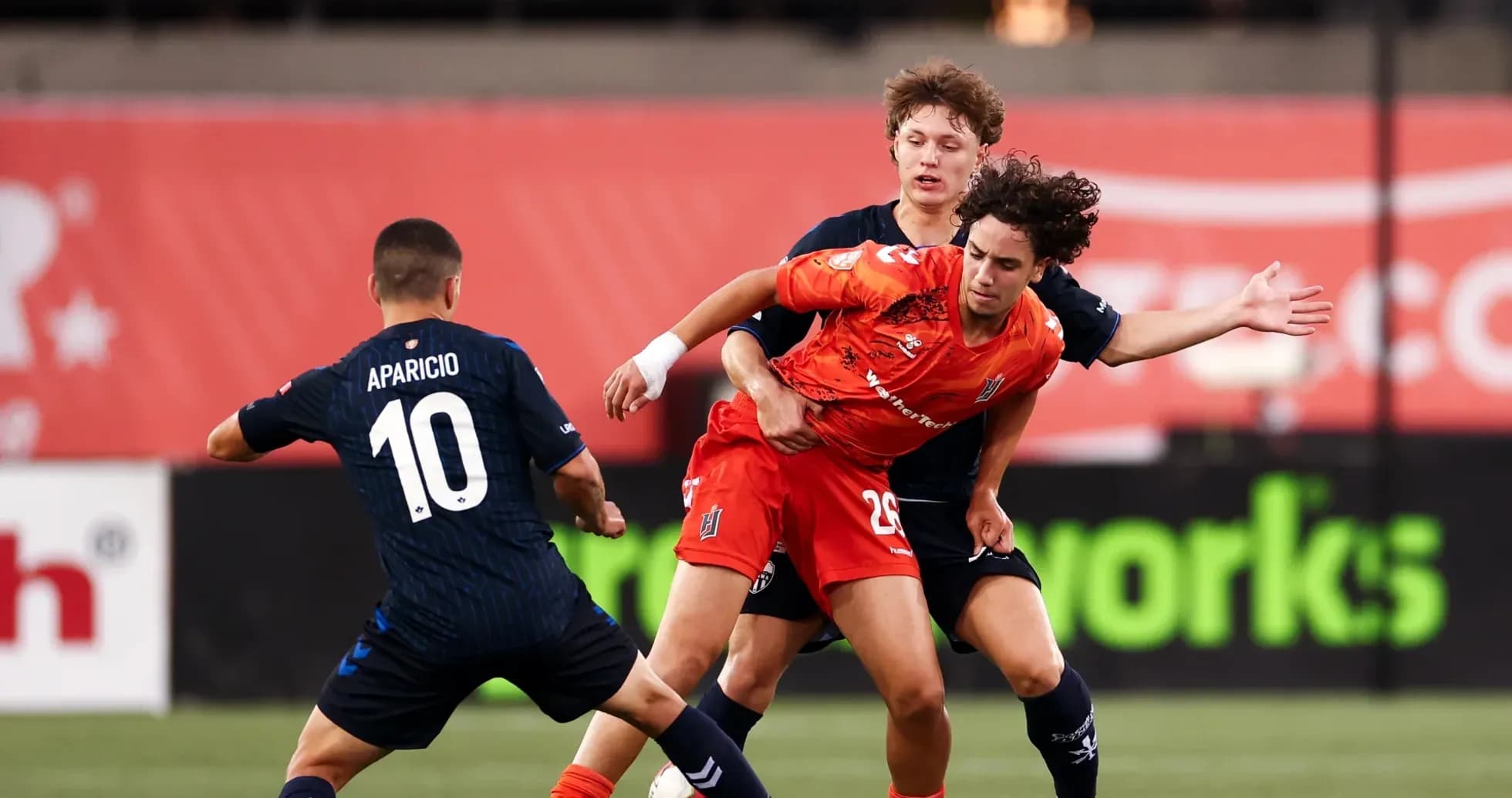
Forge FC Dominates Atlético Ottawa 3–0: A Tactical Breakdown
On a cool night at Tim Hortons Field, Forge’s 3–0 dismantling of Atlético Ottawa felt less like a single result and more like a confirmation of deeper seasonal truths about both squads.
I. The Big Picture – A contender flexes at home
Heading into this game, Forge were already carving out the profile of a ruthless contender. They sat 2nd in the Canadian Premier League with 45 points from 21 matches, built on 14 wins, 3 draws and just 4 defeats. Their overall goal difference of 18 was rooted in balance: 33 goals scored and 15 conceded. At home, they had been even more imposing – 8 wins from 11, with 17 goals for and only 6 against, an average of 1.5 goals scored and 0.5 conceded at Tim Hortons Field.
Ottawa arrived as dangerous but flawed chasers. They were 3rd with 34 points from 22 matches, having won 10, drawn 4 and lost 8. Their overall goal difference of -3 (34 scored, 37 conceded) captured the contradiction: one of the league’s liveliest attacks paired with a porous defence. On their travels, Ottawa’s record of 3 wins, 1 draw and 7 defeats, with 13 goals scored and 24 conceded, underlined just how exposed they become away from home, conceding an average of 2.2 goals per away match.
Within that context, Forge’s 3–0 full-time scoreline was a logical extension of the season’s patterns: a side that controls its home environment and a visitor that often unravels on the road.
II. Tactical Voids – Discipline and structure
Neither squad carried listed absentees into this fixture, allowing both coaches to lean on their preferred identities.
Bobby Smyrniotis doubled down on Forge’s established backbone, returning to the 4-3-3 that has been their most-used shape this season. It is the same structure that has underpinned 6 clean sheets at home and 10 overall. The spine of Daniel Nimick and Marko Jevremović at centre-back, protected by a hard-working midfield trio, is the foundation of those numbers.
This is a team comfortable living on the disciplinary edge. Across the campaign, Forge’s yellow cards cluster heavily between 31-45 minutes and 61-75 minutes (20.83% of their yellows in each of those windows), with further spikes from 46-60 and 76-90. Red cards have arrived in three distinct bursts – late in the first half, early in the second, and again in the closing stages. Within that profile, Rezart Rama and Alessandro Aromatario stand out: Rama has already combined 5 yellows with a red, while Aromatario has collected 8 yellows. Yet, the defensive unit’s ability to absorb that aggression without losing structural coherence is a key part of Forge’s identity.
Ottawa, by contrast, brought a more fragile disciplinary record on the road. Their yellow cards skew heavily towards the final quarter of games, with 34.69% of their bookings coming between 76-90 minutes and another 18.37% in added time. It is a side that often ends matches chasing – and fouling. Gabriel Antinoro, who has already seen red once this season, epitomises that combative, dribble-heavy risk profile in midfield.
III. Key Matchups – Hunter vs Shield, Engine Room battles
The “Hunter vs Shield” narrative here was meant to revolve around Ballou Tabla and Ottawa’s attacking trio against Forge’s defensive wall.
Tabla came into the fixture as one of the league’s standout forwards: 5 goals and 1 assist in 22 appearances, 19 shots with 13 on target, and a rating of 7.04 built on incisive dribbling and an ability to win fouls (25 drawn). Alongside him, Nicolas Fleuriau Chateau and Emiliano García have chipped in with 3 goals each, while Fleuriau Chateau adds 2 assists and an all-action presence in the final third. Collectively, Ottawa’s attack had been particularly explosive late in games: 42.86% of their league goals had arrived between 76-90 minutes, with another 22.86% between 61-75. They are designed to surge late.
But that late-game storm met one of the league’s most efficient shields. Forge’s defence, anchored by Nimick, had conceded just 15 overall, an average of 0.7 per match, with 7 home clean sheets. Nimick himself is a rare two-way centre-back: 3 goals, 2 penalties scored, 4 blocked shots, and a passing accuracy of 90% from 510 passes. Around him, Jevremović’s 23 tackles and 3 blocks, plus Rama’s aggression on the flank, form a back line that is both proactive and punishing.
In midfield, the “Engine Room” duel set Aromatario and Kyle Bekker against Manuel Aparicio and Antinoro. Aromatario is Forge’s quiet regulator: 413 passes at 82% accuracy, 29 tackles, 23 interceptions and 114 duels contested, all while walking a tightrope with 8 yellow cards. Bekker, the veteran fulcrum, knits play and tempo. Across from them, Aparicio has been Ottawa’s metronome – 670 passes at 83% accuracy, 11 key passes, and 25 tackles – while Antinoro brings verticality, 46 dribble attempts and 14 key passes from midfield.
In this match, Forge’s 4-3-3 box of Bekker, Aromatario and Ayman Sadek suffocated Ottawa’s central lanes, forcing Tabla and Fleuriau Chateau into wider, less dangerous zones. Ottawa’s 4-4-2, with Antinoro and Aparicio as the creative core, never found consistent access between Forge’s lines.
IV. Statistical Prognosis – Why 3–0 felt inevitable
Even without explicit xG values, the season data sketches a clear pre-match prognosis that the 3–0 scoreline ultimately confirmed.
Forge at home had been averaging 1.5 goals scored and 0.5 conceded, while Ottawa away had been scoring 1.2 but conceding 2.2. Overlay those profiles and a multi-goal Forge win with a strong chance of a clean sheet becomes the most probable outcome.
Ottawa’s tendency to concede early – 22.22% of their goals against arriving in the first 15 minutes, and 52.78% before half-time – matched up ominously with Forge’s habit of imposing control early and then managing the game. Meanwhile, Ottawa’s late attacking surge (65.72% of their goals between 61-90 minutes) was always likely to be blunted by a Forge side that, even when aggressive in the challenge late on, rarely loses its shape.
Set-pieces and penalties were another quiet dividing line. Forge had converted all 3 of their penalties this season, with no misses. Ottawa, by contrast, had split their 4 penalties evenly between goals and failures – 2 scored, 2 missed. In tight moments, Forge have been ruthlessly efficient; Ottawa have left margins on the table.
Following this result, nothing about the table changes in spirit, only in emphasis. Forge look every inch the structured contender their numbers suggest, their 4-3-3 spine reinforced by a deep bench that includes creators like Tristan Borges and impact forwards such as I. Oketokoun. Ottawa remain a thrilling but volatile chaser – rich in attacking talent through Tabla, Fleuriau Chateau and García, yet still searching for a defensive and disciplinary equilibrium that can survive nights like this on their travels.