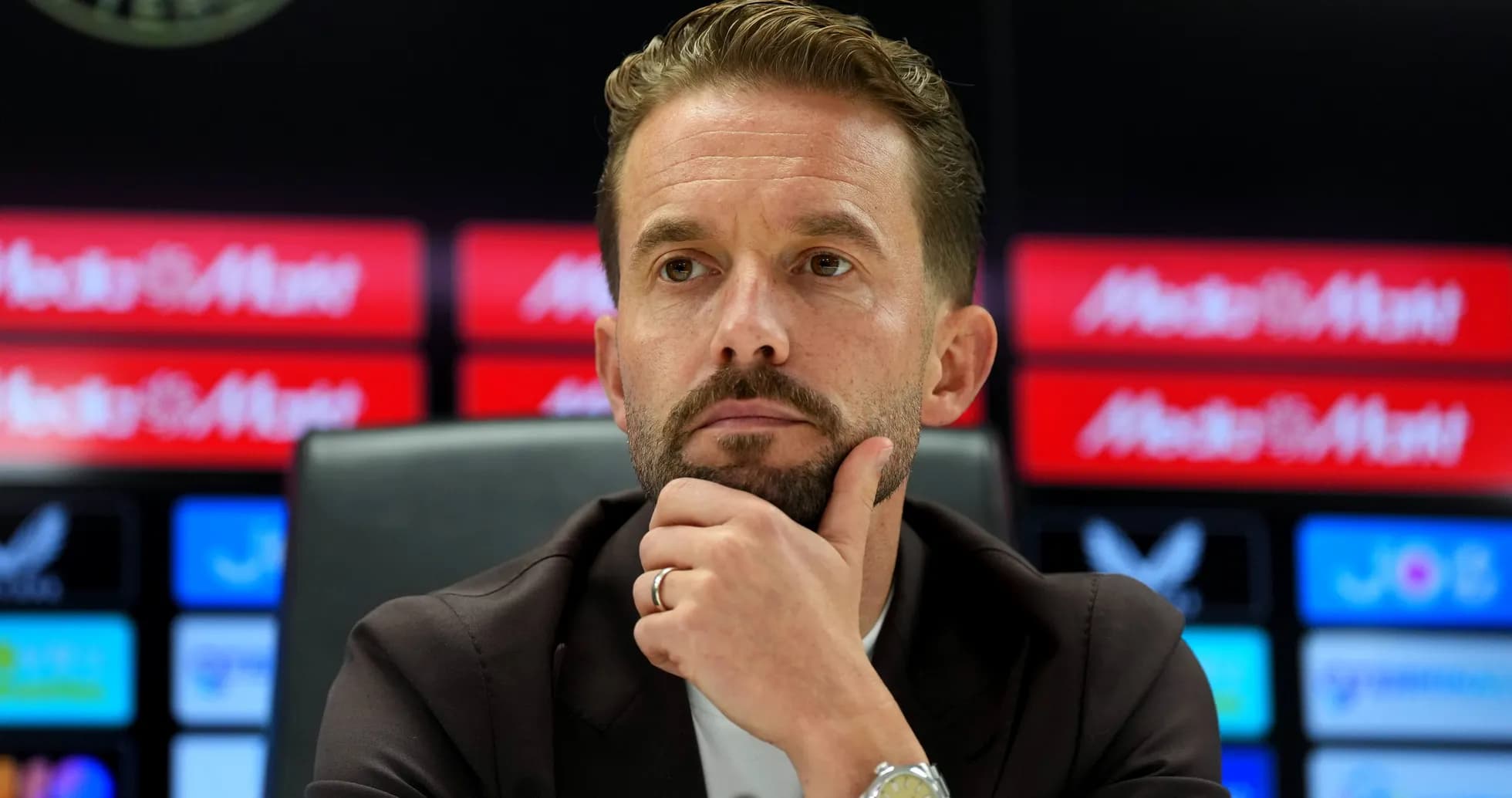
Feyenoord's Dévy Rigaux Under Fire: Comparisons to Mislintat
Valentijn Driessen and Mike Verweij have come down hard on Feyenoord’s new technical director Dévy Rigaux. In the Kick-off podcast of De Telegraaf, the pair paint a bleak picture of his early months in Rotterdam and label his first transfer window “no success at all.”
‘I fear the worst’
Verweij says his alarm bells started ringing after Rigaux’s recent round-table session with journalists.
“When I look at that round-table discussion by Rigaux with several journalists, I really fear the worst,” he says, before drawing a direct line to a painful recent example in Dutch football. “I hope this does not become the new Sven Mislintat.”
The criticism quickly sharpens. Verweij points to Rigaux’s comments about the transfer situation of Hadj Moussa.
“He says: ‘No club is allowed to talk to Hadj Moussa, because he has an ongoing contract.’ Well, that is very naive, because it happens everywhere,” Verweij argues.
He then moves to the saga around Read and the reported interest from Roma. Rigaux has maintained there was no bid of 30 million euros, only an official offer of 26 million.
“But in telephone contact Roma immediately indicated they wanted to move towards that 30 million,” Verweij claims, suggesting Rigaux is hiding behind the narrow definition of an “official” bid.
Parallels with Mislintat
For Verweij, the comparison with former Ajax technical director Sven Mislintat does not stop there.
“He brings in players from the second Bundesliga,” he says of Rigaux, again echoing the German’s recruitment profile in Amsterdam. “And another similarity is that you can sense in the media that everyone is over the moon with Rigaux, as if a world wonder has walked in. That was also the case with Mislintat.”
The suggestion is clear: a polished talker, an adventurous transfer strategy, and a media environment too eager to buy into the story.
‘Scandalous’ about Te Kloese era
Driessen then steps in and turns the spotlight on how Rigaux spoke about his predecessor, Dennis te Kloese.
“It was truly a scandalous round-table discussion!” he snaps. “The way he spoke about Dennis te Kloese... He did not say it directly, but he did let all kinds of things slip about the Te Kloese period. Too many players, far too much in wages, too many write-downs... He knew what he was getting into, didn't he?”
For Driessen, Rigaux’s criticism of the previous policy jars with the reality of what Te Kloese delivered at Feyenoord. The Belgian has talked about working in a “completely different way,” but Driessen doubts he can match the same sporting output.
“Well, I'm very curious whether in that, according to him, ‘completely different way’ he is going to achieve the same results as Dennis te Kloese,” he fumes.
He then delivers perhaps his harshest sporting verdict on the current squad.
“You can go into the Champions League with this team, but you will finish bottom without a chance. And then what is the value of Read, Hadj Moussa and Zechiël?”
The message: if the team cannot compete at the highest level, the carefully guarded transfer values of Feyenoord’s talents could collapse quickly.
‘Everyone falls for his slick talk’
Verweij circles back one more time to the Mislintat analogy, this time zooming in on the way Rigaux presents himself and how that lands in the Dutch football world.
“Everyone falls for his slick talk!” he says. As an example he mentions goalkeeper Tjark Ernst and the lofty label attached to him. “Tjark Ernst, material for Die Mannschaft... Every diagonal ball is a goal conceded!”
The line is brutal, but it underlines the scepticism in the podcast: big words, big promises, but a transfer window and a squad that, in their eyes, do not yet justify the hype.
Feyenoord’s board has backed Rigaux to reshape the club in his own image. After this kind of scrutiny, every signing, every European night, and every misjudged quote will now be measured against a single, uncomfortable question: is this a bold new era, or just Mislintat 2.0 in Rotterdam colours?