Fenerbahçe vs AS Roma: Tactical Insights from UEFA Champions League Draw
Under the floodlights of Chobani Stadium Fenerbahce Sukru Saracoglu, this League Stage opener in the UEFA Champions League felt less like a group game and more like an early stress test of identity. Fenerbahçe arrived with the swagger of an unbeaten continental run; AS Roma stepped into Istanbul as a tactical unknown, their European slate still clean, their numbers yet to be written. Ninety minutes later, a 1–1 draw left both sides with a point and a story: Fenerbahçe’s resilience against structure, Roma’s structure against chaos.
I. The Big Picture – Two Blueprints Colliding
Heading into this game, Fenerbahçe had quietly built one of the most efficient profiles in the competition. Overall, they had played 6 Champions League matches, winning 4 and drawing 2, with no defeats. In total this campaign they had scored 8 goals and conceded only 3, a goal difference of +5. At home, they had played 3 times, scoring 4 and conceding just 1; on their travels, they had mirrored that 4-goal output but allowed 2. The attacking averages were symmetrical: 1.3 goals per game at home, 1.3 away, 1.3 overall. Defensively, the numbers were even more telling: 0.3 goals conceded per home match, 0.7 away, 0.5 overall. This was the statistical profile of a side that rarely panics and almost never breaks.
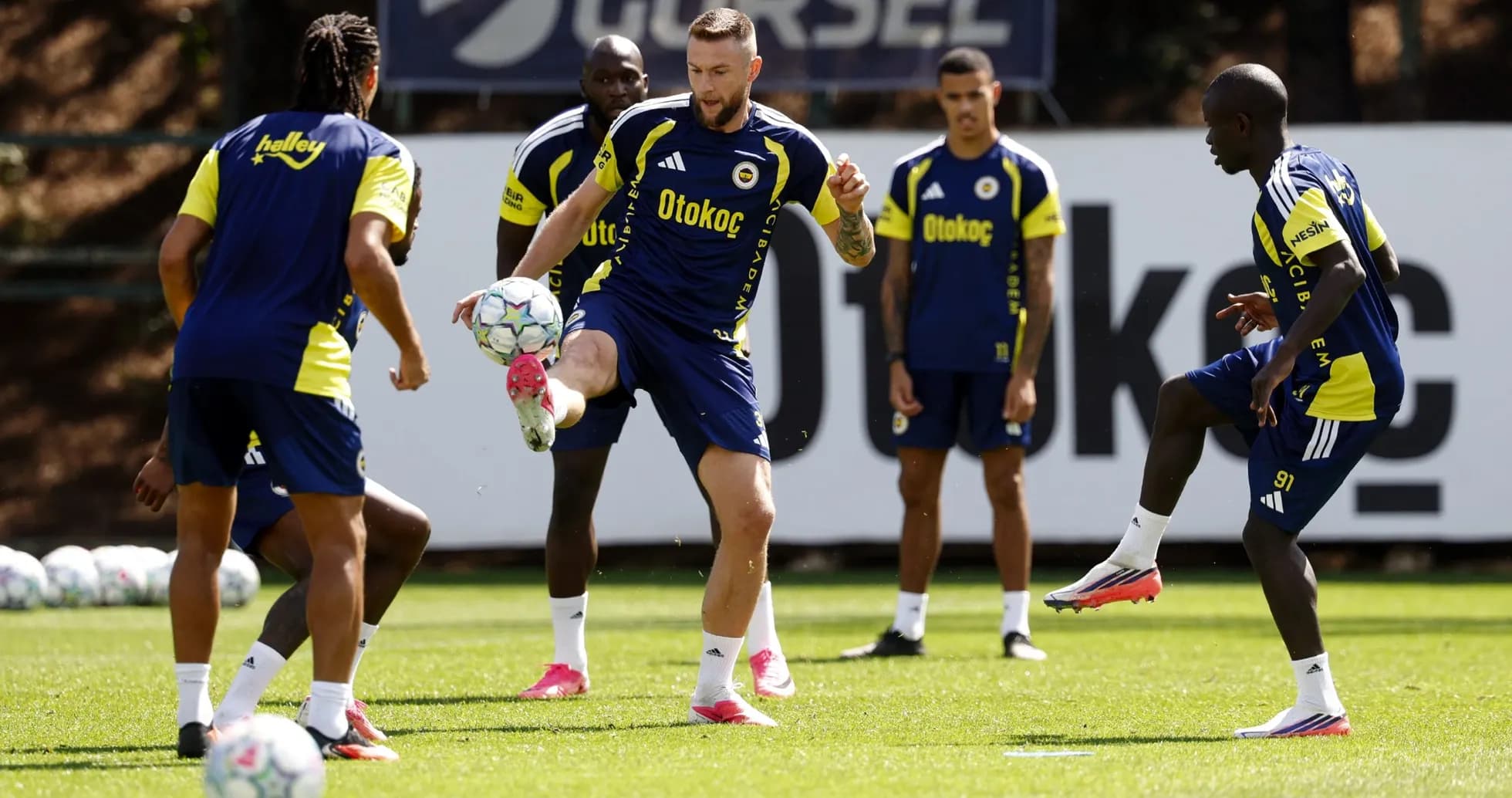
Yet İ. Kartal ripped up his usual 4-2-3-1 template and went with a 4-3-3, a signal that Roma’s structure demanded an extra midfielder rather than a classic No. 10. Ederson anchored the back, shielded by a back four of M. Müldür, M. Škriniar, N. Aké, and A. Brown. In front of them, N. Kanté, İ. Yüksek, and B. Elmaz formed a compact, combative trio, leaving the front line of M. Greenwood, V. Muriqi, and K. Aktürkoğlu to stretch and probe.
Roma, ranked 17th heading into the League Stage table but still statistically blank in this campaign, arrived as a tactical puzzle. G. Gasperini’s 3-4-2-1 featured M. Svilar in goal, a back three of G. Mancini, E. Ndicka, and Hermoso, wing presence from D. Rensch and Wesley, and a double pivot of B. Cristante and M. Koné. Ahead of them, P. Dybala and M. Soulé floated behind D. Malen, a triangle built for fluid rotations and late runs rather than a classic target man.
II. Tactical Voids – Absences That Bent the Game
This was not Fenerbahçe at full creative tilt. M. Asensio, out with a muscle injury, stripped Kartal of a high-level between-the-lines technician and set-piece threat. M. Guendouzi, suspended by a red card, removed a combative, forward-thinking presence from midfield, forcing İ. Yüksek and B. Elmaz into more responsibility in progression. J. Oosterwolde’s Achilles tendon injury and the absence of Rodrigo Becao narrowed the defensive rotation options, making the starting back four almost non-negotiable. A. Diouf and A. Fall were off the roster, further thinning depth.
Roma’s own voids were more subtle but equally structural. L. Pellegrini’s thigh injury deprived Gasperini of his most natural link between midfield and attack, a player who can occupy half-spaces and dictate tempo. M. Bah’s knee injury removed another athletic option, particularly relevant for pressing and covering the wide channels against a 4-3-3.
Disciplinary trends also framed Fenerbahçe’s risk profile. In total this campaign, their yellow cards had clustered late: 30.77% in the 31–45 minute window, another 30.77% between 76–90, and a striking 38.46% from 91–105. This is a side that plays on the edge as matches stretch and fatigue bites, a detail that would shape how they could press Roma’s buildup without tipping into chaos.
III. Key Matchups – Hunter vs Shield, Engine vs Engine
The most intriguing duel was conceptual rather than individual: Fenerbahçe’s proven attacking spine versus Roma’s untested defensive block.
Even though Talisca did not feature in this particular lineup, his shadow hung over Roma’s preparation. Overall this campaign for Fenerbahçe, he had scored 4 goals in 6 appearances, firing 23 shots with 13 on target. He had also converted 2 penalties from 2, with the team’s overall penalty record standing at 2 taken, 2 scored, and 0 missed. Roma were stepping into their first Champions League minutes of the season against an attack that knew how to manufacture and convert high-value chances.
On the night, the “hunter” role fell more directly to V. Muriqi and M. Greenwood. Muriqi’s presence pinned Roma’s back three, forcing G. Mancini and E. Ndicka into constant aerial and physical duels. Greenwood, who had already contributed 2 goals and 1 assist overall in this European run, operated as the hybrid threat: part wide forward, part second striker, always looking to cut inside onto his stronger foot. His 8 total shots and 5 on target in the campaign underscored his willingness to test goalkeepers early and often.
On the flanks, K. Aktürkoğlu became the key connector. With 2 assists overall and 12 key passes in 5 European appearances, he was Fenerbahçe’s most reliable source of final-third delivery. His duel numbers – 57 total, 23 won – spoke of a winger who doesn’t just create but competes, tracking back and engaging physically. Up against Wesley and D. Rensch, his job was to drag Roma’s wing-backs deeper, forcing them into a back five and isolating Dybala and Soulé from their supply lines.
In the “Engine Room”, the battle between N. Kanté and Roma’s central pair of B. Cristante and M. Koné defined tempo. Kanté’s presence allowed İ. Yüksek and B. Elmaz to step higher in phases, compressing Roma’s midfield and trying to suffocate progression into Dybala’s feet. Cristante, in turn, had to balance screening Muriqi with feeding vertical passes to Malen and the two attacking midfielders. Every time Roma broke Fenerbahçe’s first line of pressure, the pitch opened; every time Kanté intercepted, Roma’s shape was forced into emergency rest-defense.
IV. Statistical Prognosis – What This Draw Tells Us
Following this result, both sides leave Istanbul with more questions than answers, but the underlying numbers still lean towards Fenerbahçe as the more stable project. Their overall average of 1.3 goals scored and 0.5 conceded per game remains the backbone of their identity: pragmatic, controlled, and difficult to beat. Clean sheets in 3 of 6 matches and zero games failed to score underline their consistency at both ends.
Roma, by contrast, step into the rest of the League Stage with this 1–1 as their first real data point. Their defensive structure in a 3-4-2-1 showed promise against a side that had already scored 8 times in Europe, but their attacking ceiling remains undefined. Without Pellegrini and Bah, they relied heavily on the creativity of Dybala and the vertical threat of Malen and Soulé; as the campaign unfolds, the question will be whether that is enough against more established Champions League machines.
Tactically, the intersection is clear: Fenerbahçe’s late-game aggression, reflected in their high share of yellow cards after the 31st minute, will need careful management against sides that can punish set-piece concessions. Roma, with their back three and wing-backs, have the structure to absorb pressure but must find more ways to turn controlled possession into high-quality chances.
The draw in Istanbul feels less like a stalemate and more like a prologue. Fenerbahçe leave knowing their numbers still back them as a dark horse. Roma depart with a point and a template, but their season will be defined by how quickly they can turn that template into a cutting edge.