Everton vs Manchester City: A 3-3 Draw That Highlights Evolving Identities
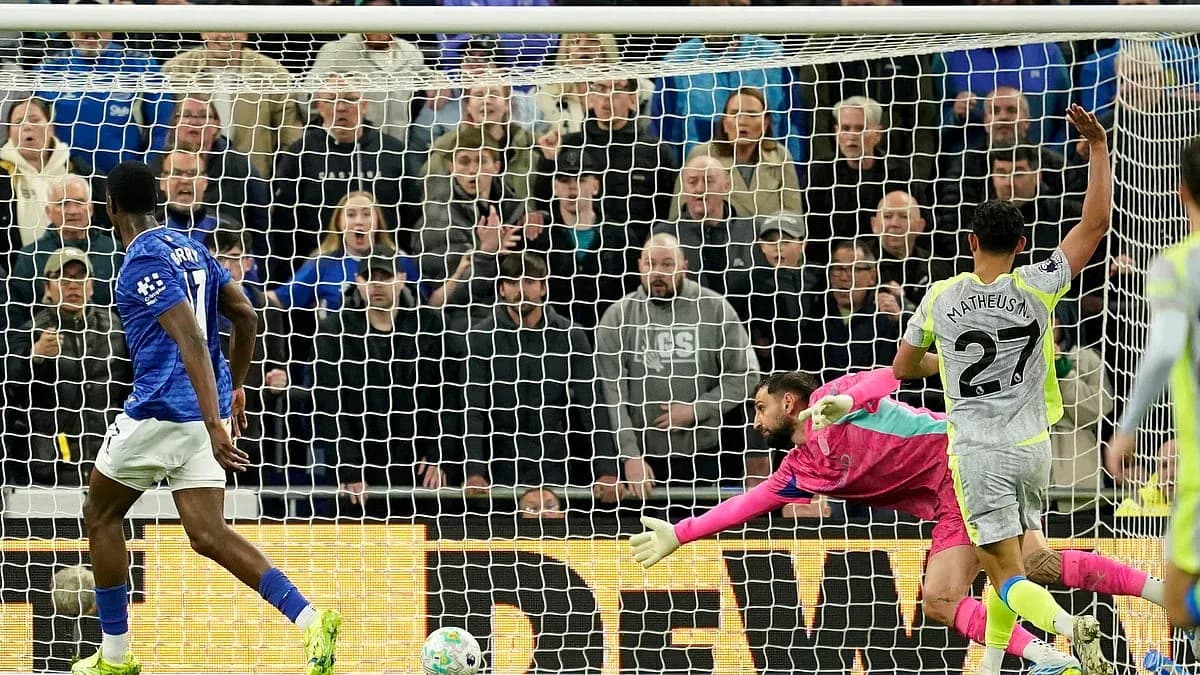
The Hill Dickinson Stadium had the feel of a cup tie rather than a late-season league fixture. Under the lights, 10th‑placed Everton met 2nd‑placed Manchester City and refused to bow, turning a 0‑1 half‑time deficit into a 3‑3 draw that said as much about their evolving identity as it did about City’s stretched resources.
I. The Big Picture – Two Identities Collide
Following this result, Everton sit on 48 points from 35 matches, their overall goal difference locked at 0, with 44 goals scored and 44 conceded. At home they have been solid but streaky: 18 matches, 6 wins, 5 draws, 7 defeats, with 25 goals for and 24 against. City, chasing the title from 2nd place, arrived with 71 points from 34 games and a formidable overall goal difference of 37, built on 69 goals scored and 32 conceded. On their travels, they had 9 wins, 5 draws and 4 defeats, scoring 31 and conceding 20.
The league data framed this as attack versus resilience. Manchester City’s overall scoring rate of 2.0 goals per game (2.4 at home, 1.7 on their travels) met an Everton side whose season has been defined by balance: 1.3 goals for and 1.3 against overall, 1.4 scored and 1.3 conceded at home. Over 90 minutes, the 3‑3 scoreline felt like those numbers shaken and spilled across the pitch.
Both coaches mirrored each other on the teamsheet, each opting for a 4‑2‑3‑1. Leighton Baines leaned into structure: Jordan Pickford behind a back four of J. O’Brien, J. Tarkowski, M. Keane and V. Mykolenko, with T. Iroegbunam and J. Garner screening. Ahead of them, M. Rohl, K. Dewsbury‑Hall and I. Ndiaye worked off Beto as the lone forward. Pep Guardiola, forced into improvisation, lined up G. Donnarumma behind a defence of M. Nunes, A. Khusanov, M. Guehi and N. O’Reilly, with Nico and B. Silva as the double pivot. R. Cherki, A. Semenyo and J. Doku floated behind E. Haaland.
II. Tactical Voids – Absences That Shaped the Game
The absentees list told its own tactical story. Everton were without J. Branthwaite, I. Gueye and J. Grealish. That stripped Baines of a left‑sided ball‑playing centre‑back, his primary holding midfielder and his most natural ball‑carrying winger‑creator. The result was a more orthodox, less expansive back line and a midfield that leaned heavily on Garner’s engine and Dewsbury‑Hall’s vertical running.
Garner’s season numbers underline his importance: 35 appearances, all from the start, 3152 minutes, 2 goals and 7 assists. He has attempted 1617 passes with 49 key passes at an 86% accuracy, and his defensive output is elite – 113 tackles, 9 blocked shots and 53 interceptions. But he also walks a disciplinary tightrope, with 10 yellow cards already. That dovetails with Everton’s broader yellow‑card profile: heading into this game, 22.39% of their yellows came between 76‑90 minutes, and another 20.90% between 46‑60, making late‑game discipline a recurring issue.
City’s void was even more structural. R. Dias and J. Gvardiol were both out, along with Rodri – three pillars of Guardiola’s usual defensive spine. Without Rodri’s metronome presence and Dias’ command, City’s back four of Nunes, Khusanov, Guehi and O’Reilly was more reactive than authoritative. The season statistics show City as defensively secure overall – just 32 goals conceded, 0.9 per game, and 1.1 on their travels – but this patched‑up version lacked the usual control of territory and tempo.
Interestingly, City’s disciplinary record is cleaner than Everton’s: 13 yellow cards in the 46‑60 window (21.67%) and 12 between 76‑90 (20.00%), but no reds at all this season. Everton, by contrast, have seen red, and J. O’Brien carries that history with 1 red card and 4 yellows across his campaign, even as he has blocked 16 shots and won 182 of 293 duels.
III. Key Matchups – Hunter vs Shield, Engine Room vs Enforcer
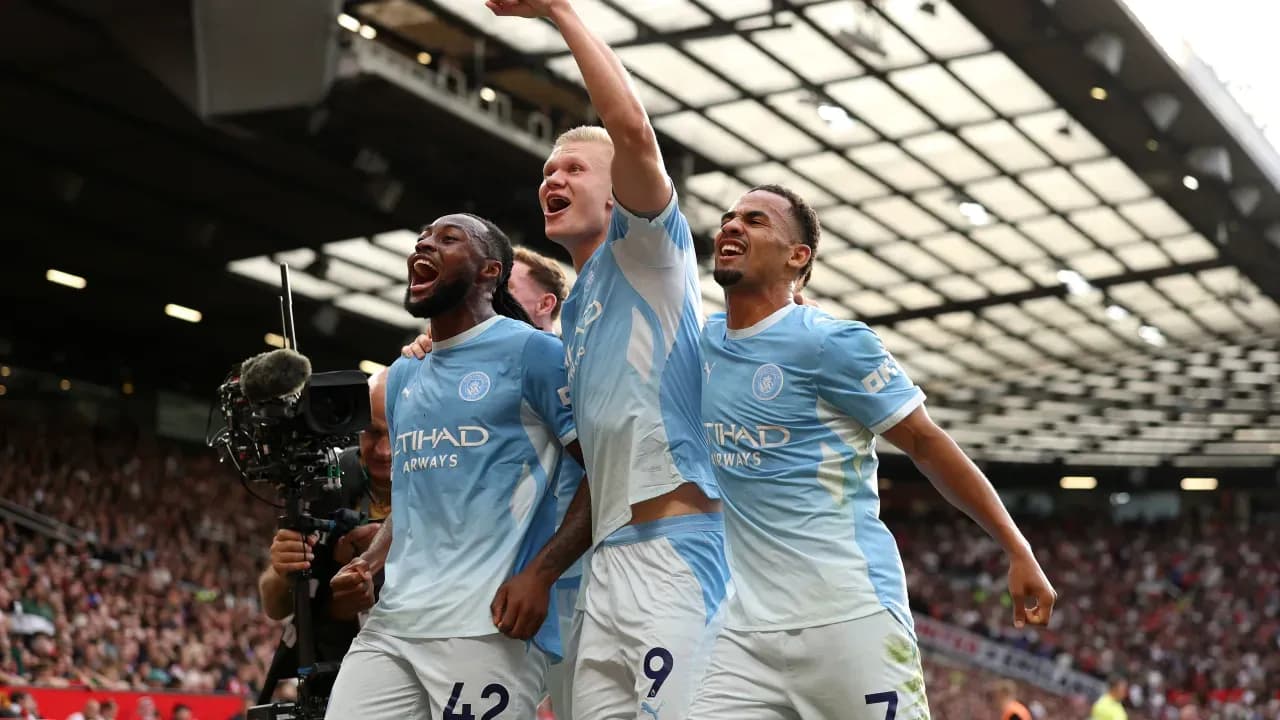
Hunter vs Shield was always going to be E. Haaland against Everton’s central block. Haaland came into this fixture as the league’s leading scorer with 25 goals and 7 assists in 33 appearances, built on 96 shots (54 on target) and 3 penalties scored from 4 attempts – that single miss a reminder that even his penalty record is not perfect. His duel volume is immense: 232 contests, 125 won, a physical and aerial presence that tests any back line.
Everton’s “shield” is not a single player but a trio: Tarkowski’s positioning, Keane’s aerial work and O’Brien’s aggression. O’Brien’s 54 tackles, 16 blocked shots and 14 interceptions, combined with his 197‑cm frame and 182 duels won, make him the natural combatant for Haaland’s direct threat. Yet the absence of Branthwaite denied Everton the left‑footed balance that often helps them build out and defend diagonals; City repeatedly sought to drag O’Brien wide and isolate Haaland against Keane.
In the Engine Room, the battle was between City’s creators and Everton’s disruptors. R. Cherki, with 11 assists and 4 goals in 29 league appearances, has become Guardiola’s chief chance‑architect: 1198 passes at 86% accuracy, 57 key passes, 97 dribble attempts with 46 successes. His tendency to drift into half‑spaces between the lines asked constant questions of Iroegbunam and Garner.
On the other side, Garner’s dual role was to protect the back four and to launch Everton’s counters. His 312 duels (190 won) and 35 fouls drawn show a player who not only breaks up play but also wins his side breathing space and set‑pieces. Against a City midfield lacking Rodri, his ability to step out and press B. Silva – who himself has 1952 passes at 90% accuracy and 45 key passes – was crucial in disrupting City’s usual rhythm.
Wide, J. Doku’s battle with V. Mykolenko and O’Brien was a constant tactical subplot. Doku’s 132 dribble attempts with 74 successes and 56 fouls drawn make him one of the league’s most direct wide threats. His 5 assists and 4 goals this season underline the end product that now accompanies his flair. Everton’s full‑backs had to decide whether to engage high and risk the space behind, or sit off and invite City into crossing zones where Haaland thrives.
IV. Statistical Prognosis – xG Balance and Defensive Fractures
On the numbers, Manchester City still project as the side more likely to edge this fixture on another day. Their overall scoring rate of 2.0 goals per game, coupled with just 0.9 conceded, suggests an Expected Goals profile that usually tilts in their favour, especially given Haaland’s shot volume and Cherki’s chance creation. On their travels, 1.7 goals scored and 1.1 conceded still mark them as one of the league’s most reliable away sides.
But Everton’s season data, and this 3‑3 draw, point to a team whose xG tends to hover close to parity yet is capable of surging in moments. At home they average 1.4 goals scored and 1.3 conceded, and they have kept 6 clean sheets at Goodison’s temporary Hill Dickinson home, failing to score only 4 times. Their 11 clean sheets overall and 9 matches without a goal suggest volatility: when they click, they can punch above their weight; when they don’t, they can be suffocated.
Following this result, the tactical verdict is nuanced. City’s underlying metrics still scream title contender, but the absence of Dias, Gvardiol and Rodri exposes a defensive xG against that will rise whenever opponents can transition quickly and commit runners beyond the first line. Everton, with Beto’s presence, Dewsbury‑Hall’s surges and Ndiaye’s movement, exploited that fragility.
For Baines, the draw confirms that his 4‑2‑3‑1, built on Garner’s relentless engine and O’Brien’s rugged defending, can live with the league’s elite when the press is coordinated and the counter is sharp. For Guardiola, it is a reminder that even with Haaland’s goals and Cherki’s artistry, control is not guaranteed when the spine is patched together.
In the broader arc of the campaign, this 3‑3 feels like a data point that flatters Everton’s belief and needles City’s sense of inevitability. On the balance of xG, City probably still shaded the chance quality; on the balance of structure, Everton exposed enough cracks to suggest that in high‑stakes games, City’s defensive solidity is now as much about who is missing as who is present.