Everton's League Cup Struggles: A History of Near Misses
The League Cup has never really been Everton’s competition. It has been a trapdoor, a banana skin, a long list of nights to forget.
Since the tournament began in 1960-61, Everton have only reached two finals. Two. A club of that size, that history, with that support, and yet the roll call is painfully short: Aston Villa in 1977 and Liverpool in 1984. Both ended in defeat.
The Villa loss still stings. Three matches to settle it, the last decided in the final minute of extra time. The sort of ending that scars a generation and gets passed down like folklore.
The 1980s didn’t fix it. Nor did the 1990s. Those years brought a different kind of misery: early exits and humbling defeats to lower-league opponents – Portsmouth, Millwall, York, Oxford. Names that still get thrown around whenever Everton’s cup record is mentioned with a grim smile.
Since 1984, they have made the semi-finals just three times. The most recent in 2016, when they somehow contrived to blow a 3-1 aggregate lead against Manchester City. A golden chance, thrown away.
The last decade has been more of the same. Three quarter-finals, but in four of the last five seasons they have not even made it past the third round. Five penalty shoot-out defeats in the last eight campaigns. The pattern is relentless.
So why should this year be any different?
Cameras, pressure and Moyes’ tightrope
Sky’s decision to park their cameras at Deepdale on Wednesday night for Preston v Everton tells its own story. They sense jeopardy. They sense the possibility of another Everton implosion in a competition that rarely brings them joy.
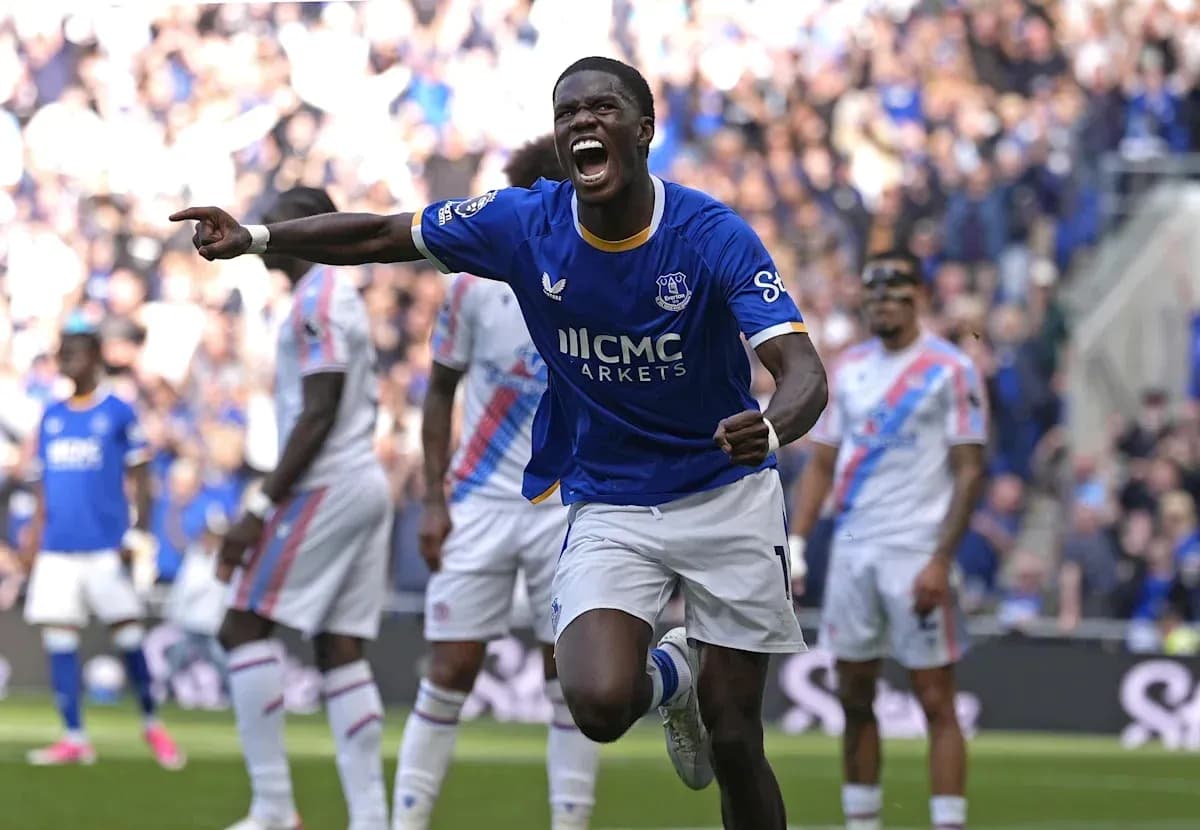
The mood around the club should be better. An opening-day win over Crystal Palace has injected some optimism. Everton are not in Europe, so the squad does not have the same overload as some of their rivals. A proper run in the cups could build momentum and bleed into the league form.
Yet David Moyes has managed to turn a straightforward question about priorities into a storm.
His comments about the trade-off between staying in the Premier League and progressing in the cups have jarred with supporters. The suggestion of a “choice” has not gone down well at a club starved of silverware and scarred by decades of near-misses and early exits.
Last season’s approach is still fresh in the memory. Moyes made sweeping changes for a trip to Wolves in this competition, a Wolves side that had lost five of their first six games. Everton went out. It felt like a wasted opportunity.
His words this week hint at a similar mindset. Another rotation-heavy side, another early exit, and the fragile feel-good factor from that Palace win starts to fray.
Deepdale, history and an old relationship
Preston v Everton is one of English football’s oldest fixtures, but it has become a rarity. Two of the original 12 founder members of the Football League in 1888, their paths have drifted apart in the modern era.
Preston’s early years were glorious. They won the inaugural league championship and the FA Cup in the same season, completing the first domestic Double. They did it without losing a league game, earning the nickname the “Invincibles” – a tag only matched since by Arsenal in 2004.
They retained the title the following year and then finished runners-up three seasons in a row. The honours slowed after that. The FA Cup in 1938 stands as their last major trophy, but they were Division One runners-up twice in the 1950s and regulars in the top flight until relegation in 1961.
That relegation year was the last time Everton played a competitive match at Deepdale.
Since then, there have been only two meetings, both at Goodison Park, both ending in 2-0 wins for Everton in the FA Cup and League Cup respectively.
Preston have flirted with a return to the top flight. They reached the play-off final in 2001 and 2005, losing both. The first of those runs came under Moyes, who knows Deepdale as well as anyone. He spent five years there as a player and four as manager, leading them to promotion to Division One – now the Championship – in 2000 and then to that play-off final a year later.
There is already a thread linking the clubs in this season’s competition. Preston’s first-round win over Huddersfield was played at Goodison Park, with Deepdale not yet ready. Since then, their league form has dipped, with defeats to Bolton and Wolves.
The history is rich. The recent meetings are sparse. The stakes, though, are very current.
The last time they met
You have to roll the clock back 22 years for the last clash between these sides.
On 27 October 2004, Everton beat Preston 2-0 in a League Cup third-round tie at Goodison. Lee Carsley and Marcus Bent scored the goals that night, a routine win in a competition that has rarely felt routine for the blue half of Merseyside.
Moyes’ selection gamble
All eyes now turn to Moyes’ team sheet.
He is expected to shuffle his pack again, but supporters are wary. They have seen what happens when the League Cup is treated as a laboratory rather than a launchpad.
Tyler Dibling, Carlos Alcaraz, Beto, Brennan Johnson and Jake O’Brien are all pushing to come into the side. On paper, it looks like depth. On the pitch, it has to look like ambition.
Moyes’ own words underline the tension:
“This is a question every journalist asks every manager and, in some ways, I think: ‘Are those journalists dead stupid? Do you think none of the managers want to win the cups?
“If I asked you: ‘Would it be more important than staying in the Premier League?’ – what would your answer be? Your answer will half answer your own question.
“I can’t think of any manager who wouldn’t want a good run in a cup competition.”
The message is clear enough, but the nuance has been lost in translation with sections of the fanbase. They hear a manager already weighing up sacrifices in a tournament that has hurt them too many times.
A night loaded with risk
Moyes’ comments, or at least how they have been interpreted, have not calmed anyone. If anything, they have turned up the heat.
Everton go to one of the game’s historic grounds, live on television, against a club with its own proud traditions and a manager with deep roots in both camps. The narrative of an upset is already written in some people’s minds.
For a club that has spent decades stumbling through this competition, this feels like one of those nights that can either reinforce the old story or start to write a new one.
Right now, it’s hard to shake the nerves.