Elche's Tactical Mastery in 1-0 Win Over Getafe
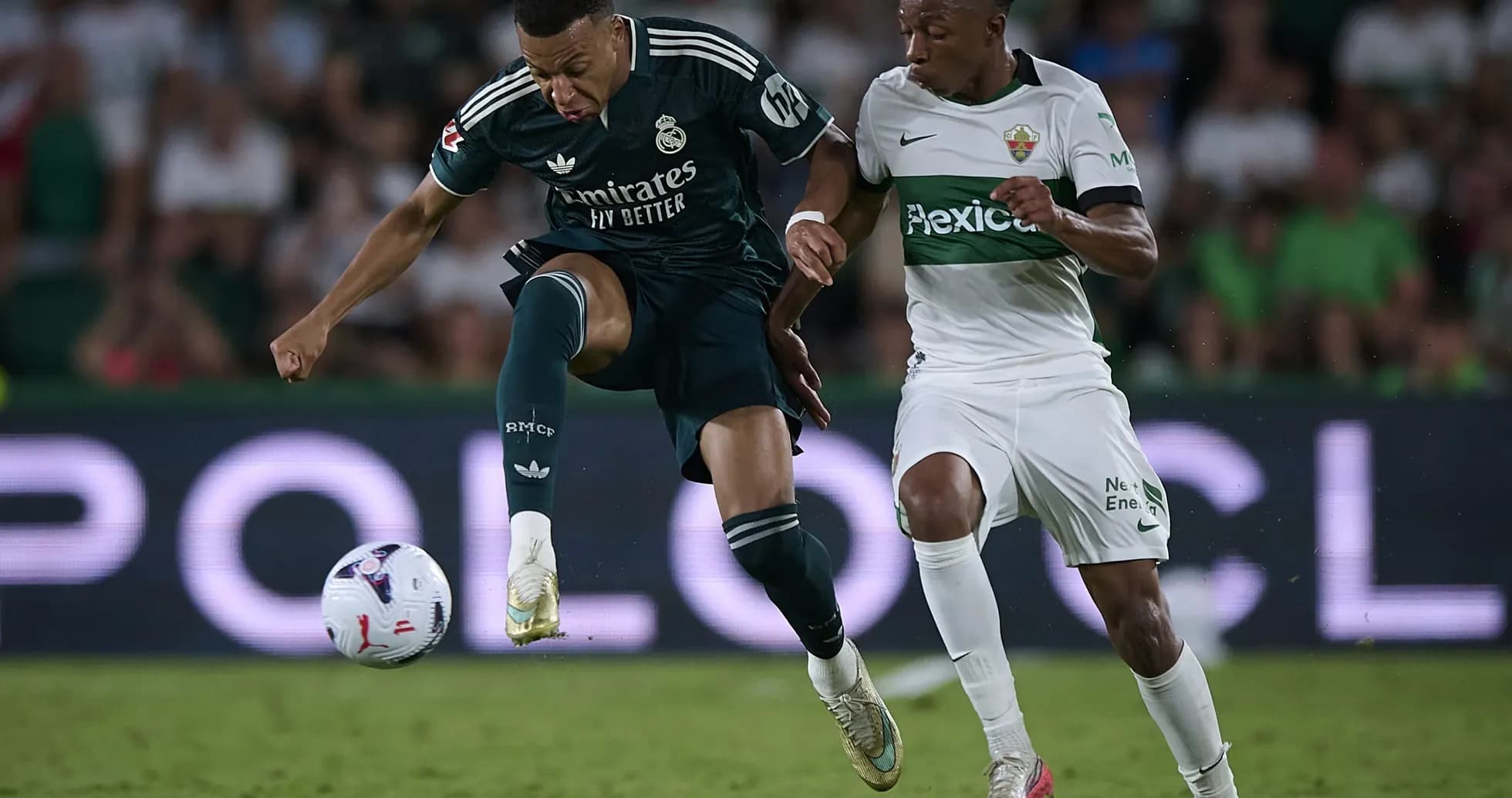
Elche’s 1-0 win over Getafe at Estadio Manuel Martínez Valero was a controlled, methodical performance built on structure rather than attacking volume. In a La Liga match where both sides produced a combined xG of just 0.54 (Elche 0.46, Getafe 0.08), the home team’s ability to manage state after an early lead and a first-half red card for the visitors defined the tactical storyline more than any individual flourish.
I. Executive Summary
Elche, set up by Eder Sarabia in a 3-5-2, dominated territory and possession (59%) without over-committing numbers, relying on their back three and a compact midfield line to suffocate Getafe. Jose Bordalas Jimenez’s 5-3-2 initially aimed to keep the game tight and low-event, but the 39th-minute dismissal of Djené forced a reactive, damage-limitation approach. From that moment, Getafe’s already conservative structure collapsed into a deep block with almost no attacking threat, as reflected in their zero shots on target and just three attempts overall.
II. Scoring Sequence & Disciplinary Log
The only goal arrived in the 19th minute, emblematic of Elche’s set-piece and structural advantage. From sustained pressure and territorial control, Víctor Chust stepped up from the back three and finished to make it Elche 1-0 Getafe. With no assist recorded, the goal underlined Elche’s capacity to profit from second phases and loose defensive organization rather than crafted combination play.
The disciplinary story began even before kickoff: at -5', Martim Neto (Elche) received a Yellow Card — Argument, an early flashpoint that hinted at a tense, confrontational tone. The game’s decisive disciplinary moment came at 39', when Djené (Getafe) was shown a Red Card — Foul, shattering Getafe’s already fragile offensive plan and locking them into survival mode with over 50 minutes to play.
In the second half, Elche’s game management became more visible in the card profile. At 66', André Silva (Elche) was booked with a Yellow Card — Leaving field, an incident that preceded his substitution and reflected the referee’s strict control over restarts and transitions. Three minutes later, at 69', Álvaro Rodriguez (Elche) picked up a Yellow Card — Foul, the final booking of the match. Overall card totals were: Elche 3 yellow cards, Getafe 1 red card, total 4 cards.
III. Tactical Breakdown & Personnel
Elche’s 3-5-2 functioned as a possession-dominant, risk-controlled system. With 399 total passes and 332 accurate (83%), they circulated the ball with patience, using the back three of Víctor Chust, Dario Affengruber and Pedro Bigas to create a stable platform. Chust’s role was pivotal: beyond his goal, he often stepped into midfield to create a plus-one in buildup, exploiting Getafe’s front two and drawing out one of the central midfielders.
The wing and half-space structure was key. Tete Morente and Gerard Valera provided width, while Gonzalo Villar, M. Aguado and Grady Diangana operated as a flexible interior trio. Villar, in particular, was central to tempo control, frequently dropping to receive from the back line and switching play to stretch Getafe’s five-man defense. Elche’s 10 total shots (3 on goal, 3 blocked) reflected this methodical approach: many attempts came from outside the box (6 shots), consistent with a team facing a compact low block.
Up front, André Silva and Álvaro Rodriguez worked more as reference points and space creators than pure finishers. Their movement pinned Getafe’s back line, allowing midfielders to arrive from deep. After his 66' booking, André Silva (OUT) made way for Alexandro Pedrosa (IN), a change that tilted Elche slightly towards more control and defensive security on the flank rather than pure striking presence.
Substitutions from Sarabia in the final phase were about preserving structure and energy. At 84', M. Aguado (OUT) was replaced by J. Donald (IN), and Grady Diangana (OUT) by L. Cepeda (IN), refreshing the midfield legs to maintain pressing intensity and ball retention. At 85', Víctor Chust (OUT) was replaced by Buba Sangare (IN), a like-for-like swap in the back line that kept the three-at-the-back shape intact while protecting a key goalscorer on a booking-free but physically demanding night. Finally, at 86', Álvaro Rodriguez (OUT) was replaced by Josan (IN), adding a more mobile, wide-oriented profile to exploit any late transitions as Getafe tired.
Getafe’s 5-3-2 was initially conservative but coherent: D. Soria behind a back five of A. Nyom, Djené, D. Duarte, Z. Romero and J. Iglesias, with L. Milla, D. Caceres and M. Arambarri in midfield, and M. Martin plus M. Satriano up front. The plan was clear: compress central spaces, concede possession, and look to break quickly. However, their passing numbers — 282 total passes, 194 accurate (69%) — show how difficult they found it to progress through Elche’s block.
Once Djené was dismissed, Bordalas moved into emergency mode. At 53', D. Caceres (OUT) was replaced by Davinchi (IN), a defensive substitution that helped re-balance the back line and maintain numerical stability at the back. Later, at 71', A. Nyom (OUT) made way for L. Vazquez (IN), and at 72' D. Duarte (OUT) was replaced by A. Abqar (IN), further refreshing the defensive unit. At 85', M. Martin (OUT) was replaced by V. Birmancevic (IN), a move to add some verticality and technical quality in the final third, but by then Getafe were too deep and too short of numbers to meaningfully threaten.
Goalkeeper realities underline the tactical shape of the game. Matías Dituro for Elche did not register a single save (Getafe had zero shots on goal), illustrating how effectively the home side controlled both space and transitions. The goals prevented metric of -0.58 for Elche’s goalkeeper block is slightly misleading in this specific match context, as the visitors generated only 0.08 xG; structurally, Elche’s defensive index on the day was extremely strong.
For Getafe, David Soria made 2 saves, anchoring a side that conceded only 3 shots on target despite playing with ten men for over 50 minutes. His goals prevented figure of -0.58 suggests he slightly underperformed relative to the quality of chances faced, but the margin is small in such a low-xG environment. More importantly, his presence and command helped keep the scoreline respectable as Elche probed patiently rather than flooding the box.
IV. The Statistical Verdict
The statistical profile aligns tightly with the tactical patterns. Elche’s 59% possession, 399 passes and 83% pass accuracy reflect a side in control of territory and tempo, using the ball as a defensive tool once ahead. Their xG of 0.46, however, shows they did not convert dominance into a high volume of clear chances; instead, they relied on one decisive moment and then game management. Defensively, allowing only 3 total shots and zero on target speaks to a very strong defensive index on the day.
Getafe’s 41% possession, 282 passes at 69% accuracy and zero corners illustrate how thoroughly they were pinned back, especially after the red card. Their xG of 0.08 confirms that their attacking threat was almost non-existent. Discipline also shaped the match: Elche’s 18 Fouls and 3 yellow cards contrasted with Getafe’s 13 Fouls and 1 red card, underlining a game where the home side were aggressive but controlled, while the visitors’ single critical lapse — Djené’s dismissal — determined their tactical ceiling. In the end, Elche’s structure, ball circulation and defensive control fully justified the 1-0 scoreline.