DR Congo's World Cup Plans Disrupted by Ebola Outbreak
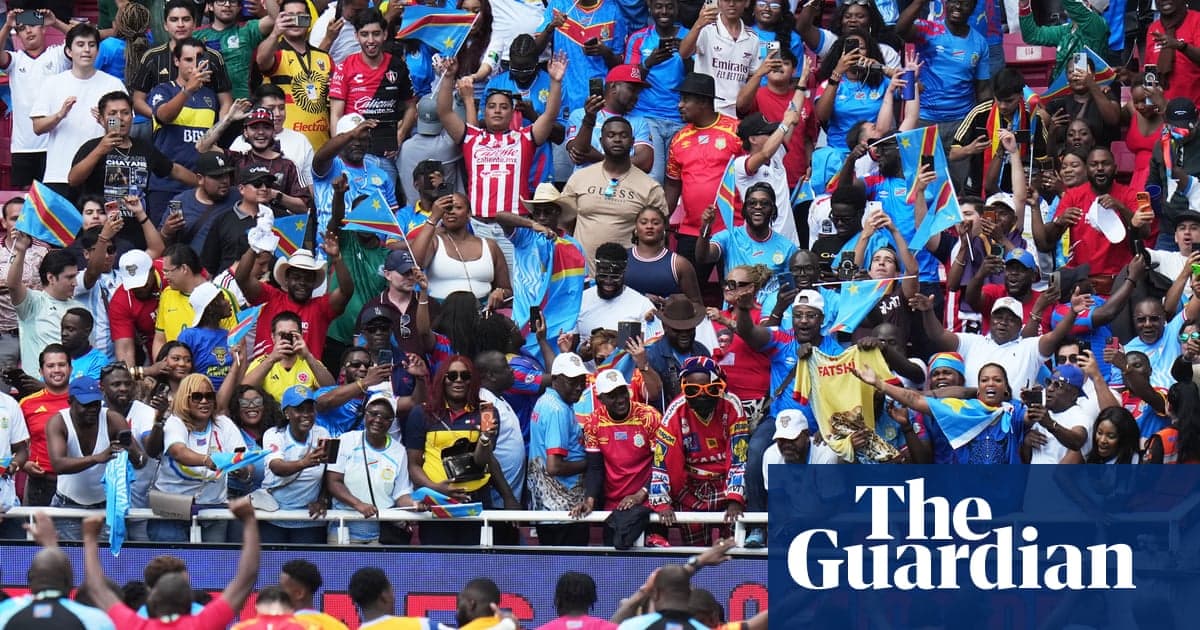
The Democratic Republic of the Congo will head to their first World Cup in half a century without the emotional farewell they had promised their fans in Kinshasa, after an Ebola outbreak in the east of the country forced a drastic late change of plans.
A three-day training camp and public goodbye in the capital has been scrapped, with preparations shifted entirely abroad. The decision comes amid the spread of a rare strain of the virus, Bundibugyo, which is believed to have killed more than 130 people and led to nearly 600 suspected cases. The World Health Organization has classed the situation as a public health emergency of international concern.
Warm-ups in Europe, launch in Houston
The Leopards will still play their two scheduled World Cup warm-up matches: Denmark in Liège on 3 June, then Chile in southern Spain on 9 June. Both fixtures remain on the slate, team spokesman Jerry Kalemo confirmed.
“There were three stages of preparation: in Kinshasa to say goodbye to the public, Belgium and Spain with two friendly matches … and the third stage from 11 June in Houston. Only one stage was cancelled – the one in Kinshasa,” Kalemo said.
From 11 June, DR Congo will set up camp in Houston, where their World Cup opens on 17 June against Portugal. Group K then sends them to Guadalajara to meet Colombia on 23 June before a final group game against Uzbekistan in Atlanta on 27 June.
It is a demanding itinerary for a country stepping back onto the biggest stage for the first time since 1974, when they played under the name Zaïre.
Travel bans and tight corridors
The Ebola outbreak has not just reshaped the training map; it has triggered global health measures that brush right up against the World Cup.
The US Centers for Disease Control and Prevention announced this week that the United States will bar entry to all foreign nationals who have been in the DRC, Uganda or South Sudan in the previous three weeks. The ban runs for 30 days.
On paper, that could have cut straight across DR Congo’s World Cup dream. In practice, the squad have slipped through a narrow corridor of eligibility. A US official confirmed that the national team will not be affected by the CDC order because the players and coaching staff have been based in Europe for several weeks and have not returned to the DRC in the 21-day window.
Those members of the wider World Cup delegation who did travel back to the country during that period will face the same quarantine rules as US citizens returning from affected areas. That carve-out does not extend to fans hoping to follow the team to the United States.
The White House World Cup taskforce, operating under the Department of Homeland Security, has stressed it is working closely with multiple agencies on health and security around the tournament and is “closely monitoring” the outbreak.
A squad scattered abroad
If there is one reason DR Congo have been able to adapt quickly, it lies in the profile of their squad. All of Desabre’s players and the French coach himself are based outside the country, many of them in France. Kalemo said staff members who do live in the DRC “are leaving in the next hours” to link up with the team.
On the pitch, the squad carries a distinctly European sheen. Newcastle forward Yoane Wissa, Sunderland midfielder Noah Sadiki and West Ham full-back Aaron Wan-Bissaka headline a 26-man group that blends Premier League experience with players drawn from across the continent.
There has already been one enforced change. Hibernian centre-back Rocky Bushiri, initially named in the squad, has withdrawn with a suspected achilles injury. Kilmarnock’s Aaron Tshibola, another Scottish Premiership player, has been drafted in as his replacement.
This is a team that earned its ticket the hard way, beating Jamaica in a playoff in Mexico to clinch a place in Group K. Now they must juggle tactical fine-tuning with the realities of a global health emergency.
New power at Fecofa
Off the field, the country’s football structure is also shifting. Véron Mosengo-Omba, the former general secretary of the Confederation of African Football, has been elected president of Fecofa, the DRC federation.
Standing unopposed, he secured 60 of a possible 65 votes. His election follows his resignation from Caf in March after five years in the role. A long-time ally of Fifa president Gianni Infantino, Mosengo-Omba followed him from Uefa to Fifa in 2016 before moving to Caf in 2021.
A new federation chief, a long-awaited World Cup return, and a national team forced to say its goodbyes from afar. For DR Congo, this campaign now unfolds at the uneasy intersection of footballing ambition and public health crisis.