Deadline Day Nonsense: Transfer Myths Unveiled
Two days after the window slammed shut and the transfer circus should be packing away its tents, the show simply changes costume. No more breathless “late deals” from Premier League clubs. Now it’s the season of the Great Free Agent Lucky Dip, where every out-of-contract name becomes a “solution” and every headline pretends urgency where there is none.
The trick has been the same for years: never mind what actually happens, just what might, one day, theoretically, if a dozen things fall into place. Click first, think later.
The Dimarco “Deal” That Isn’t
Step forward the Daily Express with a truly audacious effort:
“Man Utd can sign one of best left-backs in the world for free – but there’s a catch”
Sounds like United have found a loophole, a late-market masterstroke, a way to fix their left-back crisis right now, doesn’t it?
Here’s the “catch”, buried more than 200 words into the piece:
While United cannot sign the player immediately, the Red Devils can begin laying the groundwork. With his contract currently due to expire in 2027, Inter defender Federico Dimarco stands to become available on a free transfer next summer.
So the grand revelation is that a player whose deal runs to 2027 could, in theory, leave for free in 2027. Or, if something changes, maybe next summer. At some point. Possibly.
There is no line suggesting Manchester United want Dimarco. No suggestion they’re in talks. No hint they’re even thinking about him.
The story boils down to this: Manchester United, like every other club on the planet, could sign Federico Dimarco on a free at some point in the future if the stars align. That’s it. That’s the scoop.
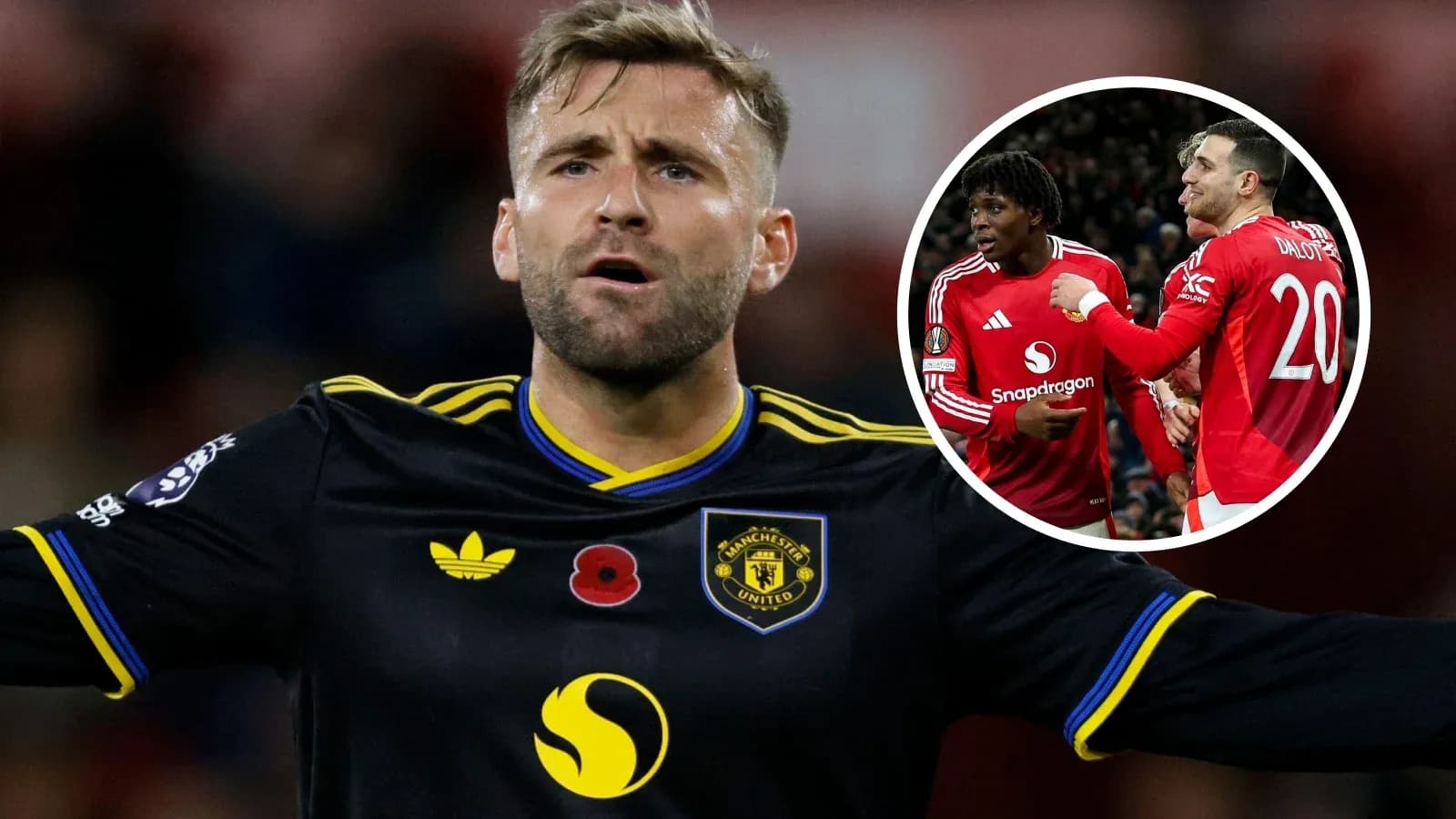
Yet the headline is dressed up as a live solution to Erik ten Hag’s immediate headache at left-back, where Luke Shaw’s fitness and form are carrying an uncomfortable amount of weight. It leans directly into the one genuine post-deadline route to reinforcements – free agents – and then swerves away from the reality that Dimarco is not one of them.
The market for actual free left-backs is thin. Even the Express hasn’t tried to float the idea of United picking up the injured Oleksandr Zinchenko. So instead of dealing with the real, limited options, the piece reaches for a name that isn’t available and a scenario that isn’t happening.
Why? Because “one of best left-backs in the world for free” looks irresistible in bold type, even if the substance underneath is, frankly, nonsense.
This is the game now: find a contractual technicality, inflate it into a “transfer possibility”, and hope nobody reads far enough down to notice the foundations are made of sand.
Arsenal’s “Late Signing” That Isn’t What It Seems
The Daily Star offers a different flavour of the same dish with a classic “as” headline:
“Arsenal news: Late signing jets in for medical as £60m transfer set to be confirmed”
It sounds like one blockbuster story. Two deals. One big moment.
The “late signing” is Andria Bartishvili, a 17-year-old Georgian winger, predictably billed as “the next Khvicha Kvaratskhelia”. His fee? Around £4m. His arrival date? Not until he turns 18 next year, when he’ll actually link up with Arsenal.
So who’s the £60m man? Gabriel Martinelli, of course, and his protracted move to Al-Hilal. One genuine major transfer, one low-cost teenager for the future, bundled together into a single breathless headline.
The structure is deliberate. It blurs the line between immediate first-team business and long-term planning, using the gravity of a £60m sale to pull a developmental signing into the same orbit. It’s not untrue. It’s just very, very convenient.
Chelsea’s “Savings” Spin
Over at football.london, Chelsea’s midfield reshuffle gets the optimistic treatment:
“Chelsea can save millions on Enzo Fernandez replacement after Lamine Camara transfer blunder”
The “millions-saving” masterplan? Promote from within. Sell a World Cup winner for £125m, then fill the gap by elevating academy players into the first-team squad.
On one level, it’s a perfectly sensible football idea. Chelsea’s academy is famously rich with talent. Plenty of top clubs would love to be able to replace big-money departures with homegrown prospects.
But framed as a financial coup, as if discovering that young players can step up is some sort of accounting cheat code, it turns a footballing necessity into a glossy cost-cutting narrative. A “blunder” on Lamine Camara gets spun into a virtue: never mind the miss, look at the savings.
The Post-Window Hustle
This is what the landscape looks like once the window closes. Real transfers dry up, so the industry shifts to speculation, spin and the soft edges of what might be possible one day.
Free agents become miracle cures. Future contract expiries become “opportunities”. Teenagers for tomorrow get sold as late moves for today.
The deals have stopped. The headlines won’t.