Crystal Palace vs Everton: Premier League Clash at Selhurst Park
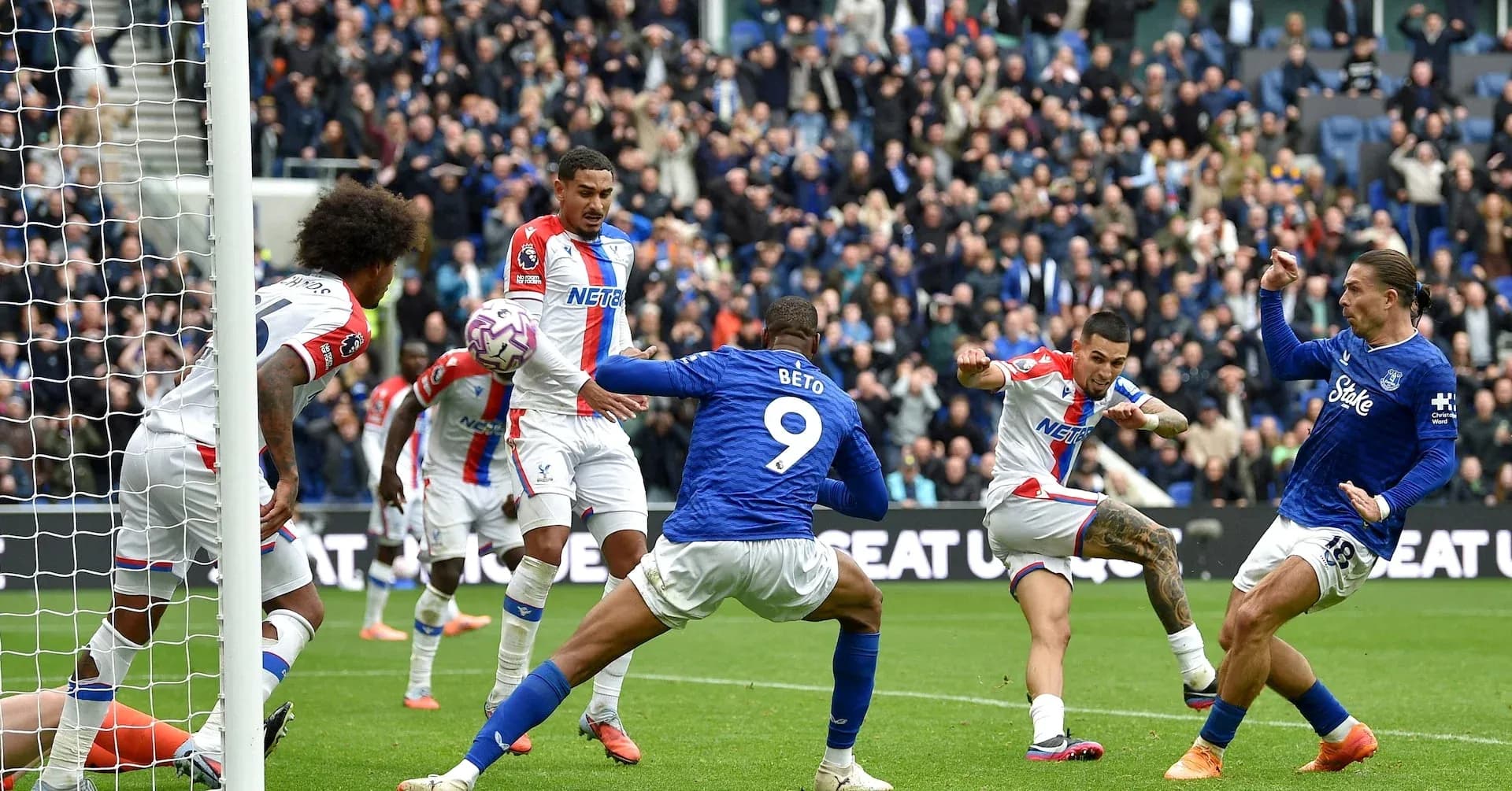
Selhurst Park hosts a mid-table Premier League meeting on 10 May 2026 as 15th‑placed Crystal Palace welcome 10th‑placed Everton. With the visitors chasing a top‑half finish and the hosts still not mathematically clear of danger, the stakes are more about positioning and momentum than trophies, but the edge between these two has been sharpened by a recent run of Everton dominance in this fixture.
Context and stakes
In the league, Crystal Palace sit 15th on 43 points after 34 matches, with a goal difference of -6 (36 scored, 42 conceded). Their recent form line of LLDWD underlines inconsistency, but also hints at a team capable of grinding out results.
Everton arrive in a stronger position: 10th with 48 points from 35 games, and a neutral goal difference (44-44). Their form reads DLLDW, another mixed sequence but one that keeps them in touch with the European conversation if they can finish strongly.
For Palace, a result would push them closer to the comfort of mid‑table and away from any late‑season nerves. For Everton, three points at Selhurst Park would consolidate a top‑half finish and underline their improvement across the campaign.
Tactical outlook: Palace’s back three vs Everton’s 4‑2‑3‑1
Across all phases, Crystal Palace have been wedded to a back-three system. They have lined up 30 times in a 3‑4‑2‑1 and four times in a 3‑4‑3 in the league this season. That structure has delivered a solid base but modest attacking output: just 36 goals in 34 matches, with averages of 1.1 goals for and 1.2 against per game.
At Selhurst Park specifically, Palace’s record is 4 wins, 8 draws and 5 defeats from 17 home games, scoring 16 and conceding 19. The numbers underline a cautious, often attritional home side: they fail to score in 7 of those 17 home matches but also keep 7 clean sheets. Expect a compact mid‑block, three centre‑backs protecting the box, and wing‑backs asked to provide width without leaving them exposed in transition.
Everton, by contrast, have a clearer attacking structure. In the league they have used a 4‑2‑3‑1 in 21 matches, with one outing in a 4‑3‑3. They have scored 44 goals in 35 games (1.3 per match) and conceded 44 (1.3 per match), reflecting a more open, higher‑variance style than Palace.
Away from home, Everton’s record is 7 wins, 4 draws and 6 defeats from 17 matches, with 19 goals scored and 20 conceded. They have kept 5 away clean sheets and failed to score 5 times, suggesting that when they click, they can control games on the road, but there is still volatility in performance.
The tactical battle therefore shapes up as:
- Palace’s 3‑4‑2‑1: focused on structure, set‑pieces and quick use of the front man.
- Everton’s 4‑2‑3‑1: double pivot to manage transitions, three advanced midfielders looking to exploit spaces between Palace’s wing‑backs and wide centre‑backs.
Key players and attacking threats
Crystal Palace’s primary attacking reference is Jean‑Philippe Mateta. Across all phases this Premier League season, he has:
- 10 league goals in 28 appearances (24 starts, 2095 minutes)
- 53 shots, 30 on target
- 4 penalties scored from 4 attempts, with no misses
- A role as a physical focal point (192cm, 88kg) who can both finish in the box and occupy centre‑backs.
Mateta’s duel volume (274 duels, 104 won) underlines his importance as the out ball when Palace go long from their back three. With Palace averaging just 0.9 goals per game at home, his efficiency in the penalty area – and from the spot – is critical.
From a structural perspective, Palace’s 12 clean sheets across all phases (7 at home) and 11 matches where they failed to score show a team whose games often hinge on fine margins. They have the defensive discipline to keep this tight, but they need Mateta’s presence to turn half‑chances into points.
Everton spread their goals more evenly across the squad (no detailed individual scoring data is provided here), but the team‑level profile is clear: they can hit three at home (their biggest home win is 3‑0) and are capable of controlled away wins (biggest away win 0‑2), yet their defensive line is susceptible to collapses (a 1‑4 home defeat and a 2‑0 away loss are their heaviest reverses).
Everton have also shown composure from the spot this season, scoring 2 penalties from 2 attempts across all phases, with no misses recorded. While the individual takers are not specified in the data, that reliability adds another dimension to their attacking threat in tight contests.
Injuries and selection issues
Team news could significantly shape the tactical options on both sides.
For Crystal Palace, four players are listed as definitely out for this fixture due to injury:
- C. Doucoure – Knee injury
- E. Guessand – Knee injury
- E. Nketiah – Thigh injury
- B. Sosa – Injury
Losing E. Nketiah removes a key alternative to Mateta in the forward line, reducing Palace’s ability to change the profile of their attack from the bench. The absence of B. Sosa also affects their options at wing‑back or full‑back, important roles in a 3‑4‑2‑1.
Everton are also dealing with significant absences:
- J. Branthwaite – Hamstring injury
- J. Grealish – Foot injury
Branthwaite’s absence weakens their central defensive unit, particularly in aerial duels against Mateta. Grealish’s unavailability removes a creative and ball‑carrying option in the final third.
Two Everton players are listed as questionable:
- I. Gueye – Injury
- T. Iroegbunam – Injury
If I. Gueye is unavailable or not fully fit, Everton lose a key ball‑winning and screening presence in front of the back four, which could make them more vulnerable to Palace’s direct play and second‑ball pressure.
Recent head‑to‑head record
Looking only at competitive fixtures, the last five meetings between these sides show a clear Everton edge:
- Everton 2-1 Crystal Palace – Premier League, at Hill Dickinson Stadium, 5 October 2025. Everton win.
- Crystal Palace 1-2 Everton – Premier League, at Selhurst Park, 15 February 2025. Everton win.
- Everton 2-1 Crystal Palace – Premier League, at Goodison Park, 28 September 2024. Everton win.
- Everton 1-1 Crystal Palace – Premier League, at Goodison Park, 19 February 2024. Draw.
- Everton 1-0 Crystal Palace – FA Cup, at Goodison Park, 17 January 2024. Everton win.
Across these five competitive matches, the record stands at:
- Everton wins: 4
- Crystal Palace wins: 0
- Draws: 1
Notably, Palace have lost both of the last two league meetings by the same 1-2 scoreline, including at Selhurst Park in February 2025.
Discipline and game state
Both teams carry a certain edge in their defensive work. Palace’s yellow cards cluster around the 31‑60 minute window, often as they attempt to disrupt opposition momentum after half‑time. Everton’s bookings are more back‑loaded, with a spike between 76‑90 minutes, suggesting late‑game intensity and perhaps pressure when defending leads or chasing results.
Red cards are rare but present for both: Palace have 2 reds across all phases (both in the second half), while Everton have 4, spread across different time ranges. With referee T. Bramall appointed, game management and discipline could be crucial, especially in a tight contest.
The verdict
The data points towards a finely balanced match‑up between a structured but goal‑shy Palace and a more expansive, inconsistent Everton.
- Palace’s home profile (16 scored, 19 conceded, 7 clean sheets, 7 blanks) suggests low‑scoring, close games.
- Everton’s away profile (19 scored, 20 conceded, 7 wins from 17) shows they are comfortable on the road and capable of edging tight contests.
- Everton’s recent head‑to‑head dominance (4 wins and 1 draw in the last 5 competitive meetings) adds psychological weight in their favour.
- Injuries to Branthwaite and potentially I. Gueye, however, could leave Everton more vulnerable to Mateta’s physical presence and Palace’s set‑piece threat.
On balance, Everton’s slightly superior attacking numbers across all phases and their strong recent record in this fixture point to the visitors having a marginal edge. Yet Palace’s defensive resilience at Selhurst Park and their capacity to shut games down mean this is unlikely to be a wide‑margin contest.
A narrow Everton win or a draw feels the most logical outcome, with the match likely decided by set‑pieces, penalty‑box moments around Mateta, and whether Everton can compensate for their defensive absentees without losing their attacking structure.