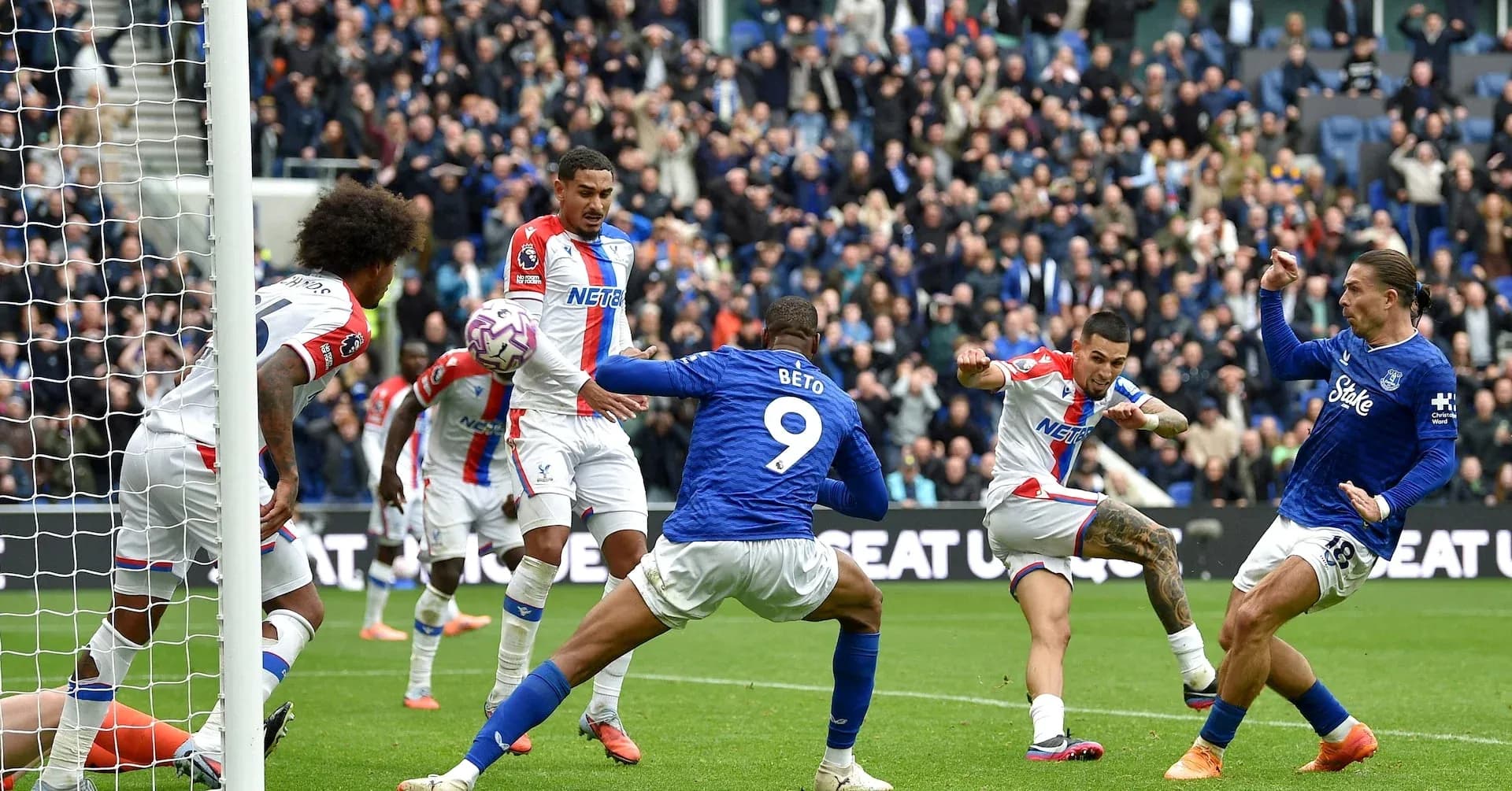
Crystal Palace vs Everton: Premier League Mid-Table Clash
In 2026 at Selhurst Park, Crystal Palace host Everton in a Regular Season - 36 Premier League fixture that is far more about positioning than survival or Europe. In the league phase, Palace sit 15th on 43 points with a -6 goal difference (36 scored, 42 conceded in 34 games), looking to lock in safety and avoid being dragged into late anxiety. Everton arrive 10th on 48 points with a neutral goal difference (44 scored, 44 conceded in 35 games), targeting a top-half finish and an outside shot at climbing towards the European conversation if results elsewhere go their way. The seasonal weight is therefore mid-table but meaningful: Palace seeking security and momentum, Everton chasing status and prize-money upside.
Head-to-Head Tactical Summary
The recent meetings show a clear Everton edge in tight, low-margin contests. On 5 October 2025 at Hill Dickinson Stadium in the Premier League (Regular Season - 7), Everton beat Crystal Palace 2-1 after trailing 0-1 at half-time. Earlier in 2025, on 15 February at Selhurst Park (Premier League, Regular Season - 25), Everton again won 2-1, leading 1-0 at half-time. On 28 September 2024 at Goodison Park (Premier League, Regular Season - 6), Everton recorded another 2-1 home win, once more overturning a 0-1 half-time deficit. On 19 February 2024 at Goodison Park (Premier League, Regular Season - 25), the sides drew 1-1 after a 0-0 first half, underlining how fine the margins can be. In cup action on 17 January 2024 at Goodison Park (FA Cup, 3rd Round Replays), Everton edged a 1-0 win, leading 1-0 at half-time. Across these fixtures, Everton have consistently found ways to edge one-goal games, often responding well after the interval when behind.
Global Season Picture
- League Phase Performance: In the league phase, Crystal Palace are 15th with 43 points from 34 matches, scoring 36 and conceding 42. Their home record is cautious but fragile (4 wins, 8 draws, 5 losses; 16 goals for, 19 against), reflecting a conservative attack and a defense that is relatively stable but not dominant (16 scored, 19 conceded at home). Everton are 10th with 48 points from 35 matches, with 44 goals for and 44 against. Away from home they have been solid (7 wins, 4 draws, 6 losses; 19 scored, 20 conceded), suggesting a balanced but unspectacular profile in both attack and defense (away goals for 19, against 20).
- All-Competition Metrics: Across all phases of the competition, Crystal Palace average 1.1 goals scored and 1.2 conceded per match (36 for, 42 against over 34), indicating a slightly negative goal trend that aligns with their league goal difference. They have 12 clean sheets and have failed to score 11 times, pointing to an inconsistent attack that can be shut down but occasionally keeps games under control. Everton, across all phases of the competition, average 1.3 goals scored and 1.3 conceded per match (44 for, 44 against over 35), a perfectly balanced profile. With 11 clean sheets and 9 matches without scoring, they show a similar pattern of variability but with a marginally higher attacking output than Palace. Card profiles underline discipline challenges: Palace accumulate yellow cards heavily between 31-60 minutes, while Everton’s bookings spike from 46-90 minutes, hinting at late-game physicality and risk management issues.
- Form Trajectory: In the league phase, Crystal Palace’s recent form string “LLDWD” signals a downward tilt: two straight losses followed by a draw, a win, and another defeat. That pattern reflects a side unable to build sustained momentum, oscillating between stabilizing results and setbacks. Everton’s “DLLDW” shows only one win in the last five league matches, with two draws and two losses. Both teams are trending inconsistently, but Palace are closer to the danger zone, making home points more urgent, while Everton’s plateau risks surrendering a stronger top-half finish if not corrected.
Tactical Efficiency
Across all phases of the competition, Crystal Palace’s attacking output of 1.1 goals per game against 1.2 conceded suggests a slightly inefficient attack relative to their defensive effort: they often keep matches close but lack the cutting edge to tilt them in their favor. Their frequent use of a 3-4-2-1 structure (30 matches) underlines a system prioritizing compactness and wing-backs, which can limit numbers in the box and contribute to their 11 matches without scoring. Everton, with 1.3 goals for and 1.3 against across all phases, operate with a more expansive 4-2-3-1 base (21 matches), producing marginally higher attacking returns but at the cost of a similar defensive concession rate. In efficiency terms, Everton’s ability to consistently hit 1+ goals aligns with their superior head-to-head record in one-goal matches. Without explicit numeric Attack/Defense Index values from the comparison block, the relative picture is clear: Everton’s attack is slightly more productive, while both defenses are broadly comparable in concession rate. That small attacking edge has repeatedly translated into narrow wins in this matchup and remains the key tactical differentiator.
The Verdict: Seasonal Impact
This fixture’s seasonal impact sits in the “positioning and pressure” tier rather than defining the title or relegation race. For Crystal Palace, a home win would likely push them closer to or beyond the psychological 40+ points comfort line they have already surpassed in the league phase, but with 43 points and a -6 goal difference they still need to avoid a late slide; beating a top-half opponent would all but remove lingering relegation fears and provide a platform to reassess and rebuild in 2026 with a more ambitious attacking plan. A draw would maintain stability but leave them vulnerable to being overtaken by teams below if their “LLDWD” pattern persists. A defeat, combined with their recent negative trend, would deepen anxiety and could drag them into a congested lower mid-table, making the final rounds nervier than necessary.
For Everton, three points away from home would consolidate a top-half finish and keep open the possibility of climbing further if those above them falter, strengthening their case as a resurgent mid-table force with scope to push higher in 2026. A draw would be acceptable but underwhelming, reinforcing their “DLLDW” stagnation and limiting upward mobility. A loss would not endanger safety but would likely cap their ceiling, risking a slide towards the lower half and raising questions about converting a balanced goal profile (44 for, 44 against) into a more assertive, upward trajectory. In summary, the match is a mid-table hinge: Palace are playing to remove doubt and reset the narrative, Everton to prove they are more than a statistically average side and to turn narrow historical advantages into tangible end-of-year gains.