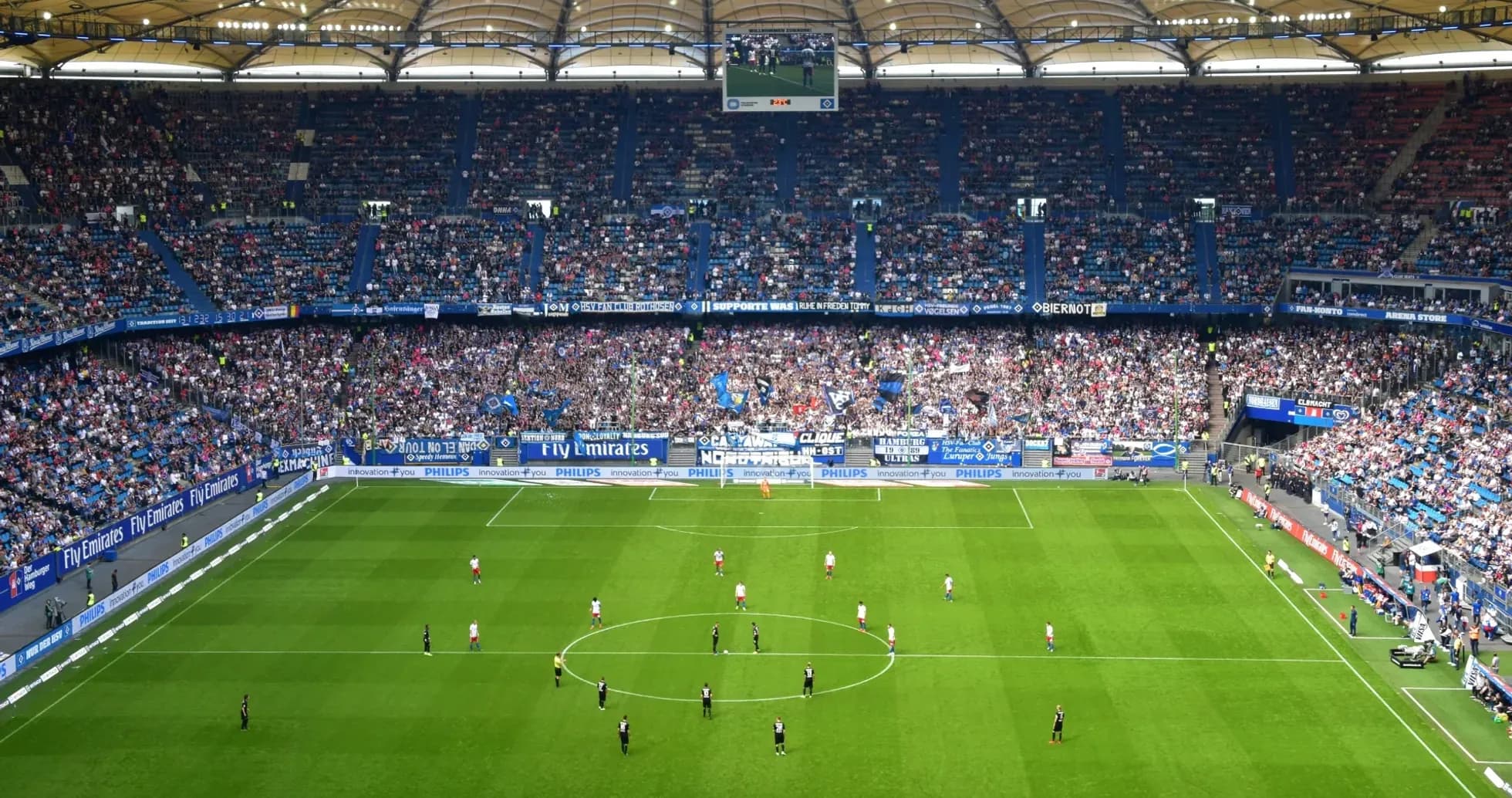
Cruz Azul vs Club America: A 4-3 Thriller in Liga MX
Under the lights of Estadio Banorte, Cruz Azul and Club America delivered a seven-goal epic that felt less like a regular Apertura fixture and more like a playoff dress rehearsal. In a match that finished 4-3 to Cruz Azul, the narrative was clear: a side built on chaos and attacking thrust outlasted a team that usually lives on control and defensive assurance.
I. The Big Picture – Two Contenders, One Wild Script
Heading into this game, Cruz Azul sat 4th in Liga MX Apertura with 15 points from 8 matches. Their overall goal difference of 2 (16 scored, 14 conceded) already hinted at a team that wins by outscoring rather than suffocating opponents. At home, they had played 5 times, winning 3 and losing 2, with 9 goals scored and 9 conceded – a perfectly balanced but volatile profile.
Club America arrived as one of the form sides of the league. They were 3rd with 16 points from 7 games, and their overall goal difference of 9 (15 scored, 6 conceded) painted the picture of a far more stable contender. On their travels, they had played 4 matches, winning 2, drawing 1 and losing just 1, scoring 7 and conceding 6. For a team that had kept 3 clean sheets at home and 1 away, being dragged into a 4-3 shootout was a departure from the script.
Tactically, this was a clash of identities. Cruz Azul’s season numbers told of a front-foot side: overall they averaged 2.0 goals scored and 1.8 conceded per match, with 1.8 at home in both directions. Club America, by contrast, combined attacking power with defensive rigour: overall 2.1 goals scored and just 0.9 conceded per game, even if that defensive shield was thinner away from home (1.8 scored, 1.5 conceded).
II. Tactical Voids and Discipline – Where the Edges Frayed
Cruz Azul came out in a 5-4-1 under Joel Huiqui, but the nominal back five was more about width and launchpads than deep protection. With only 1 clean sheet in total this season and 9 goals conceded at home, this is not a side that locks games down. Their disciplinary profile reinforces the idea of a team that plays on the edge: 43.75% of their yellow cards arrive between 46-60 minutes, and another 31.25% between 61-75. They grow more aggressive as the second half begins, a risk-reward phase that often tilts matches into chaos.
Club America, under G. Almada, lined up in their familiar 4-2-3-1, a structure that has underpinned a run of 4 consecutive wins in their biggest positive streak. Yet their card distribution shows a team that becomes increasingly combative as the game wears on: 25.00% of their yellows fall between 61-75 minutes, and they have already taken a red card in the 76-90 window, where 100.00% of their reds have been shown. In a high-stakes clásico-style atmosphere, that late-game edge can easily become a liability.
Set pieces and penalties are another hidden void. Cruz Azul have been awarded 3 penalties in total this season but have only scored 1, missing 2 (66.67% of their attempts). In a tight match, that inefficiency is a structural weakness. Club America are not much cleaner: they have had 2 penalties, scored 1 and missed 1, a 50.00% conversion rate. Both sides are dangerous enough to draw fouls in the box, but neither can claim to be ruthlessly reliable from the spot.
III. Key Matchups – Hunter vs Shield, Engine Room vs Enforcer
The “Hunter vs Shield” duel was embodied by Cruz Azul’s attacking axis against Club America’s usually stingy back line. Nicolás Ibáñez, starting as the lone forward in the 5-4-1, brought 3 league goals from 8 appearances into this fixture, along with 21 shots and 14 on target. His profile is that of a volume shooter who keeps defences under constant stress. Against an America side that had conceded just 6 overall and never at home before this game, his ability to pin centre-backs and attack crosses was critical.
Behind him, José Paradela and Carlos Rodríguez formed the creative spine of Cruz Azul’s midfield. Paradela, with 2 goals and 4 assists this season, is one of the league’s most productive creators, having produced 20 key passes and 26 dribble attempts with 12 successes. Rodríguez, the top assist provider in Liga MX with 5, had already delivered 36 key passes and 379 total passes at 82% accuracy. Together they turned a nominal 5-4-1 into a shape that constantly broke lines, especially in transition.
On the other side, Club America’s “Shield” is usually built around structure rather than a single star defender. Yet Kevin Álvarez is pivotal in how they defend and build. With 3 assists already and 87% passing accuracy, he offers both progression and final-third delivery from the right. His duel with Cruz Azul’s left-sided outlets – Paradela drifting wide and overlapping runs from the wing-back zone – was a key tactical battleground. If Álvarez stepped too high, space opened behind him; if he sat, America lost one of their main outlets.
In the engine room, Alan Cervantes is Almada’s metronome and disruptor. With 305 passes at 92% accuracy and 8 tackles plus 5 interceptions, he is the pivot that allows the front four to stay aggressive. His disciplinary record, however, is a warning sign: 2 yellows and 1 yellow-red in just 5 appearances. Against a Cruz Azul midfield that thrives on drawing fouls – Paradela alone has been fouled 11 times – Cervantes walks a thin line between control and overcommitment.
Further forward, the double threat of Henry Martín and Brian Rodríguez gives America a multi-layered attack. Both have 3 goals this season; Martín adds 1 assist and 15 key passes, while Rodríguez has 12 shots, 8 on target, and an excellent 7.48 rating. When combined with Raphael Veiga, who has 1 goal, 2 assists and 20 key passes, America’s 4-2-3-1 can overload the half-spaces and punish any disorganisation in a back five.
IV. Statistical Prognosis – Chaos as a Feature, Not a Bug
Following this 4-3 result, the numbers and the narrative align: these are two of the league’s most potent attacking units, but they carry very different defensive profiles. Cruz Azul’s overall averages of 2.0 goals scored and 1.8 conceded, plus their tendency to pick up cards in the early second half, point to matches that open up after the break. Club America’s overall 2.1 scored and 0.9 conceded suggest a team that usually controls variance, but their away defensive average of 1.5 conceded hints that they are more vulnerable when forced to defend space.
Overlaying the minute-by-minute discipline patterns with the tactical setups, the critical intersection sits in the 46-75 window. That is when Cruz Azul become most aggressive in duels and when America’s midfield and back line are most likely to be stretched and card-prone. It is no coincidence that games between sides of this profile tend to tilt into end-to-end exchanges rather than being decided by a single moment.
In xG terms – even without explicit values – both teams’ shot volumes, key pass counts and scoring averages indicate that high-chance matches are more likely than sterile stalemates. Cruz Azul’s penalty waste and America’s 50.00% conversion from the spot add another layer of volatility: the margins are fine, but the events are frequent.
The tactical verdict is clear: when Cruz Azul’s creative trio of Rodríguez, Paradela and J. Márquez link with Ibáñez, they can drag even a robust defence like Club America’s into uncomfortable territory. America, with Martín, Brian Rodríguez and Veiga, will always carry enough firepower to respond. But in a game where discipline wavers in the second half and both sides are willing to trade punches, the side more comfortable in chaos – Cruz Azul – will often have the final word, as they did in this 4-3 thriller.