Columbus Crew II Triumphs Over Inter Miami II in MLS Next Pro Clash
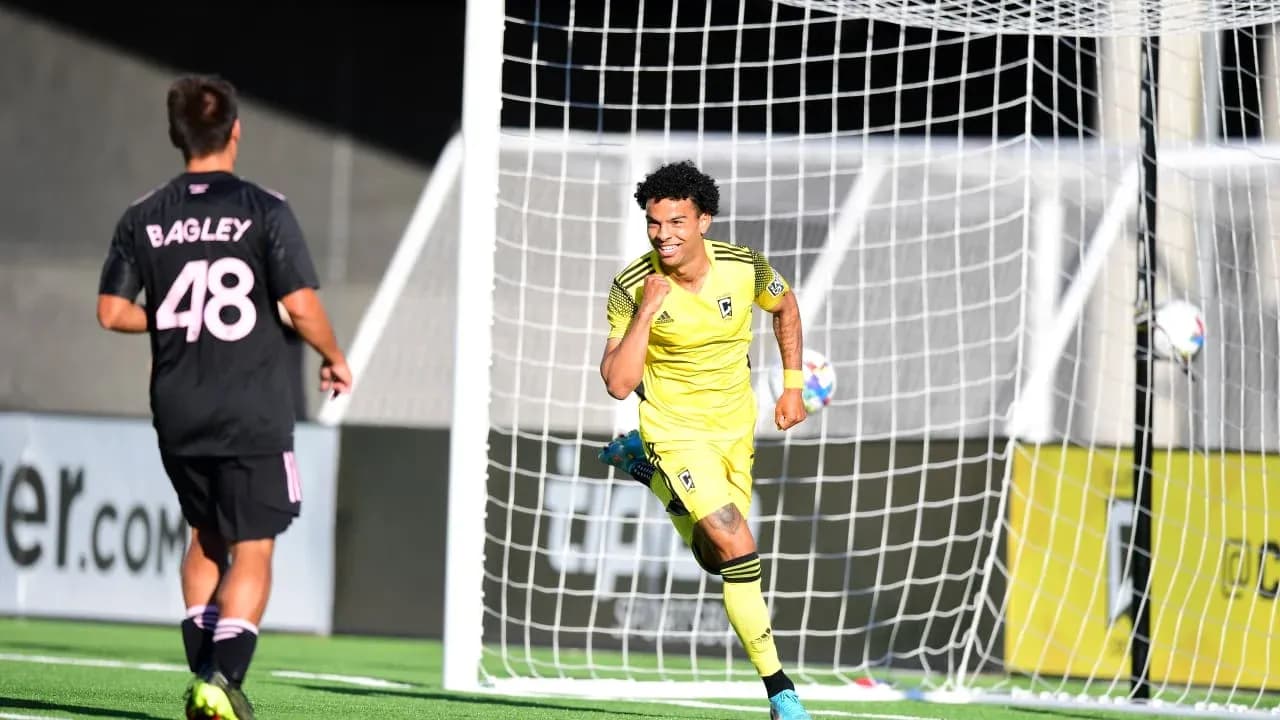
Under the lights at Historic Crew Stadium, this MLS Next Pro group-stage fixture finished with a clear verdict: Columbus Crew II 3–1 Inter Miami II. Following this result, the league table tells the story of two very different projects in the Eastern Conference. Columbus sit high in the conference picture with 17 points and a positive goal difference of 1 overall (16 goals for and 15 against before this match), while Inter Miami II remain marooned near the bottom on 4 points and a goal difference of -12, their season defined by defensive frailty and fragile confidence.
I. The Big Picture – Columbus’ home fortress vs Miami’s travel sickness
Columbus’ seasonal DNA is built on dominance at Historic Crew Stadium. At home they had played 5, won 5, scored 11 and conceded just 4 heading into this game. That is an attacking average of 2.2 goals at home, backed by a tight defensive record of 0.8 goals against. The Crew’s overall form line of LWWWLWWLW suggests occasional slips, but the pattern is clear: when they play in Columbus, they overwhelm teams.
Inter Miami II arrived as a side in survival mode. On their travels they had played 5, won 1, lost 4, scoring 7 and conceding 15, an away goals-against average of 3.0 per match. Overall they had 1 win and 7 defeats in 8 games, with 10 goals for and 23 against. The -13 overall goal difference (10 scored, 23 conceded) underlines a side that cannot keep games under control, either structurally or emotionally.
In that context, a 3–1 home win for Columbus feels less like an upset and more like the logical extension of both teams’ trajectories.
II. Tactical Voids and Discipline – Edges in the margins
There were no officially listed absentees, so both Federico Higuain and Raul Ledesma Cristian had their full squads at their disposal. That placed the onus squarely on tactical preparation and in-game management.
Season-long card data offered a subtle preview of the emotional battle. Columbus’ yellow cards are spread but spike in the 31–45 and 61–75 minute windows, both at 25.00%. They are an aggressive, front-foot side that can flirt with the line as halves reach their tactical boiling point. They have also already seen a red card in the 0–15 minute range, a reminder that their intensity can spill over early if provoked.
Inter Miami II, by contrast, unravel late. Their yellow-card distribution peaks between 46–60 and 76–90 minutes, both at 23.81%, with another 19.05% in the 61–75 band. Add to that a red card in the 76–90 window (100.00% of their reds there), and you see a team that loses control as the game stretches and fatigue bites. Against a side like Columbus that sustains pressure at home, that late-game volatility is a structural weakness.
III. Key Matchups – Hunters, shields and the engine rooms
Without individual scoring charts, the “Hunter vs Shield” duel is expressed through unit profiles rather than star names.
For Columbus, the attacking trident of I. Ewing, Z. Zengue and N. Rincon embodies their home identity. Ewing’s presence as a central reference point allows Columbus to play forward early, while Zengue’s movement and Rincon’s ability to drop into pockets create constant overloads between the lines. Behind them, J. Chirinos and O. Taylor operate as the connective tissue, linking phases and stepping into half-spaces to pin full-backs and create shooting lanes at the edge of the box.
This multi-pronged home attack, which had already produced 11 home goals heading into the fixture, confronted an Inter Miami II defensive unit that concedes 3.0 goals per game away. T. Hall and N. Almeida at the back are asked to defend large spaces, with R. White and S. Basabe often stretched wide. The away side’s numbers—15 goals conceded on their travels from 5 games—suggest a back line constantly underloaded in transition and unable to compress the pitch when possession is lost.
In midfield, the “Engine Room” clash pitted Columbus’ blend of control and aggression against Miami’s reactive core. T. Brown and C. Rogers give the Crew a platform: they can step forward to contest second balls, but crucially they protect L. Pruter by screening passes into the channels. Their work is reflected in Columbus’ overall goals-against average of 1.7, which drops to just 0.8 at home.
Miami’s central trio of T. Vorenkamp, I. Urkidi and J. Convers, meanwhile, has been forced into constant fire-fighting. With the team conceding 2.9 goals per match overall, their engine room spends more time running backwards than dictating tempo. When they do push forward, the distances between lines grow, exposing the defence to exactly the kind of direct, vertical play Columbus thrive on.
IV. Statistical Prognosis and xG-Style Verdict
Even without explicit xG values, the statistical scaffolding around this match points in one direction. A home side averaging 2.2 goals scored and 0.8 conceded at home is, in xG terms, consistently creating and limiting high-quality chances. An away side conceding 3.0 goals on their travels, with no clean sheets anywhere this season, is almost certainly allowing a heavy xG against every time they step onto the pitch.
Columbus’ clean-sheet count—2 overall, both at home—shows they can compress games and deny clear looks at goal when needed. Inter Miami II’s record is the mirror opposite: 0 clean sheets, and three matches in which they failed to score. That combination usually translates to lopsided xG maps, with opponents generating repeated entries into the box and Miami relying on low-percentage counters.
Following this result, the trajectory of both squads feels reinforced rather than rewritten. Columbus Crew II remain a ruthless, high-tempo home side whose structure and mentality are built for knockout-chasing football when the Eastern Conference play-offs approach. Inter Miami II, by contrast, leave Historic Crew Stadium as a team still searching for defensive stability, emotional control in the closing stages, and an engine room capable of slowing games down before they run away.