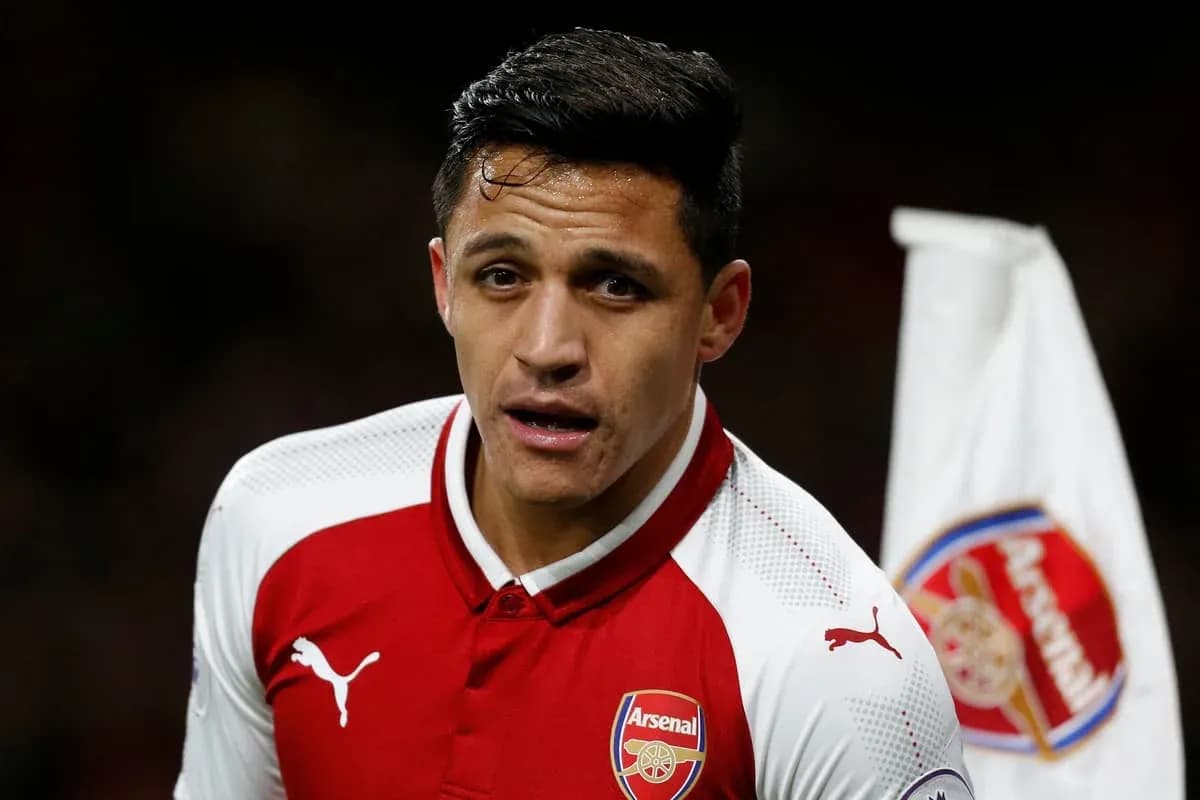
Christos Tzolis: Arsenal's New Left-Winger Star
Amid the noise and the names and the endless talk of a “marquee” forward, Arsenal might already have their answer sprinting down the left touchline.
Christos Tzolis. The kid who once turned up at the Emirates as a struggling Norwich winger. The 19-year-old who barely laid a glove on a fragile Arsenal side fighting for their manager’s job. That day, he didn’t have a shot. Arsenal scraped a 1-0 win. Mikel Arteta clung on.
Five years on, everything around that story has flipped.
From passenger at the Emirates to problem at London Colney
Back in 2021, Arsenal were bottom of the Premier League after three games, goalless and drifting. Lose to Norwich and the Arteta project might have ended before it really began. Tzolis, on his Premier League debut, was a footnote in that survival act.
Now he’s become a central character in the sequel.
Having faced Arteta’s rebuilt Arsenal with Club Brugge last season, he saw the difference up close.
“I can say it was the most difficult team to attack against that I’ve played so far,” he admitted earlier this summer. “We played against other big teams, but against Arsenal, we had the most difficulties to make clear chances.”
He no longer has to solve that problem on a matchday. Only in training.
And this time, he looks nothing like the winger who went 14 league games for Norwich without a goal.
The numbers that turned Arsenal’s head
Arsenal paid £34million to bring Tzolis from Club Brugge. On paper, the case was obvious: 22 goals and 29 assists in all competitions last season. Those are video-game numbers.
Yes, the caveat hangs over them. Belgium’s top flight sits seventh in Opta’s league rankings, not the Premier League’s intensity and depth. Arsenal know that. They signed him anyway.
What convinced them was not just volume, but variety. Tzolis can operate across the front line, is genuinely two-footed and, stylistically, sits in that Leandro Trossard mould of a technically sharp, multi-position forward. Inside the club, there was a belief he could raise the technical baseline of the entire attacking unit.
Arteta liked the character too. The staff saw a player who doesn’t just chase numbers, but understands structure, spacing, timing.
Still, his “superpower”, as one look at the stat sheet shows, is the final action. Tzolis has scored or assisted in each of his last 15 competitive club appearances, stacking up 25 goal involvements in that run.
That kind of relentlessness is exactly what Arsenal lacked last season, even as they lifted the Premier League trophy.
A title-winning attack that still misfired
The numbers behind the medal told a more complicated story. Gabriel Martinelli managed just one Premier League goal. Only Viktor Gyokeres broke the seven-goal mark in the league. Martin Odegaard topped the assist charts with six.
Arsenal’s system created pressure, territory, control. What it didn’t always deliver was cold, repeatable end product from enough of its forwards.
Too many of Arteta’s attackers run hot for a few weeks, then drift. A flurry of goals, then a drought. Some of that has been down to injuries; key forwards have rarely stayed fit long enough to build rhythm.
Tzolis, by contrast, barely missed a game in Belgium. Over two seasons at Club Brugge, he sat out just five matches, three of those through illness. Availability is not a glamorous trait, but it is one Arteta values.
So far, the early evidence in red and white is matching the theory.
Pre-season hints, Community Shield statement
Because his move was lined up early, Tzolis arrived with a running start. Two weeks of pre-season and a friendly with Club Brugge meant he joined Arsenal already sharp, not playing catch-up.
You could see it in the friendlies. An assist against Borussia Dortmund. Another against Real Betis. Then his first Arsenal goal, a trademark finish bent into the far corner against Girona.
The real examination came with the Community Shield. Bigger crowd, bigger stakes, a proper opponent. Tzolis didn’t shrink.
His deft header set up Kai Havertz for Arsenal’s second. Later, he drifted in from the left, found space and picked out Odegaard in the box for another assist. Same pattern: carry, composure, incision.
Wearing the No17 shirt, gliding infield off the left, taking small touches before delivering the decisive ball, he inevitably drew comparisons.
There was a flash of Alexis Sanchez about it.
Arteta didn’t play that down.
“He’s fitting, he’s a really intelligent boy and he has a massive quality which is when he’s in the last 20-30 metres,” the manager said afterwards. “He’s so composed to pick people out around the box or to finish actions. I’m really impressed with him.”
Tzolis himself knew the Sanchez connection would come. “Actually, I knew that he wore the number 17,” he said after signing. “I watched a lot of football and he was a top player for Arsenal, as a left winger always.
“He’s one of the players I looked up to when I was younger. And also, I see some similarities with him. But it’s not the reason I took the number 17.
“It’s nice (though). Alexis Sanchez had number 17 – so I hope I will have the same success.”
That’s the bar he has chosen to live under.
Martinelli question, left-side solution?
The clearest indication of how highly Arsenal rate Tzolis came not in what they said, but in what they did.
Gabriel Martinelli, once seen as the long-term answer on the left, was not just benched for the Community Shield. He was left out of the squad entirely. Arsenal are open to selling him. That is a bold call in a title defence.
It is also a vote of confidence in Tzolis as the current first-choice left winger.
For years, Arsenal’s left flank has lagged behind their right. The bulk of the creativity and threat has flowed through Bukayo Saka and Odegaard. The left has often felt more functional than frightening.
Now there is the prospect of Riccardo Calafiori stepping in from left-back, breaking lines and creating overloads, with Tzolis ahead of him carrying the ball and making those last-30-metre decisions Arteta talks about.
Suddenly, the pitch looks more balanced.
Arsenal still want to strengthen in attack. The search for a headline name has not stopped. Eberechi Eze, for instance, can operate off the left if required and would offer a different profile.
If no sale materialises, Martinelli stays in the mix and pushes Tzolis. A more progressive passer in midfield, such as his Brazil team-mate Bruno Guimaraes, would in theory help unlock Martinelli again.
But right now, the shirt is Tzolis’s to lose.
Marquee signing or ready-made answer?
Inside the club, the plan was never to build the entire attack around Tzolis. When they signed him, the expectation was that a bigger-name forward would arrive as well, either this window or the next. That could still happen.
If it does, his minutes may shrink. His role may shift. He knows that.
What he has already done, though, is force a rethink of the urgency and shape of that “marquee” hunt. If you have a 24-year-old who scores or assists every week, rarely gets injured and is only just stepping into a better team, how desperate are you to rip up the left side for the sake of a name?
Arsenal need most of their forwards to raise their levels from last season if they are to retain their title. For Saka, Odegaard, Havertz, the demand is: more.
For Tzolis, the demand is simpler.
Just keep doing exactly what you’ve been doing.