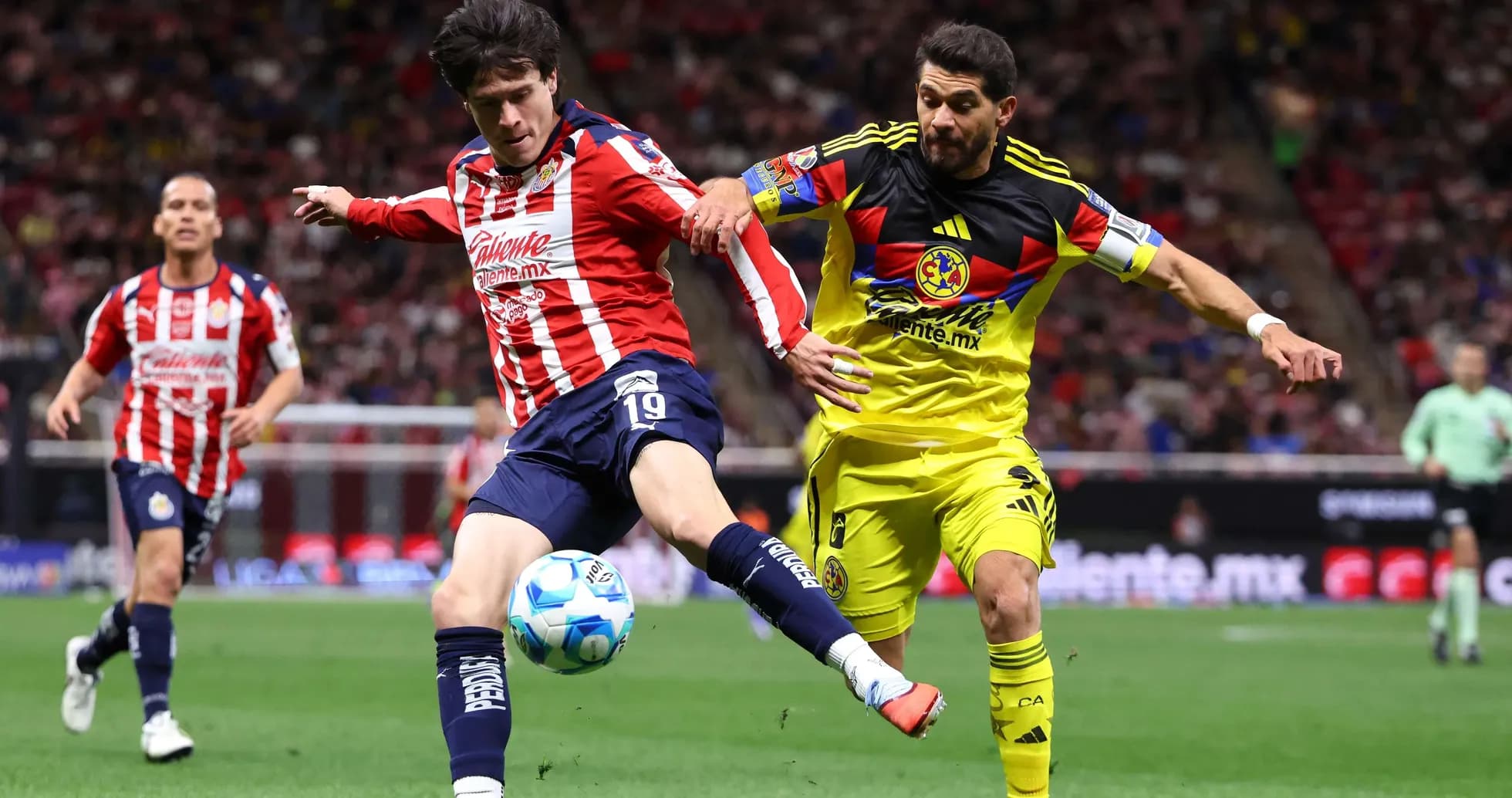
Chivas Dominate Pumas in 3–0 Victory: A Statement Win
Under the Zapopan lights of Estadio Akron, Guadalajara Chivas did far more than collect three points in a 3–0 win over U.N.A.M. – Pumas. They delivered a statement that crystallises the early-season hierarchy in Liga MX’s Apertura: the league leaders playing like league leaders, and a mid-table Pumas side exposed in all the wrong zones.
I. The Big Picture – Chivas’ structure, Pumas’ uncertainty
Both sides lined up in a mirrored 3-4-2-1, but the similarity ended on the tactics board. Chivas, under Gabriel Milito, carried into this fixture the profile of a complete side: top of the table with 17 points from 8 matches, five wins, two draws and just one defeat overall. Their overall goal difference of 9 is the product of 15 goals scored and 6 conceded, and at home they had already been ruthless, with 9 goals scored and 4 conceded across 4 matches.
Those numbers translate into a clear identity. At home, Chivas average 2.3 goals scored and 1.0 conceded, an attacking machine balanced by a disciplined back three. Their clean-sheet record – 2 at home and 2 away, 4 in total – underlines a side that can dominate the ball without losing its defensive bearings.
Pumas arrived in a very different state. Eleventh in the table with 11 points from 8 games, they are the very definition of instability: 3 wins, 2 draws and 3 defeats overall, with 11 goals scored and 12 conceded. Their overall goal difference of -1 tells of a team that can hurt you but is just as likely to hurt itself. On their travels, they had been entertaining but fragile: 7 goals scored and 7 conceded in 4 away games, an away average of 1.8 goals for and 1.8 against.
The final 3–0 scoreline in Guadalajara did not distort the story; it confirmed it. Following this result, the table’s narrative tightens around a Chivas side that is behaving exactly like a contender and a Pumas side that still feels like a tactical experiment.
II. Tactical Voids – Discipline, risk and the cost of chaos
With no official injury or absentee list provided, both coaches could lean on their core structures. Milito doubled down on the back three of D. Aguirre, D. Campillo Del Campo and L. Romo in front of R. Rangel, trusting the system that has already supported a league-best defensive record. The wing-oriented midfield four – R. Alvarado, O. Govea, F. Gonzalez and H. Camberos – gave Chivas the width and verticality to stretch Pumas’ line of three.
Discipline has been a subtle but important pillar of Chivas’ rise. Across the Apertura, their yellow cards cluster in the middle and late phases: 28.57% between 46–60 minutes and another 28.57% between 76–90, with a further 14.29% in stoppage time. This pattern suggests a team that is willing to foul to manage transitions and close out matches, rather than one that loses its head early. Their single red card this season came between 46–60 minutes, but the broader picture is of controlled aggression.
Pumas, by contrast, live closer to the edge. Their yellow cards spike late: 27.27% between 76–90 minutes and another 18.18% in the 91–105 window. The emotional volatility of a team chasing games is written into those numbers. Their one red card this season also arrived between 46–60 minutes, and with a player like P. Bennevendo already on the league’s red-card ledger, Esteban Solari knows that his high-energy approach can tip into self-sabotage.
III. Key Matchups – Hunters and shields
The “Hunter vs Shield” duel was always going to orbit around the two headline forwards. For Pumas, Juninho came into the Apertura as one of the league’s sharpest strikers: 4 goals in 8 appearances, with 10 shots and 4 on target, and a 7.03 average rating. He is not just a finisher but a focal point, having already won and converted a penalty this season. Yet in Akron he ran into a Chivas defence that, heading into this game, conceded only 0.8 goals per match overall and just 0.5 on their travels; at home, they were still tight at 1.0 conceded per game. The back three’s capacity to defend large spaces while R. Rangel swept behind them effectively blunted Pumas’ primary threat.
On the other side, R. Alvarado has quietly become one of the most complete attacking profiles in the league. With 3 goals, 14 key passes and an 89% passing accuracy across 386 total passes, he is both scorer and architect. His 11 tackles, 1 blocked shot and 3 interceptions show how much defensive work he adds from midfield. Against a Pumas side conceding 1.5 goals per match overall and 1.8 on their travels, Alvarado’s ability to find pockets between the lines in the 3-4-2-1 was always likely to tilt the game.
Supporting him, R. Marín and Á. Sepúlveda offered different but complementary threats. Marín’s 2 goals and 2 assists in just 387 minutes make him one of the league’s most efficient attackers; Sepúlveda, despite no goals so far, has 2 assists and a history of walking the disciplinary tightrope, already owning a red card this season. Their presence pinned back Pumas’ back three, especially Nathan Silva and R. Duarte, forcing the visitors to defend deeper than their system truly likes.
For Pumas, the “Engine Room” duel centred on P. Vite and R. Morales. Vite, with 314 passes at 87% accuracy, 11 tackles, 4 blocks and 9 interceptions, is the two-way midfielder tasked with gluing Solari’s flexible structures together. Morales, with 2 goals and 3 assists, is the creative blade, also contributing 5 successful blocks defensively. Yet in a mirrored 3-4-2-1, they found themselves outnumbered and outmanoeuvred by Chivas’ box midfield, where Govea and Gonzalez could sit while Alvarado and Camberos roamed.
IV. Statistical Prognosis – Why 3–0 made sense
Strip away the emotion, and the numbers prefigured this kind of result. Heading into this game, Chivas’ overall attacking average of 1.9 goals per match, combined with Pumas’ 1.5 goals conceded overall and 1.8 on their travels, pointed towards a multi-goal home performance. Defensively, Chivas’ 0.8 goals conceded overall, against a Pumas attack averaging 1.4 overall, hinted at a narrow margin for the visitors even on a good day.
Chivas’ penalty profile – 2 penalties taken, 2 scored, none missed – underlines a clinical edge in high-leverage moments. Pumas, likewise perfect from the spot with 1 scored and none missed, simply never engineered the kind of penalty-box pressure that could tilt the balance.
In the end, the 3–0 in regular time felt less like an outlier and more like a convergence: league leaders playing to their averages, a vulnerable away defence reverting to type, and a mirrored formation that only highlighted the gap in cohesion. For Chivas, this was the performance of a side ready to carry their promotion-chasing description deep into the Apertura play-offs. For Pumas, it was a reminder that tactical flexibility means little without a stable spine – and that in a league as unforgiving as Liga MX, the margins between 11th and irrelevance can shrink with every away trip.