Celtic's Champions League Collapse: A Failure of Leadership and Desire
Celtic’s Champions League collapse in Austria has been branded a failure of desire, leadership and depth by some of the club’s most decorated former players.
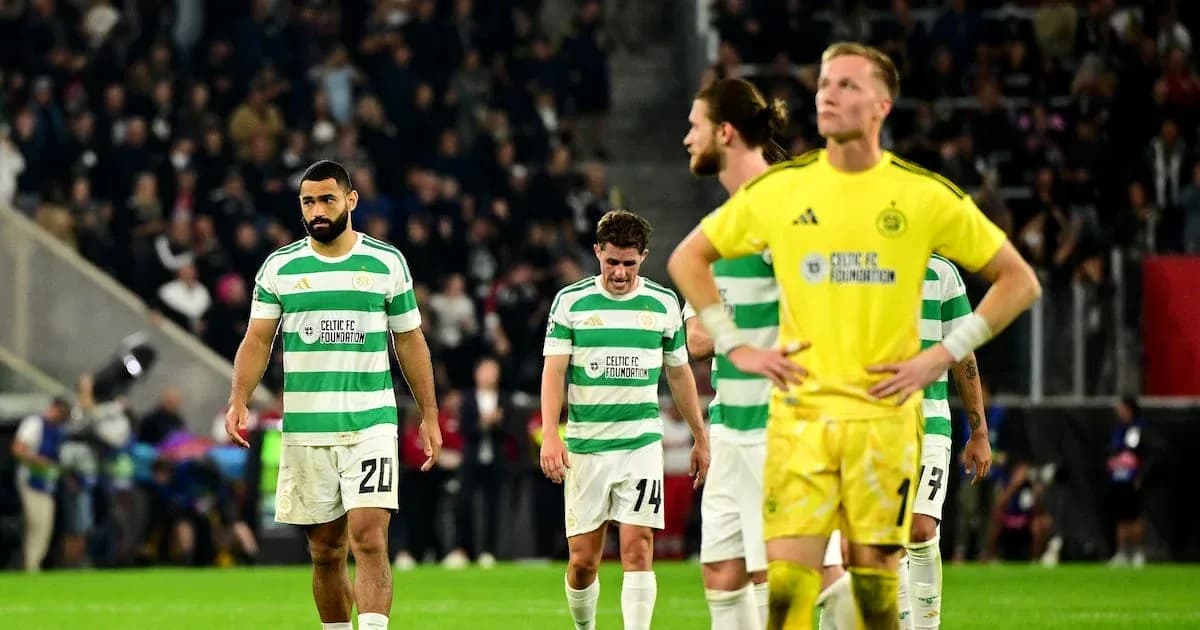
Martin O’Neill’s side somehow allowed a four-goal aggregate cushion to disintegrate, a 5-1 hammering by LASK dumping them into the Europa League and reopening old wounds about mentality on the biggest stage.
‘Those players were hiding’
Stiliyan Petrov did not sugar-coat it. The Bulgarian, who knows O’Neill’s standards better than most from their time together at Celtic and Aston Villa, delivered a blistering verdict on Amazon Prime.
“You have to stand up and be counted, show character, be able to deal with the pressure,” he said. “Those players were hiding.
“When they had to take responsibility with the ball, they didn’t take it. They were losing the ball very easily. LASK were better in second balls, more aggressive. They wanted it more.
“Celtic try to dominate games and be in control. But there was nothing there. They couldn’t take the sting out the game, they couldn’t slow the game down.
“Sometimes you need big players to do that. You need players to control that, control the team. You have to stand up, be brave and be strong.
“You have to run more, you have to close people down, you have to make decisions on the pitch, important decisions and important moments that make the difference. Those decisions were not there.”
It was a damning picture: a team supposedly in command of the tie, shrinking when the contest turned hostile.
Lennon questions fitness and mentality
Neil Lennon, another former Celtic captain and manager, went straight for the physical and psychological edge that deserted O’Neill’s players.
“Physically they weren’t up to it, running power they weren’t up to it,” said the Dunfermline manager. “LASK were the better team and they wanted it more, and that’s not something you can say about a Martin O’Neill team very often.”
What really alarmed him came after the interval.
“Second half I saw three or four players go down with cramp. It’s only 65-70 minutes into the game. That’s a worry for me.
“It could be a physical thing, it could be a psychological thing. For me it’s a sign of not being strong. They looked exhausted at times.”
A Champions League play-off, season-defining and high-tempo, and Celtic players were cramping before the final push. For Lennon, that was not just a detail. It was a symptom.
Brown turns spotlight on the bench
If the starting XI faltered, the substitutes offered no rescue act. Scott Brown, who captained Celtic through so many European nights, argued the squad simply is not built to survive this level of chaos.
O’Neill turned to Liam Scales, Anthony Ralston, Dane Murray, Luke McCowan, Reo Hatate and Sebastian Tounekti over 120 minutes. Brown, speaking on BBC Radio Scotland, saw no uplift.
“I don’t think the subs made any impact on the game. You want something from them – running power, a bit of calmness on the ball – and we didn’t get that.
“They are bringing players in that are actually in the starting 11 but it shows you, on that bench, they need better quality players to come on.”
When a four-goal advantage starts to wobble, managers look to their bench for composure, experience, a change of rhythm. Brown’s view was stark: Celtic did not have it.
Schmeichel warns of ‘huge ramifications’
Kasper Schmeichel has lived this pain before. The former Celtic goalkeeper was part of last season’s play-off failure and he believes this latest implosion will echo far beyond one grim night in Austria.
“This is going to have huge ramifications,” he told Amazon Prime. “The Champions League is unique and the Europa League doesn’t have the same prestige. It impacts players’ lives and particularly the players that maybe we were looking to sign, that could have an impact on it.
“I know it’s going to be a really, really hard reaction towards the players, towards the management.
“It’s going to be a monumental task for them to motivate themselves and to get the fans back on side. Because you saw at the end, it wasn’t pleasant scenes. And we saw what happened last season, it’s not pleasant. And it’s not pleasant to be a player in that environment either.”
The financial hit matters. The loss of prestige matters. But for Schmeichel, the dressing-room fallout and the transfer market consequences may cut deepest.
O’Neill: ‘That’s my team and that’s my responsibility’
For Martin O’Neill, a man who has managed Celtic in more than 300 matches, this was as raw as anything he has felt in the dugout.
“I would say absolutely, yes,” the 74-year-old said when asked if it ranked among his most painful nights. “I’d put it down before the disappointment of losing the Uefa Cup final in 2003, but it’s so, so disappointing.
“We should have been out of sight by half-time. We scored a goal, which was great, we missed two great, great opportunities. And then we give them a lifeline just before half-time and then one just after it. And they come roaring back.
“And obviously we conceded, from our viewpoint, not good goals at all. But that’s my team and that’s my responsibility.”
Celtic were 4-0 up in the tie and 90 minutes from the Champions League group stage. A goal scored, two big chances squandered, then the door left ajar. LASK barged straight through it.
Asked if his squad was strong enough, O’Neill chose his words carefully.
“These are tough games. And it might only be a Champions League qualifying game, but it felt like a Champions League game. I thought they were a fine side. But that doesn’t matter. We should have been able to have seen it through. And we didn’t do. Talking about the squad, that’s for another day.”
The inquest into recruitment can wait. The scars from this night will not.
McGregor: ‘We got what we deserved’
Inside the dressing room, there were no excuses. Callum McGregor, the captain, faced up to the scale of the collapse with brutal honesty on Amazon Prime.
“We got what we deserved,” he said. “I thought we were so passive. All night. We actually looked scared to go and win the game, and when you are 3-0 up it’s psychological.
“To be honest I didn’t think we were that good in the first leg either. We scored at good times and kind of got away with it. You go 3-0 and you think you’ve got a real chance but when you play like that you can’t have any excuse whatsoever.
“We have to suck it up, apologise to the supporters and the club because there is no way that we should lose that game … Now you’ll see what kind of characters are in there.”
The message was clear. The Champions League dream has gone for another year. The Europa League now awaits a wounded squad whose mentality, fitness and depth have all been dragged into the spotlight.
The only question left is the one McGregor posed himself: when the dust settles, what kind of characters will Celtic actually prove to have?