Ceadach O'Neill's Dilemma: The Pressure of International Eligibility Rules
Michael O'Neill says the thing that troubles him most about the rules around international eligibility is not the politics, not the tug-of-war between associations – but the weight being dumped on the shoulders of teenagers.
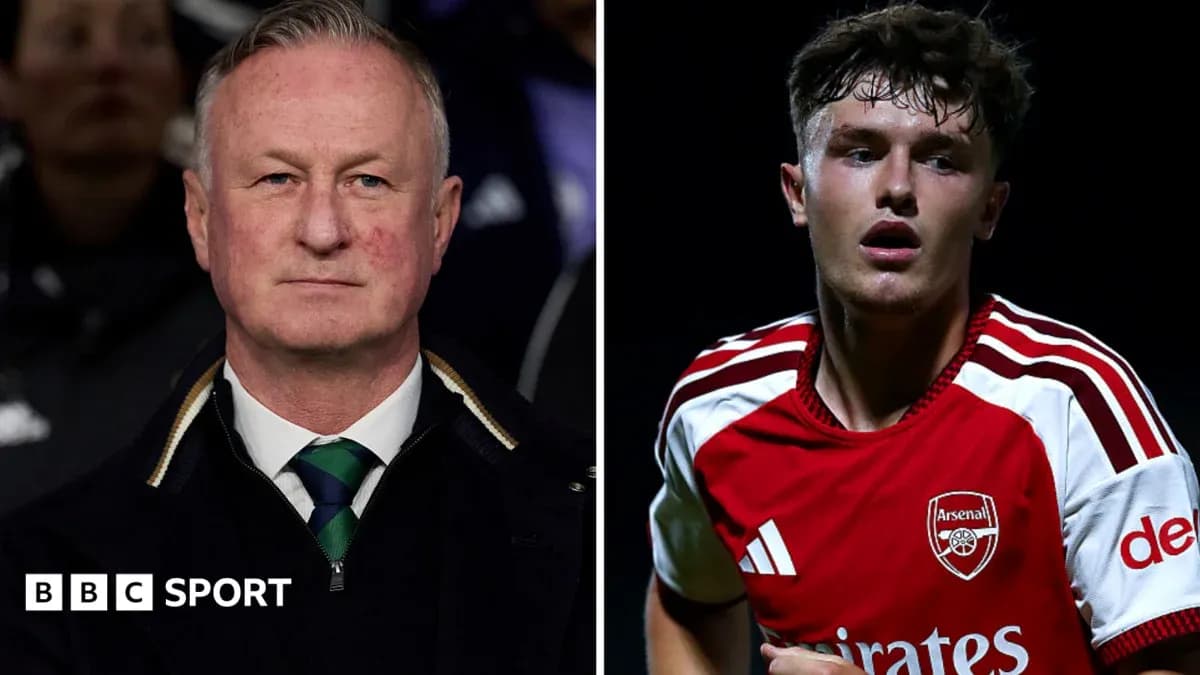
At the heart of the latest row is Arsenal youngster Ceadach O'Neill, already capped twice by Northern Ireland and now named in the squad for a Nations League quadruple-header. He has also been sounded out by the Republic of Ireland. Two countries, one teenager, one decision that could shape his entire international career.
Under current Fifa rules, any player born in Northern Ireland can represent either Northern Ireland or the Republic of Ireland. But once a player applies to switch international allegiance, that move can only be made once. No way back.
For Ceadach O'Neill, the picture is even more complicated. If he wants to play for the Republic at any level, he must apply for a Fifa transfer of allegiance. If he plays in this upcoming Nations League block, he would then have to wait until he turns 21 before making that switch. Reach four caps, and the door closes completely. No transfer allowed at any stage.
Michael O'Neill is acutely aware of what that means.
"My focus is on the player, and I have a duty of care to the player as his international manager, as we have as an association as well," he said. "He's been in our pathway since he's been a young boy. He's been part of our academy. He's obviously had an approach from another association, which happens.
"The thing that upsets me the most in this is that putting a young player in a position to make an international transfer before he's been a professional for even two years is, I think, not the right thing. It's not something that any association should be doing."
This is where football collides with the unique political and legal landscape of the island. Under the Good Friday Agreement, the 1998 peace accord that followed The Troubles, those born in Northern Ireland can hold both British and Irish passports. A 2010 Court of Arbitration for Sport ruling then clarified that players born anywhere on the island are eligible to represent the Republic of Ireland regardless of other criteria such as birthplace of parents or grandparents, or residency.
The flow, though, is not equal. Players born in the Republic cannot play for Northern Ireland unless they qualify through the usual channels of family or residency. One direction is wide open; the other has checkpoints.
"We exploit eligibility, the same as every other country does, down to the grandparent rule, but this is a rule which is obviously unique between ourselves and the FAI," O'Neill said. "I think everyone recognises it's not particularly fair, but as I say, our focus is to make sure our pathway for our young players is as good as possible and that's a pathway for boys from any part of the community."
The Football Association of Ireland has made no secret of its intent to be more proactive. In May, FAI director of football John Martin said the organisation should at "the bare minimum" be sounding out eligible players.
"We know there are kids out there who want to play for Ireland who haven't been approached in the past," Martin said. "That's not right. It's making sure we have a presence and we understand all the players available to us, and that they are being monitored and tracked."
That kind of language feeds directly into the debate swirling around Ceadach O'Neill and others like him. Every call-up, every squad list, every youth appearance is now viewed through the prism of identity, allegiance and opportunity.
When asked if the constant narrative around young players’ nationality and choices has become tiresome, Michael O'Neill did not duck the question.
"It would have been in the past, it's not tiresome now," he replied. "We have people who comment on this and talk about nationality and talk about identity and talk about all these different things, which are part of being born in Northern Ireland and growing up in Northern Ireland.
"But I think what we're missing now is that we're putting young players in a situation where they have to make a decision which is irreversible."
O'Neill is not speaking from a position of isolation. During his time as manager, Northern Ireland have also benefited from the same rules. Tottenham Hotspur forward Jamie Donley switched from England to Northern Ireland and is now a senior international. Ronan Hale moved the other way, transferring his allegiance from the Republic of Ireland to Northern Ireland at the age of 25.
"We've done two international transfers in my time. Jamie Donley, who is now a senior international, and Ronan Hale, who was 25 at the time when we asked him to make that decision," O'Neill said.
The contrast is deliberate. Donley and Hale were older, more established, more experienced. The manager’s argument is that you cannot treat a teenager the same way.
"I think there's a point in a player's career where you've just got to let him play and develop, enjoy his football without creating a situation like this," he added. "We haven't created this situation. Ceadach's been in our system all along and he's in our squad now."
Northern Ireland know the pain of losing talent. James McClean and Shane Duffy are the two standout examples of players who represented Northern Ireland at underage level before switching and going on to have long, successful international careers with the Republic of Ireland.
O'Neill accepts that, but he also believes the broader picture is often overlooked.
"I think if you look at it from our point of view, there's not many players that have been a success who have gone from Northern Ireland," he said. "I can think of two, James McClean and Shane Duffy, who had international careers where they got over 50 caps. Otherwise, most of the other players who have gone that route have not played consistently or not had, I think, possibly the international career they could have had if they stayed here.
"It is a decision for the player to make, ultimately, and we have to respect that, but as I've said all along, I think there's two sides to this. There is obviously who you feel you should play for, but there's also the situation around a football decision where you can have longevity in your international career."
For Ceadach O'Neill and the next generation coming through a divided but football-mad island, that balance between heart and head is no longer a distant question. It is arriving early, and it is arriving with consequences that cannot be undone.