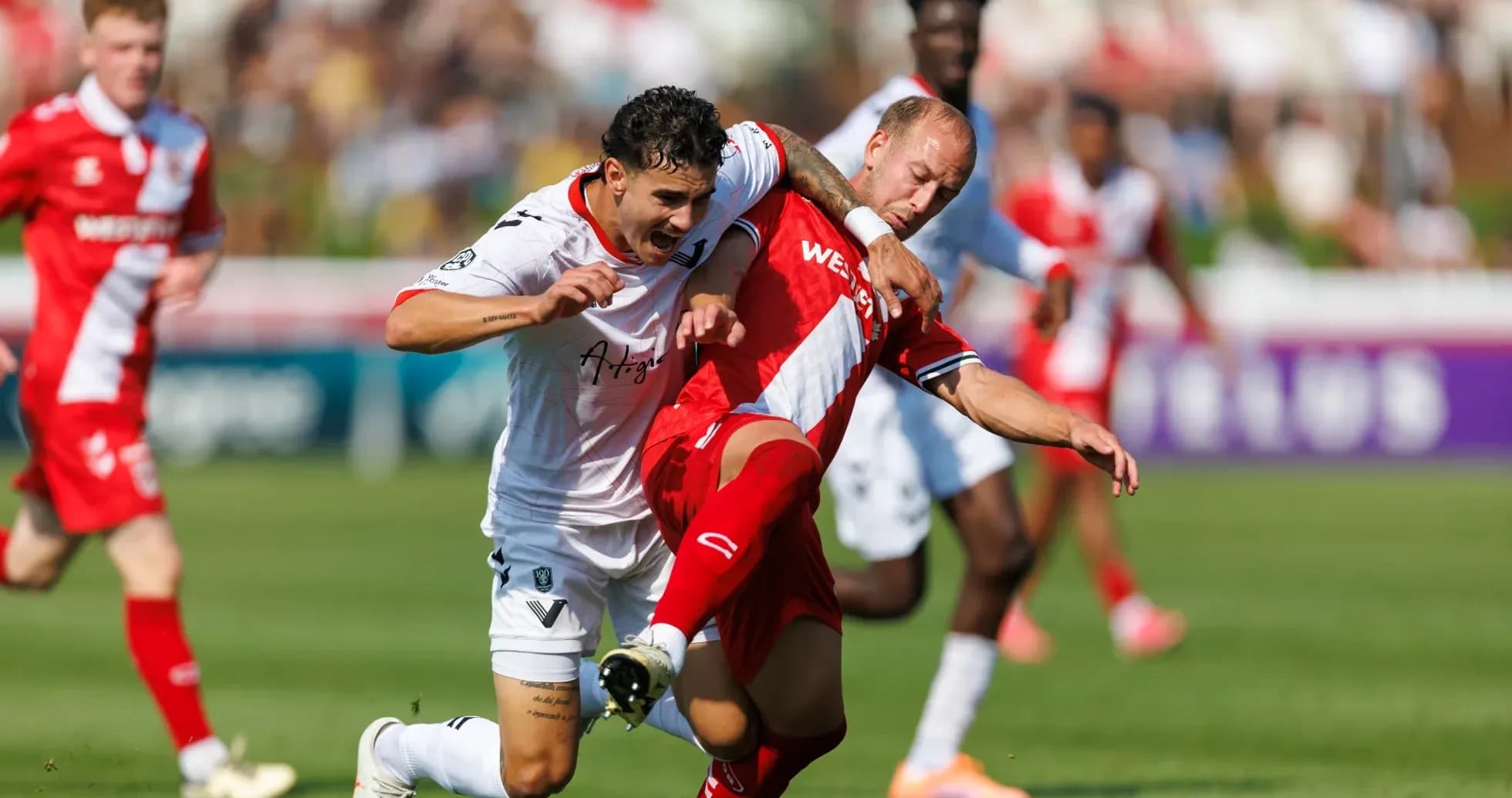
Cavalry FC vs Vancouver FC: A Tactical Showdown in the Canadian Premier League
Under the late-summer lights at ATCO Field, this Group Stage meeting in the Canadian Premier League felt less like a routine fixture and more like a stress test of two very different footballing identities. Cavalry FC, top of the table with 43 points and a commanding overall goal difference of 26 (37 scored, 11 conceded), edged Vancouver FC 1–0, extending the sense that this season runs to their rhythm. Vancouver, fourth with 27 points and an overall goal difference of 3 (26 for, 23 against), arrived as dangerous underdogs, but left reminded of the margins that separate contenders from chasers.
I. The Big Picture – Fortress vs. Flawed Traveller
Heading into this game, Cavalry’s home record was the spine of their title charge: 10 home matches, 8 wins, 2 draws, 0 defeats, with 23 goals scored and just 6 conceded. That translates to 2.3 goals for and 0.6 against at home on average – numbers that make ATCO Field feel like a high-altitude climb for any visitor.
Vancouver’s profile was more volatile. Overall, across 20 matches, they had 8 wins, 3 draws and 9 defeats, with 26 goals scored and 23 conceded. On their travels, though, the picture was stark: 3 away wins, 1 draw and 6 losses from 10 games, scoring 12 and conceding 14. An away average of 1.2 goals for and 1.4 against underscored the challenge of visiting the league’s most complete side.
The 1–0 scoreline ultimately mirrored those season-long patterns: Cavalry efficient, controlled and defensively assured; Vancouver competitive but short of the ruthless edge needed to break a champion’s guard.
II. Tactical Voids and Discipline – Risk on the Edge
Neither side’s absentees list was available, but the lineups told their own story. Tommy Wheeldon leaned on a core that has powered Cavalry’s campaign: N. Ingham in goal, a defensive line featuring A. Pearlman, D. Klomp, A. Didic and Fewo, with a midfield axis that included J. McGlinchey, A. Musse, T. Warschewski and N. Edwards, and C. Elva as a forward focal point.
On the other side, Martin Nash’s Vancouver XI built from the back with C. Irving behind a defensive line of M. Doner, M. Campagna, Thomas Geoffrey Field and K. Proctor, and a midfield spine of T. Bah, D. Pecile and M. Amissi supporting L. Mousset up front. The bench options – notably T. Campbell and A. Traore in attack, plus creative profiles like B. Lee and N. Mezquida – hinted at a plan to change tempo late.
Disciplinary trends framed the risk profiles. Cavalry, across the season, spread their yellow cards fairly evenly, but with a noticeable spike between 46–60 minutes, where 23.26% of their cautions arrive. They also carry a sharp red-card memory: their only red came in the 31–45 minute window, a reminder that their intensity can boil over before half-time.
Individually, Cavalry’s edge is personified by players like H. Paton, who has 7 yellow cards this season, and E. Kobza, with 6 yellows and one yellow-red dismissal. Even A. Pearlman, starting again here, has 5 yellows. It is an aggressive, front-foot defensive culture, and it demands constant emotional control.
Vancouver’s yellows peak late: 25.71% of their cautions arrive between 76–90 minutes, precisely when matches become stretched. M. Polisi, with 6 yellows, embodies that combative streak. Against a side that often turns the screw in the closing stages, that tendency to fray late was always going to be a tactical fault line.
III. Key Matchups – Hunter vs. Shield, Engine Room vs. Enforcer
The “Hunter vs. Shield” battle was written around Vancouver’s attacking threats and Cavalry’s defensive machine. While the visitors’ top scorer in the league, T. Campbell, began on the bench, his profile – 4 goals from 20 appearances, with 12 shots and 4 on target – meant his eventual introduction was always going to be a narrative pivot. Facing him was arguably the league’s standout defender: D. Klomp.
Klomp’s numbers this season are elite. Across 18 appearances, he has 3 goals and 1 assist, but his defensive metrics define him: 496 completed passes at 91% accuracy, 6 tackles, 5 blocked shots and 6 interceptions, plus 51 duels contested and 30 won. He is not merely a stopper; he is Cavalry’s first playmaker from deep. With Pearlman alongside him, who has 21 tackles, 2 blocked shots and 71 duels contested (45 won), Cavalry’s central defence forms a wall that explains their overall average of just 0.6 goals conceded per match.
In midfield, the “Engine Room” duel revolved around creativity versus containment. For Cavalry, T. Warschewski and A. Musse offer different kinds of incision. Warschewski’s 3 goals and 1 assist, backed by 19 key passes and 21 shots (13 on target), mark him as a hybrid 10/second striker who constantly threatens the spaces between the lines. Musse, with 2 assists and 11 key passes from 17 appearances, adds dribbling and link play.
Then there is G. Ntignee, even if not in this particular matchday squad, whose season context still shapes how opponents prepare for Cavalry. With 2 goals, 2 assists, 11 key passes and 30 dribble attempts (16 successful), he is one of the league’s most direct ball-carriers, and his presence in the wider squad forces teams like Vancouver to respect Cavalry’s wide threat.
For Vancouver, the counterweight in midfield is players like M. Polisi and, in a broader season context, I. Ssewankambo. Polisi’s 15 tackles, 2 blocks and 4 interceptions paint him as the enforcer who screens the back line. Ssewankambo, with 2 assists and 75 completed passes at 84% accuracy in limited minutes, offers vertical passing and calm progression. Against Cavalry’s layered attack, their job was to disrupt rhythm, slow transitions and protect the channels in front of Campagna and Field.
IV. Statistical Prognosis – Why the 1–0 Made Sense
When you overlay the season numbers, the 1–0 feels less like a narrow escape and more like the median of expectation. Cavalry’s total scoring average of 1.9 goals per match, combined with conceding just 0.6 overall, naturally points toward low-scoring wins rather than chaotic shootouts, especially at home. Vancouver’s overall average of 1.3 goals scored and 1.2 conceded, dragged down by their away record of 1.2 for and 1.4 against, suggested they would struggle to create sustained pressure in Calgary.
Cavalry’s penalty profile also speaks to their composure in key moments: 3 penalties awarded this season, all 3 scored, none missed. Vancouver, too, have been perfect from the spot (2 from 2), but in a match where neither side found a penalty, the difference was always likely to be who could convert from open play against an organised block.
Defensively, Vancouver are not fragile – 23 conceded in 20 matches overall is respectable – but the contrast with Cavalry’s 11 against in 19 is stark. Over 90 minutes, that defensive edge, embodied by Klomp and Pearlman in front of Ingham, was decisive.
In narrative terms, this was the league leaders doing what league leaders do: protecting their fortress, leaning on a well-drilled back line, and trusting their layered attacking cast – Warschewski between the lines, Musse in the half-spaces, Elva stretching the back four – to find the one decisive moment. For Vancouver, the story is familiar: competitive, combative, with flashes of attacking promise from the bench, but still searching for the ruthless clarity needed to turn tight away nights into statement results.
Following this result, nothing about the table’s shape is surprising. Cavalry look every inch a champion-elect, their statistical profile and on-pitch control in harmony. Vancouver remain a dangerous, if inconsistent, pursuer – a side with weapons like Campbell and Mousset, but still learning how to pierce the armour of the league’s most complete team.