Michael Carrick's Vision for Manchester United: Champions League and Beyond
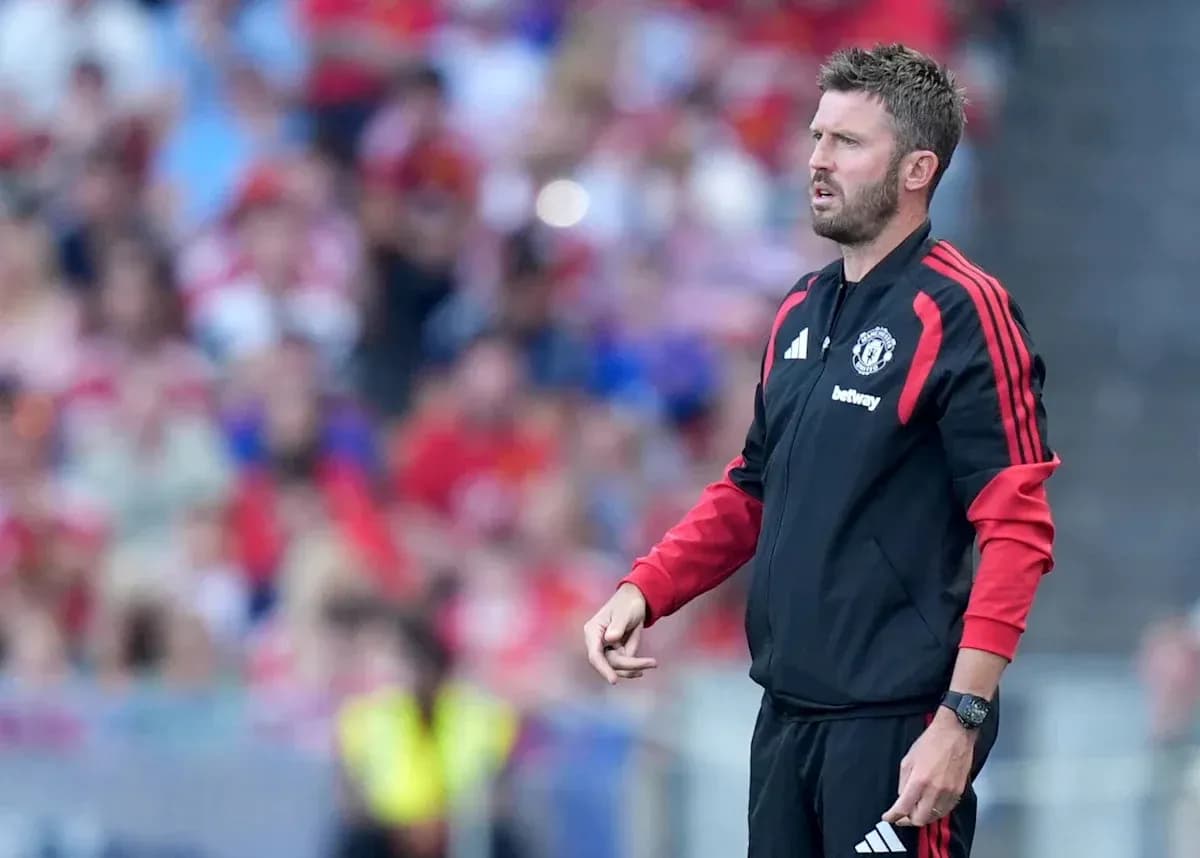
Michael Carrick knows exactly what the summit looks like. He lived there often enough as a player. Now he is trying to drag Manchester United back up the mountain as a manager – and he is not shy about where he wants this journey to end.
Champions League qualification is the immediate demand. A Premier League title remains the distant, glittering prize.
Thirteen years have passed since Carrick helped deliver United’s last league crown. He understands the scale of the task in front of him. He called it a “jump” to turn this current side into champions this season, but he refuses to rule it out for a squad he believes has the talent to surprise.
The club’s long-term vision is clear: they want to celebrate their 150th anniversary in 2028 as champions of England again. Carrick, made permanent head coach in May after steering United to third place from a difficult position in January, sees his job as building steadily towards that landmark.
“We want to evolve as a team,” he said before Saturday’s lunchtime trip to promoted Hull, a fixture that begins another defining campaign. The word “evolve” matters here. This is not a manager promising instant transformation, but one demanding constant, upward movement.
He leans heavily on youth to drive that progress.
“We've got a lot of younger players in the group that we want to help move forward individually, which collectively will move us in a good direction,” he explained. Winning runs, he believes, harden a group. They teach habits, not just moments.
“The experiences that they've had, the habit in getting used to feeling what it's like to win a number of games is huge,” he said. For Carrick, those stretches of form are not just statistics; they are the emotional and tactical education this squad needs.
He is blunt about the target.
“Yeah, we want to be finishing in the Champions League again without doubt. It's a challenge, it's a big challenge. There's a lot of teams fighting for that position and we managed to do that last season and we've got to aim to do the same and then keep pushing on through the season to see how it develops.”
The roadmap is simple in theory, brutal in practice: start strong, survive and thrive through the winter, finish stronger.
“We want to start strong, we want to get through the winter months and we want to be strong and we want to finish strong,” Carrick said. “So it's putting it all together and then see where we end up but we're going into it with a lot of encouragement.”
If the destination is clear, the route runs straight through midfield.
United have rebuilt the heart of their side. Casemiro, a key influence, has gone. Manuel Ugarte is sidelined. That leaves a new-look core, with Youri Tielemans and Andrey Santos brought in over the summer to reinforce an area the club still hope to strengthen with Brighton’s Carlos Baleba.
Carrick, who spent his career dictating games from the middle of the pitch, knows this is where seasons are shaped.
“I think it gives you the foundation of the team,” he said of a strong midfield. He wants consistency – not just across months, but within 90 minutes. Control from first whistle to last.
“I think the foundation of the team is important to be consistent, to be consistent through one game from start to finish, to be consistent over a period of time. I think you need a solid foundation through the middle of the team and trying putting it together and getting that balance.”
The word “spine” comes up, as it often does when great United sides are discussed.
“If you look at all the top teams over the years, all the great teams over the years, the spine of the team is really strong, so we're conscious of that and I think we've got a good spine of the team right now.”
Carrick insists this is only the starting point. Coaching, detail, and day‑to‑day development remain his tools.
“We can keep improving as we go in different ways and coaching and helping the boys and developing them, and I think we're in a good place.”
The ambition is clear. The structure is taking shape. Now comes the hard part: proving that this evolution can carry Manchester United from Champions League regulars back to the top of English football.