Canada and Bosnia & Herzegovina Open World Cup 2026 Campaigns with Draw
Under the cool Toronto evening lights at BMO Field, Canada and Bosnia & Herzegovina opened their World Cup 2026 campaigns with a 1–1 draw that felt less like a settled argument and more like the start of a long, tactical conversation. Following this result, both sit on 1 point in Group B, Canada in 2nd and Bosnia & Herzegovina in 4th, sharing identical overall returns: 1 goal scored, 1 conceded, goal difference at 0 for each.
I. The Big Picture – Mirror Systems, Different Intentions
Both coaches leaned into a 4-4-2, but the shapes carried distinct personalities.
Jesse Marsch’s Canada lined up with Maxime Crepeau behind a back four of Alistair Johnston, Luc De Fougerolles, Derek Cornelius and Richie Laryea. The midfield quartet – Tajon Buchanan, Ismael Kone, Stephen Eustaquio and Liam Millar – was built to run, rotate and press, feeding a front two of Jonathan David and Tani Oluwaseyi.
Sergej Barbarez mirrored the structure but not the mentality. Bosnia & Herzegovina’s back line of Amar Dedic, Nikola Katic, Tarik Muharemovic and Sead Kolasinac sat a little deeper, with a compact midfield band of Enes Bajraktarevic, Benjamin Tahirovic, Ivan Basic and Amar Memic screening ahead. Up front, Ermedin Demirovic and Jovo Lukic formed a classic strike pair: one to fight, one to finish.
Heading into this game, both sides had no previous World Cup 2026 data, so this was their first real tactical fingerprint. Following this result, Canada’s overall record shows 1 match played at home, with 1 draw, 1.0 goals for and 1.0 against on average. Bosnia & Herzegovina’s single outing has come on their travels, also a draw, with 1.0 away goals scored and 1.0 conceded on average.
II. Tactical Voids and Discipline – Where the Edges Frayed
There were no listed absentees, so both managers had full decks to shuffle. Instead of missing stars, the voids were structural: Canada lacked a natural left-back in the XI, with Millar pushing high and Laryea tasked with stretching the width from deep. Bosnia & Herzegovina, meanwhile, had no pure holding midfielder; Tahirovic and Basic had to share the dirty work, which occasionally left space between the lines for David to drift into.
Discipline quietly shaped the tempo. Canada’s season card profile from this match is telling: 2 yellow cards, split evenly between the 0–15 and 46–60 minute windows, each accounting for 50.00% of their total cautions. De Fougerolles and Johnston, both booked, played right on the edge of aggression and necessity, especially as they tried to contain Demirovic’s physical presence and Lukic’s movement.
Bosnia & Herzegovina’s yellow card distribution is more scattered: 1 caution in each of 31–45, 46–60 and 91–105 minutes, each representing 33.33% of their total yellows. Lukic, Katic and Demirovic all found their names in the book, a snapshot of a team willing to foul to break rhythm and protect their box when Canada’s pressure mounted.
Crucially, neither side has seen red in this campaign, and penalties have not yet entered the narrative: both teams show 0 penalties taken, 0 scored and 0 missed overall.
III. Key Matchups – Hunter vs Shield, and the Engine Room
Hunter vs Shield
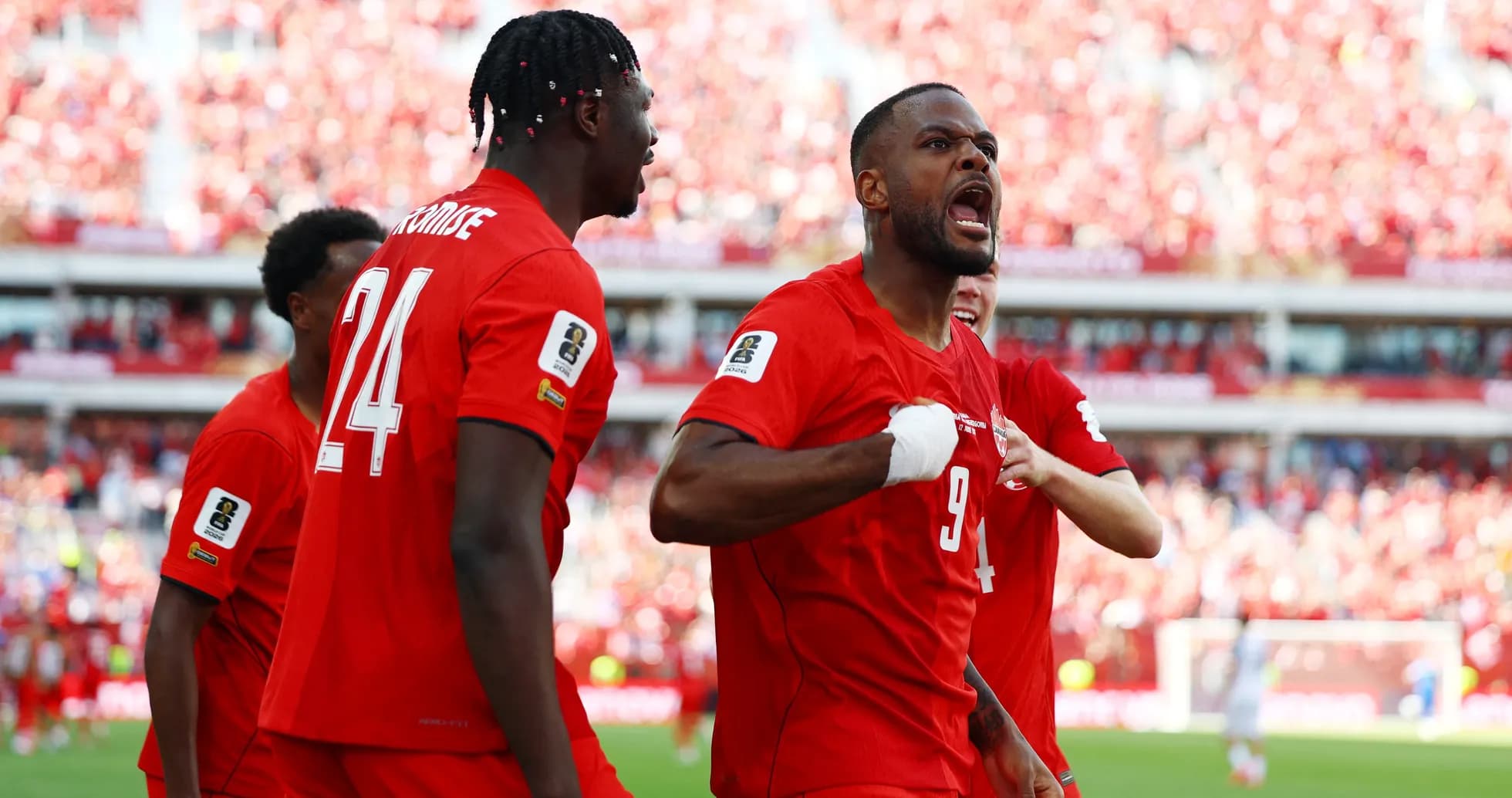
For Canada, the headline hunter does not start on the team sheet but emerges from the bench: Cyle Larin. In total this campaign, he has 1 goal from 1 shot, 1 on target, across just 14 minutes, with a 7.7 rating. He is both their joint-top scorer and a late-game weapon. His duel numbers – 3 contested, 2 won – underline how he can pin centre-backs and turn half-chances into full-blooded opportunities.
Across from him, the Bosnian shield is anchored by Nikola Katic. In his 90 minutes, Katic completed 23 passes at 65% accuracy, but his defensive data is where the story lies: 5 tackles, 2 blocked shots and 3 interceptions, plus 24 duels contested and 15 won. He is not just clearing danger; he is stepping in front of it. Any future meeting between these sides, or any knock-on fixture in this group, will likely pivot on whether a striker of Larin’s profile can unseat a defender in Katic’s form.
On the flanks, Sead Kolasinac offers a different kind of shield. He contributed 1 assist, 21 passes at 71% accuracy, 3 tackles and 2 blocked shots. He blocked 2 shots – a critical detail in how Bosnia & Herzegovina survived Canadian pressure. His capacity to both progress and protect makes him one of Barbarez’s most complete pieces.
The Engine Room
In midfield, Canada’s creative fulcrum is split between Stephen Eustaquio and the emerging influence of Promise David from the bench. Promise David has 1 assist, 1 key pass and 3 total passes in 29 minutes, plus 10 duels contested and 3 won. He is already 2nd in the World Cup assists chart for this snapshot, a sign that Marsch has a powerful impact sub who can tilt games late on.
For Bosnia & Herzegovina, the engine room’s defensive edge comes from the collective, but their attacking hinge is Lukic. His line is impressive: 1 goal, 3 shots (2 on target), 17 passes, 13 duels contested with 10 won, and a 7.5 rating. Even with a yellow card and a substitution after 62 minutes, he left a clear imprint as the primary outlet and finisher.
IV. Statistical Prognosis – What This Draw Really Says
Following this result, both teams share the same overall story: 1 match, 0 wins, 1 draw, 0 defeats, 1 goal scored and 1 conceded, no clean sheets and no failures to score. The symmetry is striking, but the underlying patterns hint at divergence.
Canada’s attacking ceiling feels higher. They have a starting structure that can dominate territory and a bench stacked with end-product: Larin and Promise David already sit among the competition’s most decisive forwards per minute. Their consistent 4-4-2, used in 1 of 1 matches, suggests Marsch is building repetition and automatisms.
Bosnia & Herzegovina, on the other hand, project defensive solidity. Katic’s volume of duels and blocks, Kolasinac’s blend of bite and delivery, and Demirovic’s work rate (21 duels, 12 won; 3 tackles) paint a picture of a side that can suffer without breaking. Their 4-4-2 has also been used in 1 of 1 matches, but with a more reactive tilt.
Without xG numbers, the prognosis leans on structure and usage: Canada look likelier to generate higher expected goals through volume and late-game firepower; Bosnia & Herzegovina appear better equipped to depress opponents’ xG through compactness and individual defending.
In a group where margins will be thin, this 1–1 does not just share the points; it outlines the paths ahead. Canada, with their layered attacking options, will be judged on whether they can turn pressure into multiple goals. Bosnia & Herzegovina, with their hardened back line and efficient forwards, will rely on staying within one moment of victory – and trusting that their shields hold long enough for their hunters to strike.