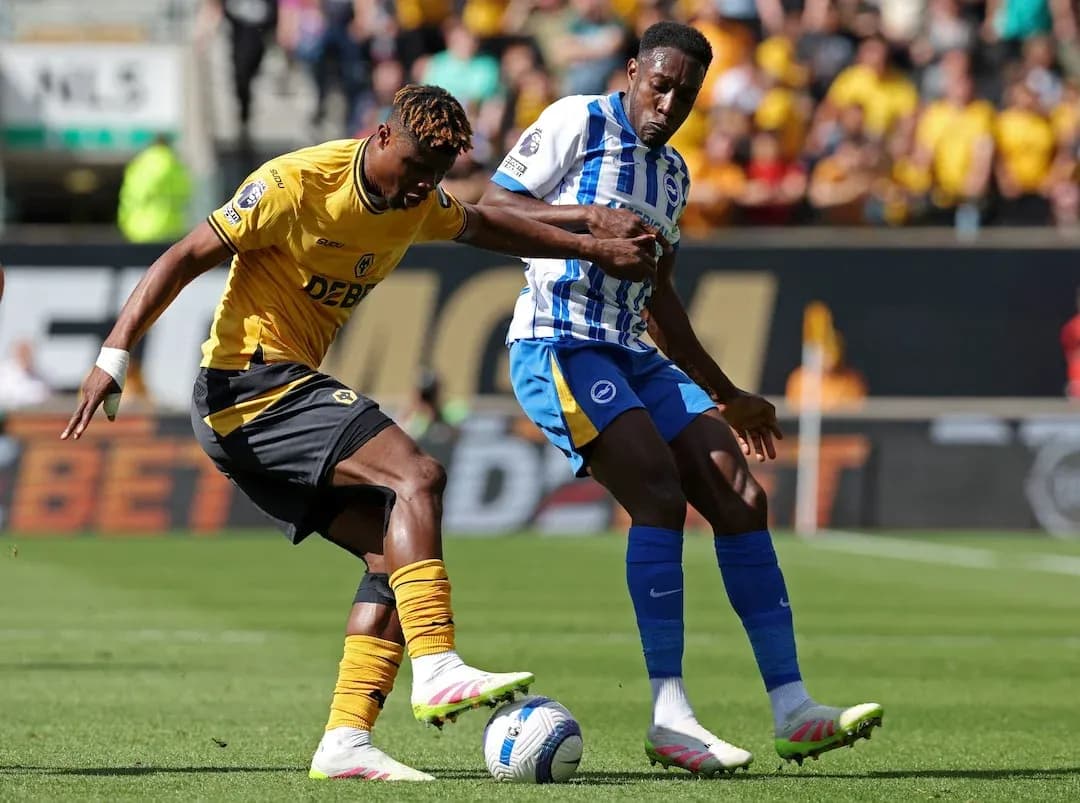
Brighton vs Wolves: Premier League Late-Season Clash
In 2026 this is a late-season Premier League fixture of asymmetric stakes at the Amex Stadium: Brighton, 8th in the league phase with 50 points from 35 games and a positive goal difference (+7), are pushing to consolidate a top-half and potential European-chasing platform, while Wolves arrive bottom in 20th on 18 points with a -38 goal difference and already locked in the relegation zone description. For Brighton this is about turning a strong league-phase platform into a springboard for 2027; for Wolves it is about damage limitation and pride at the end of a disastrous campaign.
Head-to-Head Tactical Summary
The recent meetings show a finely balanced but high-variance matchup across league and cups. On 5 October 2025 at Molineux Stadium in the Premier League (Regular Season - 7), Wolves drew 1-1 at home to Brighton, having led 1-0 at half-time before being pegged back. On 10 May 2025, again at Molineux in the Premier League (Regular Season - 36), Brighton delivered a controlled 2-0 away win, leading 1-0 at half-time and closing the game out. On 26 October 2024 at the American Express Stadium in Premier League action (Regular Season - 9), Brighton and Wolves shared a 2-2 draw; Brighton were 1-0 up at half-time but could not convert that advantage into a win. Just over a month earlier, on 18 September 2024 in the League Cup 3rd Round at the American Express Stadium, Brighton edged a 3-2 home win over Wolves in a more open cup tie, leading 2-1 at half-time. The cup narrative also includes Wolves’ 1-0 home win on 28 February 2024 in the FA Cup 5th Round at Molineux, where they led 1-0 at half-time and preserved that advantage. Overall, Brighton have tended to be more productive at home, while Wolves’ better results have come from compact, low-scoring games at Molineux.
Global Season Picture
- League Phase Performance: In the league phase Brighton sit 8th with 50 points from 35 matches, scoring 49 and conceding 42 (goal difference +7). Wolves are 20th with 18 points from 35 games, scoring 25 and conceding 63 (goal difference -38), and are tagged in the relegation to Championship zone.
- All-Competition Metrics: Across all phases of the competition Brighton’s attacking profile is steady rather than explosive, with 49 goals in 35 matches and an average of 1.4 goals for per game, balanced by 1.2 goals against per game. Their use of primarily a 4-2-3-1 in 30 matches indicates a possession-oriented structure with an emphasis on controlled buildup, supported by 9 clean sheets and only 7 games without scoring, pointing to a generally reliable attack and reasonably solid defensive base (1.2 goals against on average). Wolves across all phases show a blunt attack and exposed defense: 25 goals in 35 matches at only 0.7 goals for per game, while conceding 63 at 1.8 goals against per game. They have failed to score in 18 matches and kept just 4 clean sheets, underlining a consistently struggling offensive unit and a defense under heavy and often unsustainable pressure.
- Form Trajectory: In the league phase Brighton’s recent form string “LWDWW” indicates three wins in the last five, with one draw and one loss, suggesting an upward trajectory at the business end of the campaign and the capacity to respond positively to setbacks. Wolves’ league-phase form “DLLLD” reflects a sequence of three defeats and two draws in the last five, reinforcing the picture of a side unable to convert performances into wins and stuck in a downward spiral, particularly away from home where they have yet to record a league victory.
Tactical Efficiency
Across all phases of the competition Brighton’s efficiency profile is that of a balanced, moderately effective side: 1.4 goals scored per match against 1.2 conceded, with their preferred 4-2-3-1 giving them structural stability. Their 9 clean sheets and limited number of games without scoring suggest that their attack and defense indices would both sit in the positive range relative to a mid-table baseline, even if not at elite levels. Wolves, by contrast, combine a low attacking return (0.7 goals per game, with 18 matches failing to score) with a high defensive concession rate (1.8 goals per game), which corresponds to a very low attack index and a weak defense index. The variety of formations used by Wolves (from 3-4-2-1 and 3-5-2 to 4-3-3 and 5-3-2) indicates tactical searching rather than settled efficiency, and the card distribution, with a concentration of yellow cards between minutes 46-75, suggests that their defensive workload and late-game pressure often lead to reactive, last-ditch interventions. In contrast, Brighton’s card pattern, with a peak between minutes 46-60, points to a team that presses with intensity early in the second half but generally manages game states without tipping into ill-discipline. Overall, Brighton’s season averages and structural stability are consistent with a stronger attack and more resilient defense than Wolves, and any modelled attack/defense index would heavily favor Brighton on both sides of the ball.
The Verdict: Seasonal Impact
In the league phase context this match is far more consequential for Brighton’s medium-term trajectory than for Wolves’ immediate fate. Wolves’ relegation status is effectively sealed by their 20th place, 18-point tally and -38 goal difference, so the primary impact of this result for them lies in psychological momentum, evaluation of players and systems for the Championship, and the extent of damage to defensive confidence. For Brighton, however, three points here would consolidate a strong top-half finish and potentially position them to attack European qualification in 2027, building on a positive goal difference and improving recent form. Dropped points at home to the bottom side would not trigger a crisis but would cap their ceiling, limiting their ability to close the gap to the upper tier of the table and raising questions about their capacity to consistently convert dominance into results against deep, reactive opponents. A Brighton win would confirm the season’s underlying storylines: a stable, upward-trending side versus a relegated team in need of a reset; anything less would inject late doubt into Brighton’s progression narrative and slightly soften the statistical gap between the two, without altering the fundamental relegation and title dynamics of the league.