Brighton Dominates Wolves 3–0 at Amex Stadium
Brighton 3–0 Wolves at the Amex Stadium underlined the gulf between a side chasing Europe and one already condemned to relegation. Brighton’s emphatic win tightens their grip on seventh place and a potential European play-off, while bottom‑placed Wolves’ bleak season deepens with another heavy defeat.
Brighton struck almost immediately. In the 1st minute, Jack Hinshelwood arrived from midfield to finish after Maxim De Cuyper’s delivery from the left created the opening, giving the hosts a perfect start. Just four minutes later, De Cuyper was the creator again: his set‑piece found Lewis Dunk, who powered home to make it 2–0 inside five minutes, leaving Wolves reeling.
Kaoru Mitoma’s aggressive pressing earned him a yellow card for roughing in the 24th minute, the only blot on an otherwise dominant first‑half display from Brighton. Wolves, struggling to get out, offered little threat before the break as Brighton controlled territory and tempo.
At half-time, Wolves tried to reset: in the 46th minute David Møller Wolfe replaced Hugo Bueno at left wing‑back, a like‑for‑like change aimed at adding more energy down the flank. The visitors showed some early second‑half intent, but their frustration surfaced when Hwang Hee-chan was booked for tripping in the 49th minute after a late challenge.
Brighton made their first change on 58 minutes, with Joël Veltman replacing Mitoma, a move that nudged Ferdi Kadıoğlu higher at times and gave Brighton extra defensive security on the right while protecting Mitoma ahead of the run‑in.
Wolves rolled the dice with a double change in the 67th minute. Jean-Ricner Bellegarde replaced Mateus Mané to add more creativity behind the striker, while Rodrigo Gomes came on for Pedro Lima to inject pace on the flank. Yet within a minute, André’s late challenge brought a yellow card for roughing on 68 minutes, symbolising Wolves’ inability to channel their aggression productively.
Brighton then freshened their attack in the 76th minute, making a double substitution: Georginio Rutter replaced Danny Welbeck up front, and Yasin Ayari came on for Carlos Baleba in midfield, maintaining Brighton’s intensity between the lines without sacrificing control.
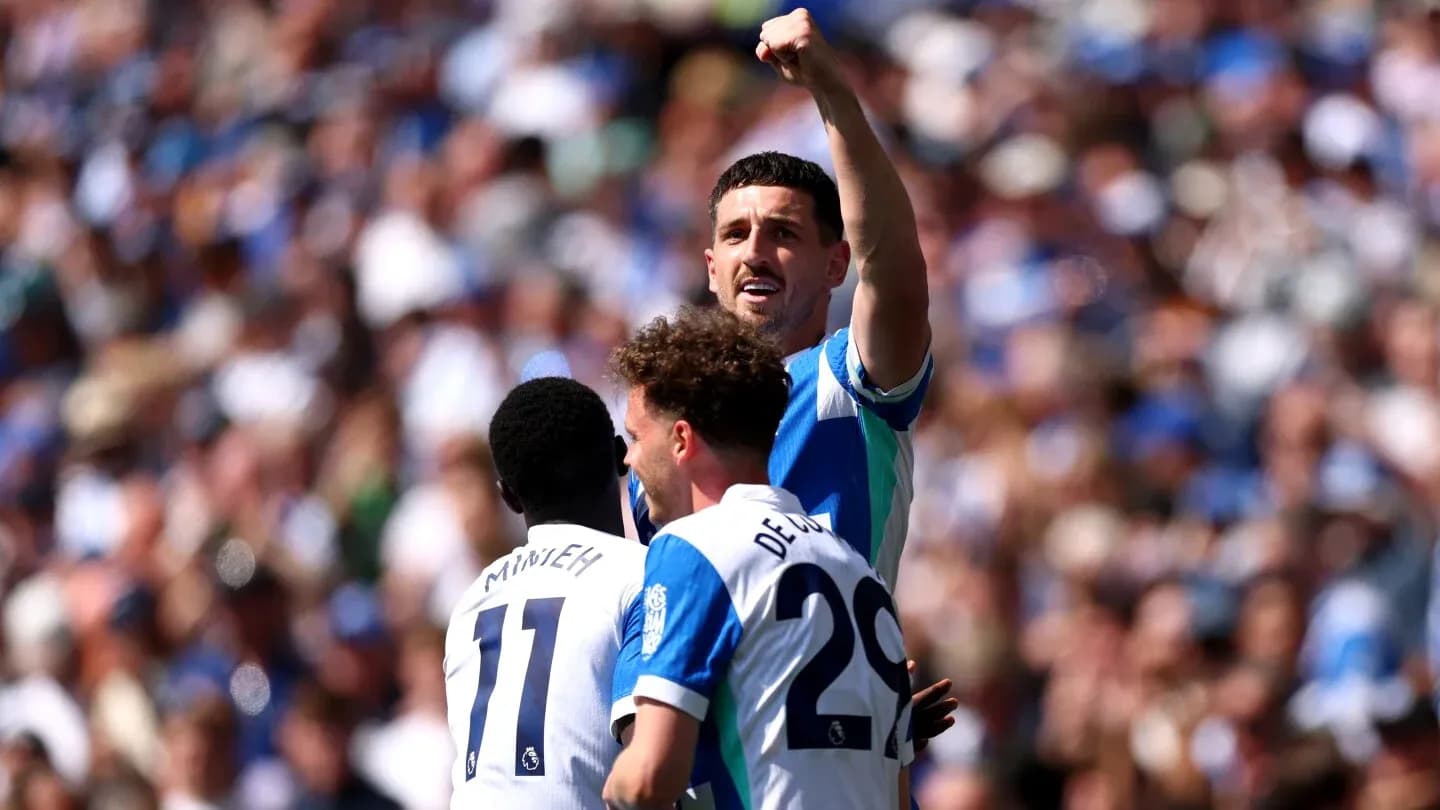
The hosts killed the game as a contest in the 86th minute. Yankuba Minteh, who had been a constant outlet on the right, drove inside and finished with a solo effort, an unassisted third goal that reflected Brighton’s dominance and Wolves’ defensive disarray.
In the 88th minute, Fabian Hurzeler managed minutes with another double change: Charalampos Kostoulas replaced Hinshelwood, and Solly March came on for the influential De Cuyper, whose two early assists had defined the contest. Wolves responded with late attacking switches in the 89th minute, as Angel Gomes replaced Hwang Hee-chan and Tolu Arokodare came on for Joao Gomes, but by then the match was long beyond them and there was no time to alter the scoreline.
Fixture Statistics & Tactical Audit
- xG (Expected Goals): Brighton 1.46 vs Wolves 0.46
- Possession: Brighton 72% vs Wolves 28%
- Shots on Target: Brighton 6 vs Wolves 1
- Goalkeeper Saves: Brighton 1 vs Wolves 3
- Blocked Shots: Brighton 3 vs Wolves 0
Brighton’s three‑goal margin was supported by the underlying numbers. Their higher xG (1.46 vs 0.46) and volume of shots on target (6 vs 1) reflected sustained territorial dominance and a steady stream of good‑quality chances rather than sheer luck. The 72% possession underscored how Brighton controlled the ball and the tempo, circulating through midfield and repeatedly pinning Wolves back. Wolves’ single shot on target and lack of blocked efforts (0 blocked shots) showed how rarely they established pressure in Brighton’s defensive third. While the scoreline slightly exceeded the xG gap, Brighton’s combination of early set‑piece efficiency and a late individual strike made a 3–0 outcome a fair reflection of their control (xG 1.46–0.46, shots on target 6–1, possession 72–28).
Standings Update & Seasonal Impact
For Brighton, the three goals scored and clean sheet move their season totals from 52 goals for and 42 against to 55 scored and 42 conceded, improving their goal difference from +10 to +13. Their three points lift them from 53 to 56, consolidating seventh place and strengthening their position in the race for European qualification, keeping pressure on the sides immediately above them.
Wolves, already bottom in 20th, see their defensive record worsen from 25 goals for and 66 against to 25 scored and 69 conceded, with goal difference sliding from -41 to -44. Their points tally remains stuck on 18, and with another away defeat and no improvement in their away record, the gap to safety in the relegation battle grows ever more daunting, underlining a season defined by defensive frailty and limited attacking threat.
Lineups & Personnel
Brighton Actual XI
- GK: Bart Verbruggen
- DF: Ferdi Kadıoğlu, Jan Paul van Hecke, Lewis Dunk, Maxim De Cuyper
- MF: Carlos Baleba, Pascal Groß, Yankuba Minteh, Jack Hinshelwood, Kaoru Mitoma
- FW: Danny Welbeck
Wolves Actual XI
- GK: Daniel Bentley
- DF: Yerson Mosquera, Santiago Bueno, Toti Gomes
- MF: Pedro Lima, André, Joao Gomes, Hugo Bueno
- MF (advanced)/FW line: Adam Armstrong, Mateus Mané
- FW: Hwang Hee-chan
Expert's Post-Match Verdict
Fabian Hurzeler’s Brighton delivered a controlled, professional performance built on early set‑piece precision and sustained territorial dominance. The 4-2-3-1 structure, with Groß and Baleba anchoring midfield and Hinshelwood breaking lines, allowed Brighton to suffocate Wolves’ attempts to counter, reflected in the overwhelming possession share (72%) and shot profile (13 total shots, 6 on target). Their attacking efficiency, turning 1.46 xG into three goals, pointed to sharp execution in key moments rather than over‑reliance on volume alone (xG 1.46, 6 shots on target).
Rob Edwards’ Wolves, in a 3-4-2-1, never established control in midfield and were exposed by Brighton’s width and delivery, particularly from De Cuyper. The visitors’ meagre attacking output (0.46 xG, 1 shot on target, 5 total shots) and absence of blocked shots highlighted a side unable to sustain pressure or pin Brighton back. The flurry of second‑half substitutions marginally increased energy but did not alter the structural issues: slow ball progression, limited support around the striker, and porous defending on crosses and second balls. Statistically and tactically, this was less an isolated off‑day than a continuation of Wolves’ season‑long defensive collapse and attacking bluntness, starkly illustrated by their worsening goal difference and minimal xG.