Brazil and Morocco Share Points in 1-1 Draw
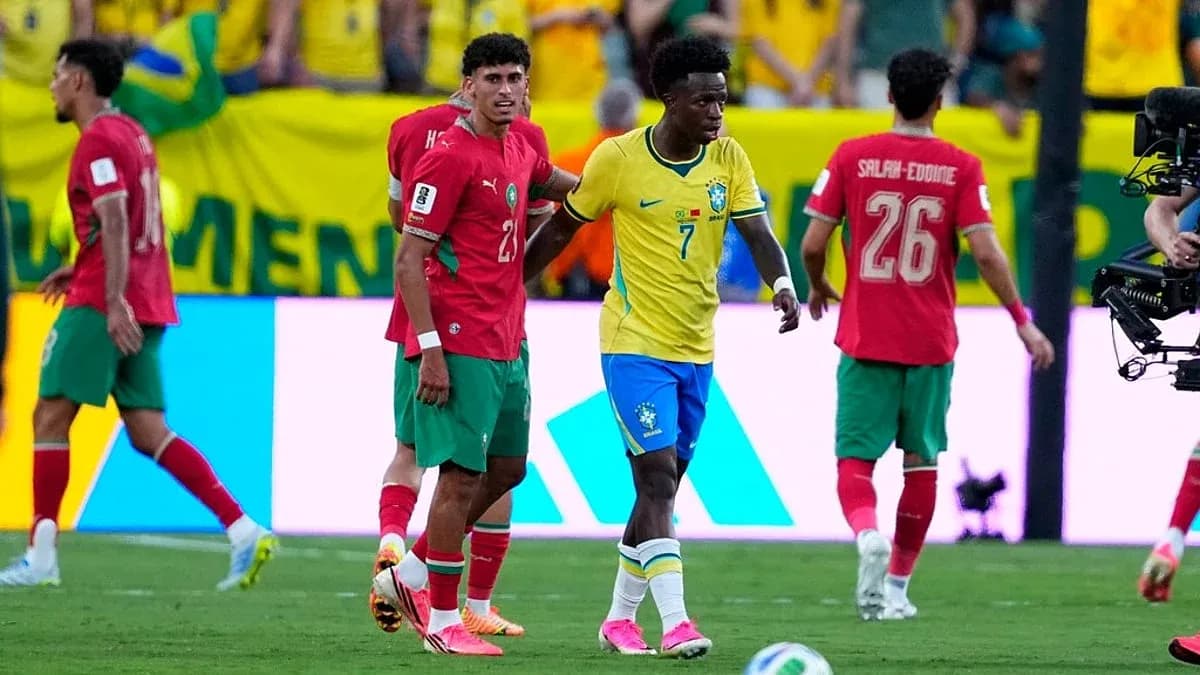
Brazil 1-1 Morocco at MetLife Stadium opens Group C with both sides moving to 2 points from two games, Brazil staying second and Morocco remaining top on goal difference after another shared result that reflects a finely balanced contest.
Match Report
The game’s first clear breakthrough came on 21' as Morocco struck from their right-sided overload. A quick combination released Brahim Díaz between the lines, and his slide-rule pass found Ismael Saibari arriving centrally. 21' Morocco goal — I. Saibari (assisted by B. Diaz), a composed low finish past Alisson to make it 0-1.
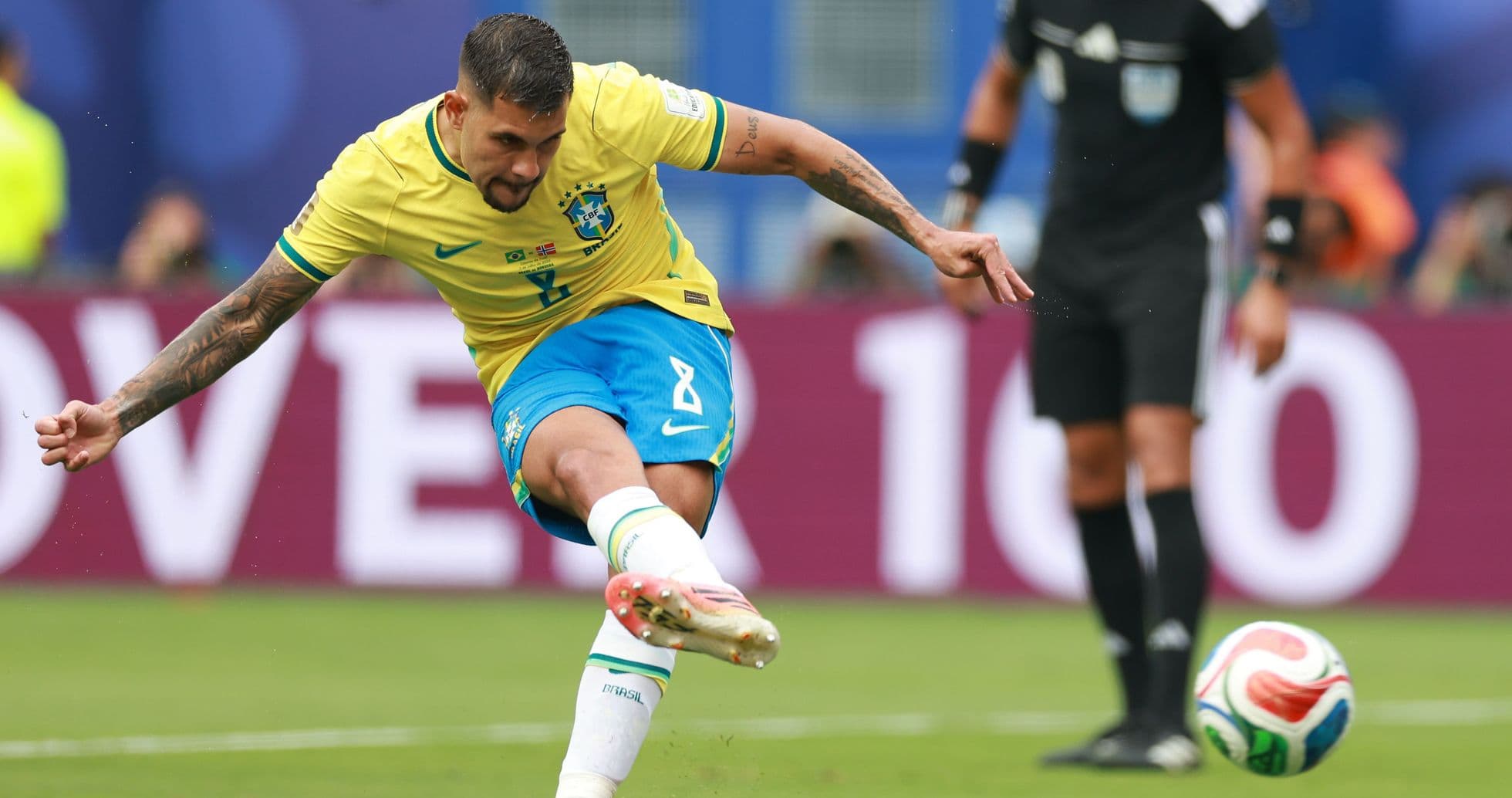
Brazil responded with more aggressive occupation of the half-spaces, and the equaliser arrived on 32' from their left flank. Bruno Guimarães stepped higher to receive between the lines and fed Vinicius Junior attacking the inside-left channel. 32' Brazil goal — Vinicius Junior (assisted by Bruno Guimaraes), the winger opening his body and curling beyond Bono to level at 1-1.
Brazil’s physical response in midfield brought disciplinary action before the break. 37' Casemiro (Brazil) — yellow card (Tripping) after halting a Moroccan transition with a late challenge in the centre circle. Six minutes later the other booking followed in the back line: 43' Ibanez (Brazil) — yellow card (Tripping) for stepping across Saibari as he tried to spin away down the right.
At half-time Carlo Ancelotti moved decisively. On 46' Danilo replaced Ibanez (Brazil), a like-for-like change at right-back but with more on-ball security. Simultaneously, 46' Fabinho replaced Casemiro (Brazil), giving Brazil a slightly more mobile screening presence in front of the defence.
As Brazil pushed for greater attacking variety, further changes followed. 61' M. Cunha replaced Lucas Paqueta (Brazil), adding a second central presence to pin Morocco’s centre-backs and free Vinicius Junior to roam. One minute later, 62' Luiz Henrique replaced I. Thiago (Brazil), injecting fresh pace on the right and turning the front line into a more fluid three.
Morocco answered with a double switch on 65', aimed at preserving energy and vertical threat. 65' C. Talbi replaced B. Diaz (Morocco), maintaining a runner between the lines after Díaz’s intensive first hour. In midfield, 65' S. El Mourabet replaced A. Ounahi (Morocco), adding fresh legs to contest Brazil’s growing territorial control.
With Brazil committing more numbers forward, Morocco adjusted their left flank on 80' to stabilise the defensive structure. 80' A. Salah-Eddine replaced N. Mazraoui (Morocco), providing a natural left-back profile and allowing Hakimi to stay higher on the opposite side in transition. At the same minute, 80' A. Amaimouni replaced B. El Khannouss (Morocco), keeping energy and pressing intensity in the advanced midfield line.
Ancelotti used his final midfield rotation on 80' to maintain tempo: 80' Danilo Santos replaced Bruno Guimaraes (Brazil), preserving the double pivot but with fresh legs to counter Moroccan counters and recycle possession.
Morocco’s last change came on 89', targeted at stretching a tiring Brazilian back line. 89' S. Rahimi replaced I. Saibari (Morocco), switching the focal point up front to a more direct runner for the closing stages. Despite the late injection of pace and several half-chances at both ends, neither side could find a winner, and the game closed at 1-1.
Fixture Statistics & Tactical Audit
- xG: Brazil 1.24 vs 1.28 Morocco
- Possession: Brazil 54% vs 46% Morocco
- Shots on Target: Brazil 4 vs 2 Morocco
- Goalkeeper Saves: Brazil 1 vs 3 Morocco
- Blocked Shots: Brazil 4 vs 6 Morocco
The 1-1 scoreline broadly matches the underlying numbers, with xG almost level (Brazil 1.24 vs 1.28 Morocco) and total shots identical at 12-12. Brazil were more ball-dominant (54% possession) and carried a slightly higher volume of efforts from inside the box, but Morocco’s compact block forced them into crowded shooting lanes, reflected in Morocco’s 6 blocked shots. Bono’s workload (3 saves against 4 shots on target) underlines that Brazil’s pressure was sustained rather than overwhelming, while Alisson faced only 2 shots on target, consistent with Morocco’s more selective, transition-based threat. Overall, the draw appears a fair reflection of a match where Brazil controlled territory but Morocco matched them in chance quality.
Standings Update & Seasonal Impact
Both teams came into this Group C fixture on 1 point from their opening draws, and they leave East Rutherford still locked together on 2 points after two games. Brazil move from 1 to 2 points with a second consecutive draw, taking their goals for to 2 and goals against to 2, for a neutral goal difference of 0. Morocco also climb from 1 to 2 points, with their tally now 2 goals for and 2 against, likewise a goal difference of 0. With both sides already in positions described as “Advancing to the Round of 32”, this result keeps Morocco marginally ahead at the top of the group on ranking, while Brazil remain second, setting up a decisive final round in which small margins in goal difference and head-to-head records could determine the final seeding.
Lineups & Personnel
Brazil Starting XI
- GK: Alisson
- DF: Douglas Santos, Gabriel Magalhães, Marquinhos, Roger Ibañez
- MF: Bruno Guimarães, Casemiro, Lucas Paquetá, Raphinha, Vinícius Júnior
- FW: Igor Thiago
Morocco Starting XI
- GK: Bono
- DF: Noussair Mazraoui, Chadi Riad, Issa Diop, Achraf Hakimi
- MF: Ayyoub Bouaddi, Neil El Aynaoui, Bilal El Khannouss, Azzedine Ounahi, Brahim Díaz
- FW: Ismael Saibari
Post-Match Verdict
This was a controlled but not clinical Brazil display (4 shots on target from 12 attempts, xG 1.24), blunted repeatedly by Morocco’s disciplined mid-block and high volume of blocks (6). Ancelotti’s in-game adjustments — notably the early second-half double change in defence and midfield — improved Brazil’s circulation and territorial control (54% possession, 501 passes at 88% accuracy), but the final-third patterns remained predictable, with wide overloads not consistently converted into clear-cut chances.
Morocco delivered a tactically mature performance built on compact spacing and efficient transitions. Their attack was economical rather than expansive (2 shots on target from 12 attempts, xG 1.28), but when they did break, they created chances of similar quality to Brazil’s, highlighted by Saibari’s well-constructed opener. Defensively, Bono and his back line were collectively resilient (3 saves, 6 blocked shots), allowing Brazil few clean looks at goal. In strategic terms, both sides leave with their tournament trajectories intact: Brazil must now convert possession into more incisive finishing, while Morocco can be encouraged that their structure is robust enough to contain elite opposition without sacrificing all attacking ambition.